We’ve all been there: it’s 5pm on a drizzly Tuesday, the fridge holds a limp carrot and half a tub of yoghurt, and the thought of another dash to Tesco makes you want to order a takeaway. But if you’ve got a handful of reliable pantry staples in the cupboard, dinner can happen without the panic. In a British kitchen, that means a compact, cleverly chosen set of shelf-stable ingredients that can become quick pasta, soups, traybakes, curries, stews, and lunches with very little effort. When you stock the right basics, cooking gets easier as your skills grow: first you can feed yourself cheaply, then you can cook faster, waste less, and eventually build proper weeknight flexibility around what is already in the cupboard.
What makes a pantry staple truly useful?
A good pantry staple does more than sit on a shelf. It should help you make several different meals, keep well, and work with the kind of everyday shopping you might do after work at Sainsbury’s or a quick Aldi run.
The best staples usually do at least one of these jobs:
- add flavour quickly
- bulk out a meal cheaply
- improve texture or protein content
- help you build a sauce, soup, or stew
- reduce waste by pairing with fresh food you already have, like those two carrots in the veg drawer
For home cooks in the UK, the most practical staples are the ones you can buy in Tesco, Sainsbury’s, Asda, Morrisons, Aldi, Lidl, or a local corner shop and use in more than one type of dish. If an ingredient only works for a single recipe that you rarely make, it’s simply not earning its shelf space.
Pantry staples by level of usefulness
The easiest way to build a pantry is to think in stages—a bit like how you might layer a winter stew. Start with the ingredients that solve the most problems first, then expand once your kitchen habits are more settled.
| Level | What it covers | Why it matters |
|---|---|---|
| Essentials | The absolute basics for everyday cooking | Lets you make simple meals immediately |
| Versatile builders | Ingredients that create sauces, fillings, and hearty dishes | Expands your recipe range without extra shopping |
| Flavour boosters | Items that make basic food taste better | Helps you cook more confidently and reduce boredom |
| Convenience staples | Time-saving ingredients for busy weeks | Useful when dinner needs to happen fast |
Level 1: the essentials every kitchen should have
These are the workhorse staples. If your cupboard is mostly empty—perhaps after a house move or a big clear-out—start here. They’re the ingredients I turn to on weeks when the budget is tight and the energy is low.
1. Salt and black pepper
Salt is not optional; it is the difference between food tasting flat and food tasting finished. Without it, even a banging tomato sauce can taste oddly hollow. Black pepper adds gentle heat and works across everything from scrambled eggs to roast root veg.
Choose:
- fine table salt for everyday cooking—it dissolves quickly and you can control the pinch easily
- flaky salt if you like finishing dishes with texture, particularly roasted vegetables or a simple slice of sourdough and butter
- a basic pepper grinder or pre-ground black pepper; a grinder gives you fresher flavour, but a little pot of pre-ground does the job when speed matters
2. Olive oil and a neutral cooking oil
You need one oil for flavour and one for general cooking. This duo has saved me from burnt garlic more times than I can count.
- Olive oil works well for dressings, pasta, roasted vegetables, and finishing dishes. Even a modest supermarket own-label extra virgin brings enough fruitiness for most weeknight cooking.
- Rapeseed oil is a practical everyday choice for frying and roasting because it has a neutral taste, can handle high heat without smoking, and is widely available and affordable in the UK. Cold-pressed British rapeseed is a lovely thing if you fancy a local upgrade.
3. Onions and garlic
These are the backbone of countless meals. They form the base of soups, sauces, curries, stews, and savoury pies. I keep a mesh bag of onions in the larder and a bulb of garlic on the counter. If fresh garlic regularly goes green or sprouty before you use it, keep a jar of garlic paste or frozen garlic cubes (most supermarkets sell them in the freezer aisle) as a backup—they melt straight into the pan and taste surprisingly fresh.
4. Tinned tomatoes
A tin of tomatoes is one of the most useful things in a British cupboard. It can become pasta sauce, chilli, shakshuka, curry, soup, or a quick braise for some sausages. On a truly bare-cupboard evening, onion, garlic, and a tin of tomatoes spooned over pasta with a knob of butter is an honest dinner.
Look for:
- chopped tomatoes—the all-rounder
- plum tomatoes—sweeter, whole, easy to crush by hand
- passata for smoother sauces, particularly in a hurry; it’s just sieved tomatoes and behaves beautifully in a one-pot dish
5. Stock cubes or stock pots
Stock adds depth to soups, gravies, risottos, and one-pan meals. Vegetable, chicken, and beef versions all have a place, depending on how you cook. If you only buy one, make it vegetable—it’s the most versatile and won’t scare off anyone who doesn’t eat meat. A stock cube is especially useful when a dish tastes dull but not broken: a quick crumble stirred into a watery sauce or a bland soup can work wonders.
6. Dried pasta, rice, and oats
These are your basic starches—the canvas for so many weeknight dinners.
- Pasta gives quick dinners, from a simple aglio e olio to a creamy use-up of whatever cheese is lurking. Dried pasta lasts ages; keep a shape like penne or fusilli for chunkier sauces and spaghetti for lighter ones.
- Rice works for curries, stir-fries, and grain bowls. Long grain or basmati are my everyday choices because they cook reliably and don’t clump.
- Oats are useful for breakfast, baking, and even savoury cooking in a pinch—a handful can thicken a soup or add body to a veggie burger mix.
Level 2: staples that make meals more complete
Once the basics are in place, add ingredients that turn simple cooking into proper meals—the sort that fill you up and don’t leave you hunting for snacks an hour later. This layer is where your pantry shifts from survival mode to actually pleasant midweek eating.
Tinned beans and lentils
Beans and lentils are among the best budget-friendly pantry staples for UK home cooking. They are cheap, filling, and easy to turn into dinner. At my last Lidl trip, a tin of chickpeas set me back 33p—it’s hard to argue with that. Keep a mix such as:
- chickpeas
- kidney beans
- cannellini beans
- lentils (tinned green or brown, or dried red lentils which cook in under 15 minutes without soaking)
- butter beans—lovely for a quick mash or adding creaminess to a stew
Use them in:
- soups
- stews
- salads
- curries
- pasta dishes
- mash-and-bean toppings (roughly mash some butter beans with olive oil, lemon, and parsley and spoon over toast)
Peanut butter
Natural or standard peanut butter can do far more than make sandwiches. It adds richness to sauces, noodles, traybakes, porridge, and baking. Stir a spoonful into a simple tomato sauce alongside some soy sauce and a pinch of chilli and you have a cheap, quick satay-ish vibe that works beautifully with shredded leftover chicken or roasted vegetables.
Flour and baking powder
Plain flour is useful for:
- thickening sauces (a quick roux or a slurry to rescue a thin gravy)
- coating meat or vegetables before frying
- quick batters for pancakes or Yorkshire puddings
- simple baking like scones or a basic soda bread
Baking powder helps with scones, pancakes, traybakes, and quick breads. Both store well in airtight containers in a cool cupboard—replace them roughly every six months if you don’t use them often, as raising agents lose their oomph.
Canned coconut milk
This is a strong support ingredient for curries, soups, and sauces. It also helps make pantry-based meals feel more complete—a tin of coconut milk tipped into onion, garlic, curry powder, and a drained tin of chickpeas creates a satisfying curry in about 15 minutes. Stir the tin well before using because the cream and water often separate. The half-used tin keeps for a couple of days in the fridge, or you can freeze the leftovers in a small tub for next time.
Vinegar
A small splash of acidity can wake up a dish that tastes heavy or bland. If a soup or stew feels like something’s missing, it’s often a drop of vinegar rather than more salt that’s needed.
Useful options include:
- white wine vinegar (light, clean, brilliant in dressings)
- cider vinegar (a little fruity, great for adding to lentil soups)
- malt vinegar (the chip-shop classic, surprisingly good for deglazing a pan after frying onions)
- balsamic vinegar (sweet and syrupy, lovely drizzled over roasted veg)
Level 3: flavour staples that make everyday food taste better
This is where your pantry starts to feel flexible rather than merely functional. You can take the same basic ingredients—pasta, beans, tinned tomatoes—and steer them towards Italian, Indian, or Chinese flavours just by changing which jar you reach for. It turns you into a more instinctive cook.
Soy sauce
Soy sauce adds salt, depth, and umami. It is useful in stir-fries, marinades, noodles, rice bowls, and even some soups. A teaspoon stirred into a tomato sauce or a chilli can add a sneaky depth that no one can quite identify but everyone misses when it’s gone. Keep it in the cupboard after opening—it lasts for months.
Mustard
Mustard is one of the easiest ways to sharpen a sauce or dressing. English mustard brings clean heat, Dijon has a smooth, rounded sharpness perfect for vinaigrettes or mayonnaise, and wholegrain mustard adds texture and a slightly milder tang that works beautifully with sausages or in a potato salad. A jar of any one of these will earn its keep.
Tomato purée
A small spoon of tomato purée deepens soups, stews, pasta sauces, and casseroles. It is especially useful when you want a stronger tomato flavour without opening another tin. Fry a tablespoon in the pan after the onions have softened, before adding any liquid—the brief sizzle takes away the raw edge and gives you a richer, more rounded sauce. Buy the tube rather than the tin; it’s easier to use just a squeeze and keeps longer in the fridge.
Herbs and spices
You do not need a huge spice rack. A small, smart selection is enough for everyday cooking. I’ve seen too many cramped London kitchens with 40 jars, half of which haven’t been opened since a recipe called for them once in 2019.
A practical UK starter set:
- ground cumin (warm, earthy, essential for curries and roasted veg)
- smoked paprika (a smoky sweetness that transforms chickpeas or soups)
- curry powder (a ready-made blend for quick weeknight curries; supermarkets do decent own-brands)
- dried oregano (perfect for tomato sauces and Greek-leaning dishes)
- dried thyme (great with lentils, beans, and roasting meat)
- cinnamon (a stick or ground, works in both sweet and savoury—try a pinch in a beef stew)
- chilli flakes (for gentle heat that you can control)
Buy the smallest packets or jars you can—spices lose their punch after a year or so. To keep them fresh, store them away from direct heat and the hob’s steam: a cupboard, not the shelf right above the kettle.
A practical starter pantry for real weeknight cooking
If you want the shortest possible shopping list—say you’ve just moved into a rented flat with two cupboards and a tiny fridge—build around this core set. It’s not fancy, but with these ingredients and a few fresh bits, you can cook properly for weeks.
- salt
- black pepper
- olive oil
- rapeseed oil
- onions
- garlic
- tinned tomatoes
- passata
- stock cubes
- pasta
- rice
- oats
- plain flour
- baking powder
- chickpeas
- kidney beans
- lentils
- peanut butter
- soy sauce
- mustard
- vinegar
- tomato purée
- cumin
- paprika
- curry powder
- oregano
How to use pantry staples in stages
Pantry cooking gets easier when you think in levels of complexity. You don’t need to master everything at once. This is how cooking confidence grows naturally in a real kitchen.
Stage 1: basic meal building
At this stage, the goal is simply to make food reliably—to get something on the table that tastes decent and stops you reaching for a ready meal. You’re learning how these ingredients behave together.
Examples:
- pasta + tinned tomatoes + onion + garlic
- rice + beans + spices + oil
- oats + peanut butter + fruit (or a mashed banana)
- soup base made from onion, stock, and lentils
Stage 2: better flavour and texture
Now you begin layering ingredients—the same way you’d build a proper gravy from pan juices. You’ll notice meals taste more rounded and satisfying.
Add:
- tomato purée for depth
- soy sauce for umami
- vinegar for brightness
- herbs and spices for contrast
- beans or lentils for body
Stage 3: flexible cooking without a recipe
At this point, you can improvise more confidently—you know what you like, and you can read your pantry. It’s the stage where you look at a half-empty fridge and know you’ll make something good.
For example:
- a tin of tomatoes becomes pasta sauce, soup, or shakshuka
- chickpeas can be roasted, mashed, or stirred into curry
- rice can become fried rice, pilaf, or a grain bowl
- oats can work for breakfast, crumble topping, or baking
Common mistakes when stocking a pantry
Even good home cooks often overbuy the wrong things. I’ve been guilty of it myself—a cupboard full of aspirational ingredients I never use because actual Tuesdays are just not that ambitious.
Buying too many one-use ingredients
A jar that supports only one recipe is usually poor value unless you know you will use it often. That pomegranate molasses from a recipe you tried last November? It’s probably still at the back, quietly judging your cheese toastie habit. Before buying a specialty item, ask yourself if you can use it in at least three different dishes.
Stocking for fantasy cooking instead of real life
If you never make elaborate dishes midweek—and honestly, who does?—you do not need a cupboard full of specialist ingredients. A few reliable herbs, spices, and condiments will take you much further than a collection of dusty jars you’re never in the mood to open.
Ignoring expiry dates
Spices, flour, oils, and baking powder all lose quality over time. Ground spices start fading after six to twelve months; flour can develop a musty smell; oil can go rancid. Buy smaller amounts if you cook less often. Write the purchase date on the lid with a marker, so you know when they’re past their best.
Forgetting the foods you actually combine
A pantry is only useful if the ingredients work together. For example, rice, beans, tomatoes, onions, and spices create many more meals than a random collection of unrelated jars—say, artichoke hearts, polenta, and a hot sauce you bought on holiday. Think in families of ingredients that naturally hold hands in the pan.
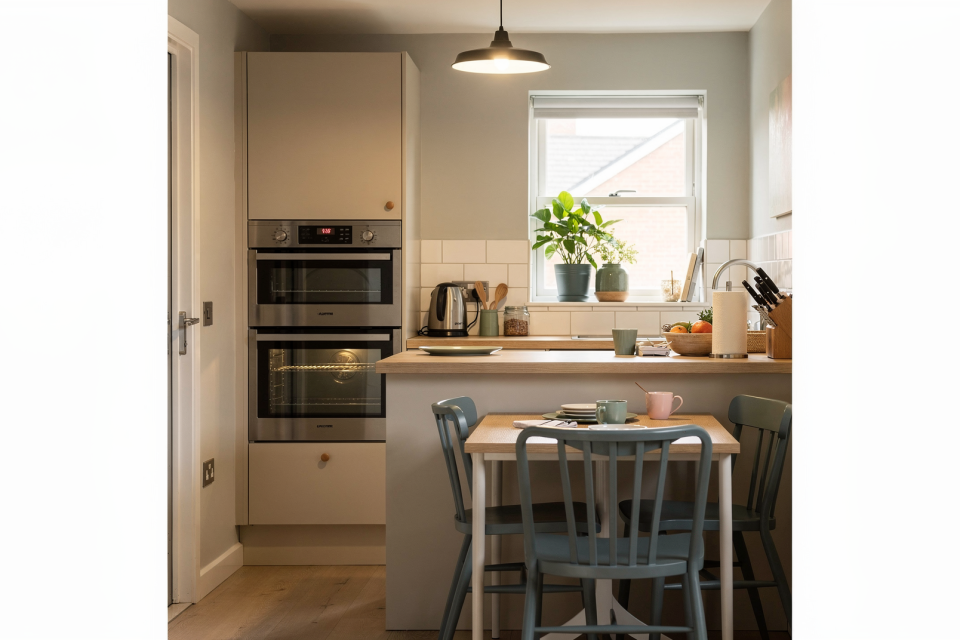
How to organise pantry staples in a small UK kitchen
In a compact flat or galley kitchen—the kind where you can stir a pot and open the fridge at the same time without moving—organisation matters as much as the shopping list. If you can’t see what you have, you won’t use it, and you’ll buy duplicates.
A simple system that works
- group ingredients by use, not by brand (all baking bits together, all tinned proteins together)
- keep cooking oils near the hob, but not so close they get hot and degrade
- store grains and pulses in clear containers if space allows—it’s easier to spot when the rice is running low
- put the most used items at eye level (for me, that’s tinned tomatoes, pasta, and the salt jar)
- keep duplicates out of the front row so they do not get forgotten; stash backup tins behind or in a separate spot until you open the primary one
Best containers to use
You do not need an Instagram pantry. Useful containers are whatever works with the space you have and stops food spoiling early.
- airtight jars for flour, oats, and rice (stops moisture and pantry moths)
- labelled tubs for opened packets—even old takeaway containers with a masking tape label are brilliant
- baskets for snacks and backup tins; a simple Sainsbury’s bag tucked on a shelf works nearly as well
- a small box for spice sachets or mixes, so they don’t skitter around behind the tea towels
A seasonal mindset still matters
Even a strong pantry works best when paired with fresh British produce. In practice, pantry staples should support what is in season, not replace it. When I see a bunch of spring greens at the greengrocer for 70p, my cupboard helps me turn them into a meal in minutes.
Examples:
- spring greens with garlic, pasta, and lemon
- summer courgettes with chickpeas and tomato
- autumn squash with lentils and curry spices
- winter carrots with onions, stock, and beans
That approach keeps cooking cheaper, simpler, and less repetitive. You’re not just eating from tins; you’re using tins to stretch and complement what’s good right now.
7-day check of your pantry
Use this quick audit to see whether your cupboard is actually working for you. I like to do this on a Sunday evening while the kettle boils, scanning the shelves before I write the week’s food list.
- Can you make at least three meals without shopping?
- Do you have one protein option on the shelf? (beans, lentils, peanut butter, or even a tin of tuna)
- Are there at least two flavour boosters? (soy sauce, mustard, vinegar, spices, etc.)
- Do you have one quick carb, such as pasta or rice?
- Do you keep stock or a similar base ingredient?
- Can you make soup, pasta, or a rice dish from what you already own?
- Are any items duplicated, forgotten, or expired? (be ruthless—if the date is 2021, it’s time to go)
If you answered no to more than two of those, it’s probably a good week to top up a few staples and do a gentle clear-out.
Example pantry combinations for common meals
Here’s a handful of real-life meals I make repeatedly with the storecupboard—the kind of things that come together when you’re tired and hungry and just need something that works.
| Meal idea | Pantry staples used |
|---|---|
| Tomato pasta | pasta, tinned tomatoes, onion, garlic, olive oil, oregano |
| Lentil soup | lentils, stock, onion, garlic, carrots, thyme |
| Chickpea curry | chickpeas, coconut milk, curry powder, tomatoes, rice |
| Fried rice | rice, soy sauce, frozen vegetables, garlic, oil |
| Bean chilli | kidney beans, tomatoes, onion, cumin, paprika |
FAQ
What are the most important pantry staples for beginners?
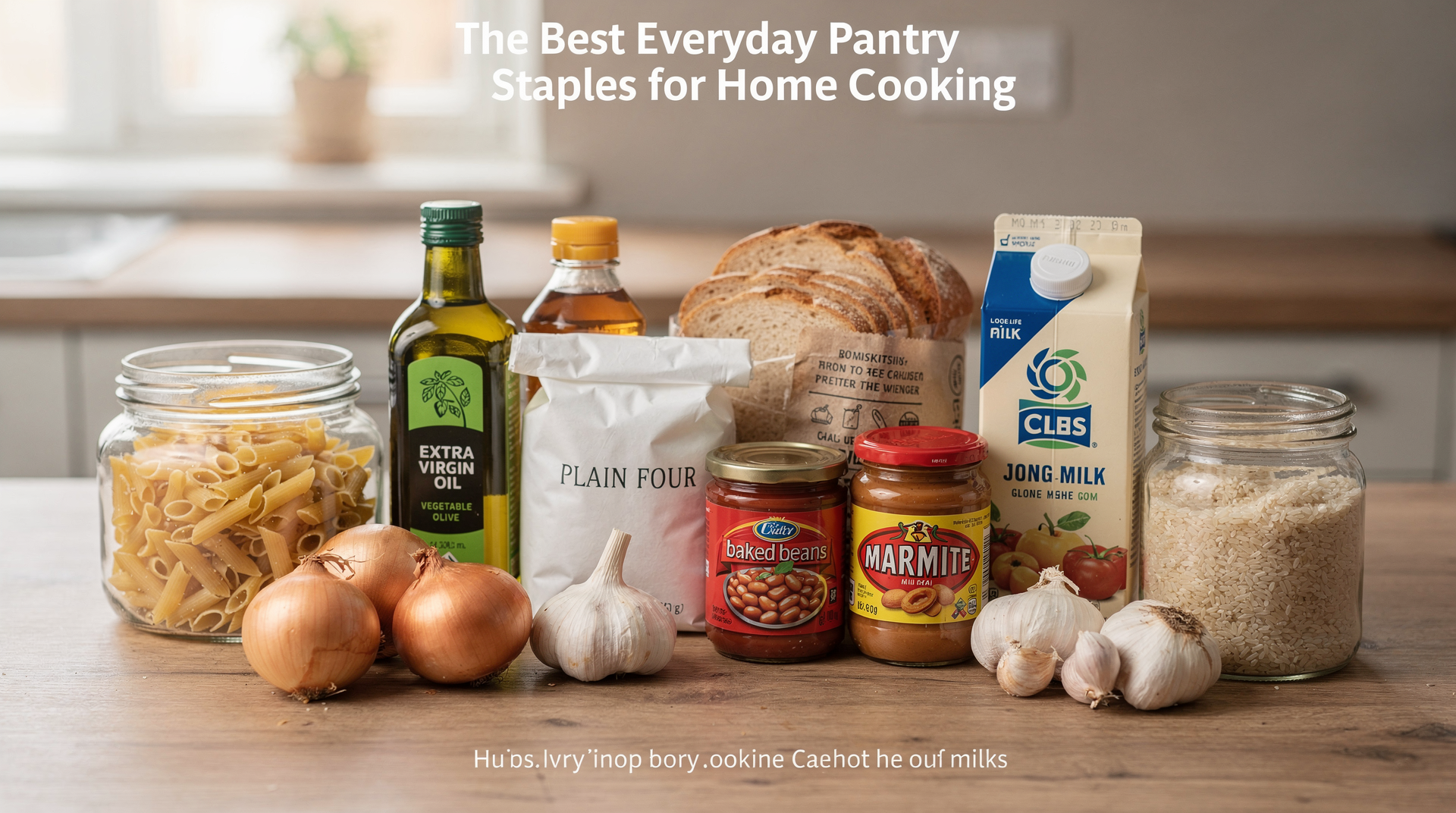
Start with salt, pepper, oil, onions, garlic, tinned tomatoes, stock cubes, pasta, rice, and a few tins of beans or lentils. Those ingredients cover the widest range of simple meals. I’ve helped friends set up their first kitchens from scratch, and that exact list gets them cooking properly within a week.
How many pantry staples do I really need?
You do not need a huge cupboard. A focused set of 15–25 reliable ingredients is enough for most everyday home cooking if you also buy fresh produce regularly. The starter list in this article hits that sweet spot. The aim is flexibility, not to replicate a corner shop.
What are the best budget pantry staples in the UK?
Beans, lentils, oats, rice, pasta, tinned tomatoes, flour, and stock cubes usually offer the best value because they stretch across multiple meals. I regularly pick up own-brand tins and bags at Lidl or Aldi for pennies per portion, and they’re just as good as pricier versions for everyday cooking.
Which pantry items go off the fastest?
Ground spices, flour, oils, baking powder, and opened sauces lose quality sooner than dried pasta or canned beans. Check them regularly and avoid overbuying. A sniff test is surprisingly reliable: if the cumin smells more like dust than the warm, earthy scent you remember, it’s time for a fresh jar.
Should I keep both fresh and dried versions of the same ingredient?
Sometimes yes. Fresh garlic, onions, and herbs are useful when you cook often, while dried or jarred backups help when you run low or need speed. I keep a bulb of garlic on the counter and a jar of paste in the fridge for those evenings when I simply cannot be bothered to peel and chop.
How do I stop pantry waste?
Plan meals around what you already own, store items clearly, use older ingredients first (just line up newer tins behind older ones), and avoid buying specialist products for a single recipe unless you know you will use the rest soon. A quick scan before you write the shopping list can save money and cupboard space. If an ingredient has been there months and you still haven’t touched it, either find a recipe to use it or quietly accept it isn’t for you.