You’re staring into the fridge at 5pm on a rainy Tuesday. The Sainsbury’s receipt is still crumpled in your hand, and the only question that matters is: what’s for tea? You don’t need a glossy magazine recipe with ingredients you’ll only find in some posh deli, or a prep time that clashes with the Northern Line at rush hour. You need a proper meal that slots into your actual schedule, your actual budget, and your actual appetite.
This is the daily reality of home cooking in the UK. Caught between the cost-of-living squeeze, tighter-than-a-teabag kitchens in London and Manchester flats, and the sheer tiredness of the work-life grind, the real basics often get lost. We forget that better everyday meals don’t come from a fancy stand mixer or a spice rack that includes sumac. They come from nailing the fundamentals: knowing your British seasonal veg, getting your kitchen organised enough to find the colander, and building a toolkit of trusty techniques that work even when you’re running on fumes.
This guide isn’t about turning you into a chef. It’s about turning you into a confident home cook who can take a bag of Tesco carrots and a few store-cupboard bits and turn out a meal that feeds the family, wastes less, and actually makes the evening feel a bit nicer. We’ll walk through the whole journey—from the early stage of picking the right seasonal produce, right through to the advanced game of meal prepping so your Wednesday self doesn’t reach for a takeaway. You’ll learn where to start, what to focus on next, and how to dodge the pitfalls that creep in when you try to do too much at once.
Whether you’re a total beginner who just wants to boil a potato without it turning to mush, or a more seasoned cook who wants to streamline your Sunday batch-cooking routine, this is the backbone of home cooking basics for better everyday meals. Let’s get your kitchen working for you, not against you.
Phase 1: Mastering Seasonal and Local British Ingredients
The bedrock of any decent home-cooked meal is the ingredient itself. Here in the UK, we’re actually lucky: we’ve got a brilliant tradition of seasonal produce that’s often cheaper, fresher, and far more flavourful than anything flown in from halfway across the world. But I still catch myself—and plenty of other home cooks—reaching for the same bag of salad leaves and the same broccoli all year round, missing out on the sheer variety and value that comes with shopping by the season.
Why Seasonal Matters for Your Budget and Flavour
When you buy produce that’s in season, you’re buying it at its absolute peak. That’s the moment it’s grown naturally, not forced in a heated polytunnel. The difference is night and day.
- Better Flavour: A carrot pulled in autumn tastes properly sweet and earthy, not like the watery ones that appear in February. A British strawberry in June needs nothing more than a splash of cream; the January import tastes of wet cotton wool.
- Lower Cost: Abundance pushes prices down. You’ll often spot “seasonal specials” at Tesco, Sainsbury’s, Lidl, or your local greengrocer—think £0.50 for a bag of wonky parsnips, or a punnet of homegrown plums for half the price of imported ones.
- Reduced Waste: Seasonal stuff tends to come with less packaging and it’s hardier, so it hangs about in your veg drawer for longer without going limp. Less slimy lettuce, more actual meals.
The British Seasonal Calendar: What to Buy When
To really make the switch, you need a mental map of what’s about when. Don’t worry about memorising it all at once—just stick this on the fridge and glance at it. Here’s a practical UK seasonal calendar that will see you through the year.
| Season | Months | Key Vegetables | Key Fruits | Meal Ideas |
|---|---|---|---|---|
| Spring | Mar – May | Leeks, Asparagus, Spring Greens, New Potatoes, Radishes | Rhubarb, Strawberries (late) | Creamy leek and potato soup, asparagus risotto, rhubarb crumble |
| Summer | Jun – Aug | Tomatoes, Courgettes, Peas, Broad Beans, Beetroot | Berries, Cherries, Apples (early) | Heirloom tomato salad, pea and mint pasta, courgette fritters |
| Autumn | Sep – Nov | Mushrooms, Brussels Sprouts, Carrots, Parsnips, Kale | Plums, Blackberries, Apples | Roasted root vegetable medley, mushroom risotto, apple and blackberry pie |
| Winter | Dec – Feb | Cabbage, Swede, Leeks, Onions, Potatoes | Oranges, Pears | Winter cabbage stew, swede mash, hearty onion and potato soup |
How to Source Locally Without the Hassle
You don’t need a cottage in the Cotswolds to get your hands on local produce. The UK is threaded with easy ways to buy British, even in the middle of a city.
- Farmers’ Markets: From Bristol to Edinburgh, there are weekly markets stuffed with stalls. You get to chat to the people who actually grew your veg, which means you can pick up tips on cooking it, too. I always come away with a few unexpected varieties and a better mood.
- Supermarket “Local” Sections: Virtually all the big chains—Tesco, Sainsbury’s, Asda—now have dedicated “Local” or “British” shelves. Look for the red and white label; it’s the closest thing to a guarantee that your money stays closer to home.
- Box Schemes: A lot of households I know swear by vegetable box deliveries like Riverford or Abel & Cole. A box turns up on your doorstep with a week’s worth of seasonal produce, often with recipe cards tucked inside. It takes the decision-making out of the shop, which on a busy week is a gift.
- Greengrocers: Don’t walk past the independent greengrocer in favour of the big supermarket. They often have better quality root veg and leafy greens, and they’re far more likely to sell you exactly the amount you need instead of a multipack wrapped in plastic.
Common Mistakes and How to Avoid Them
- Mistake 1: Buying “Off-Season” Imports.
Why it happens: You spot strawberries in January and think you deserve a treat.
The Fix: Wait. In the UK, strawberries are a summer fruit. In the middle of winter, reach for forced rhubarb, or raid the freezer aisle for frozen berries—they’re picked at their peak and often cheaper. - Mistake 2: Ignoring “Ugly” Produce.
Why it happens: You want perfectly straight carrots for your Instagram-worthy roast.
The Fix: Buy the wonky ones. They taste exactly the same and can be 30% cheaper. Whack them in a soup or stew where nobody’s judging aesthetics. - Mistake 3: Over-Prepping.
Why it happens: You see a massive bag of spinach on offer and think you’ll use it all.
The Fix: Buy smaller amounts of good-quality leaves. If you do end up with a mountain, wilt it down and freeze it in a block—perfect for throwing into a curry later. Otherwise, it’ll just turn to slime at the bottom of the fridge.
Phase 2: Cost-of-Living and Everyday Kitchen Practicality
Once you’ve got the ingredients in, the next hurdle is the cost-of-living crisis that’s pinching every household. Cooking at home remains one of the best ways to keep your spending down, but it does need a shift in how you think: away from “buying convenience” and towards “squeezing the value out of everything”. This bit is all about planning your meals around a tight budget, using less energy to cook them, and cutting the waste that drains your purse.
The Budget Meal Plan: A Step-by-Step Approach
Planning your meals for the week is the single most powerful habit for saving money. It sidesteps that 5pm panic where you end up ordering a takeaway or grabbing an overpriced ready meal. Here’s how I do it.
Step 1: Check Your Fridge and Freezer
Before you write a shopping list, open everything up and take stock. That half-head of celery, the last two eggs, the bag of frozen peas—they’re the starting point. Using them up is the first and easiest step to cutting waste.
Step 2: Build a “Base” Menu
Build your week around cheap, versatile staples. In UK kitchens, the holy trinity of cheap eats is:
- Potatoes: The ultimate cheap staple. Roast them, mash them, boil them, fry them. A bag of Maris Pipers goes a long way.
- Pasta: Buy it in bulk when it’s on offer. It’s filling, keeps for ages, and plays nicely with almost anything.
- Rice: A great base for curries or a quick stir-fry using whatever veg is left.
- Canned Tomatoes: The backbone of soups, stews, and pasta sauces. Stock up when they’re four for a quid.
- Eggs: Cheap protein and endlessly versatile. Even a simple fried egg on top of a bowl of rice and veg feels like a proper meal.
Step 3: Shop the “Seasonal Specials”
When you’re in the supermarket, keep your eyes on the yellow reduced stickers and the seasonal offers. If a bag of carrots is down to £0.50, grab it and plan a meal around it that very week. The same goes for meat that’s marked down—pop it straight in the freezer if you won’t use it that day.
Step 4: Batch Cook and Freeze
Cooking once for multiple meals saves a surprising amount of money and time. Make a big pot of lentil soup, a tray of pasta bake, or a vat of chicken curry. Freeze half in portions. On a night when you can’t face the hob, you’ve got a cheap, homemade meal ready to reheat.
Energy-Saving Cooking Methods
With energy prices what they are, a few small tweaks in the kitchen can genuinely trim your bills.
- Use the Oven Efficiently: Stop opening the oven door to peek—every time you do, you let out a blast of heat and add minutes to the cooking time. If you’re roasting a chicken, throw potatoes and carrots onto the same tray so you’re not heating up a second oven. Turn the oven off 10 minutes before the end; the residual heat will finish the job.
- Boil Less Water: Only fill the kettle or the saucepan with the water you actually need. Boiling a full kettle for one cup of tea is a needless energy drain. And always pop a lid on the pot—it traps the heat and brings things to the boil faster.
- Switch to Induction or Gas (If Possible): If you’re ever in a position to upgrade your hob, induction is far more energy-efficient than traditional electric. In many parts of the UK, gas can be cheaper than electricity for cooking too, but check your specific tariff.
- Steam Instead of Boil: Steaming vegetables uses far less water and less energy than boiling a full pan. It also hangs on to more of the nutrients, so your greens stay properly green.
Reducing Food Waste: The “Zero Waste” Kitchen
Food waste is a massive drain on your wallet. UK households chuck away millions of tonnes of food every year—much of it perfectly edible. Here’s how to put a stop to it in your own kitchen.
- Understand “Use By” vs. “Best Before”:
Use By is about safety. Don’t mess with it—this applies to meat, dairy, and fish. Best Before is about quality. The food is still safe after this date; the flavour or texture might just be a tiny bit less perfect. Pasta, canned goods, and even some dairy can go beyond the date if they smell and look fine. - The “Fridge First” Rule: Always eat the food that’s closest to its expiry date first. Shove newer items behind the older ones so you see what needs using up.
- Repurpose Leftovers:
- Stale Bread: Blitz it into breadcrumbs, fry into croutons, or make a quick bread sauce. It’s too good to bin.
- Vegetable Scraps: Keep a bag in the freezer and toss in onion skins, carrot ends, celery leaves. When the bag’s full, simmer the lot with water for an hour to make a deeply savoury vegetable stock.
- Overripe Fruit: Whizz into a smoothie, bake into a crumble, or cook down into a fruit compote for your morning porridge.
- Store Food Correctly: Potatoes belong in a dark, cool place—never the fridge, or they turn sweet and grainy. Keep herbs in a glass of water on the worktop, like a bunch of flowers. And wrap lettuce in a damp paper towel before putting it back in the fridge; it’ll stay crisp for days longer.
Practical Example: The £5 Weeknight Meal
Let’s ground this in a real meal. Here’s a plan for a family of four that rings up at under a fiver, using stuff you can get in any supermarket.
- Base: 1kg of potatoes (£0.60) + 500g of pasta (£0.50)
- Protein: 4 eggs (£0.80) + 1 can of chickpeas (£0.40)
- Vegetables: 1 bag of carrots (£0.40) + 1 bag of frozen spinach (£0.50)
- Sauce: 1 can of tomatoes (£0.40) + 1 onion (£0.20) + 1 clove of garlic (£0.10)
- Total: £3.90
The Meal: Roasted potato and chickpea curry with a side of spinach and eggs.
- Prep: Chop the potatoes and carrots. Boil the eggs. Sauté the onion and garlic, add the tomatoes and chickpeas, and let it all simmer.
- Cook: Roast the potatoes and carrots in the oven while you boil the pasta.
- Serve: Spoon the curry over the pasta, pile the roasted veg alongside, and top with a fried egg.
This is hearty, genuinely cheap, and uses seasonal heroes like potatoes and carrots. It’s the sort of meal that will fill everyone up without emptying your bank account.
Phase 3: Kitchen Organisation and Home Cook Skill-Building
A cluttered kitchen is a stressed kitchen. And if you’re in a typical UK flat—especially in London where the kitchen is basically a corridor—organisation isn’t just about looking tidy. It’s about being able to actually move. This section looks at setting up your space with the right tools, organising it so you’re not running around, and building the core skills that take you from tentative to properly confident.
The Essential Toolkit for a Small British Kitchen
You absolutely don’t need a 50-piece knife block or a sous-vide gadget you’ll use once. A few high-quality, versatile bits of kit will do the heavy lifting.
| Tool | Why It’s Essential | Budget Tip |
|---|---|---|
| Sharp Chef’s Knife (20cm) | Chops, slices, and dices everything. A blunt knife is dangerous and frustrating. | One decent mid-range knife beats a cheap set. Look in TK Maxx or a proper kitchen shop. |
| Large Frying Pan (28cm) | Sauté, fry, and make sauces. A non-stick is a lifesaver for eggs; stainless steel for searing. | A supermarket own-brand non-stick pan does the job well enough and can be replaced without tears. |
| Deep Saucepan (24cm) | Boils pasta, makes soup, cooks rice. The workhorse of the hob. | Make sure the lid fits tightly—that’s the mark of a good pan. |
| Roasting Tray | Roasts veg, meat, and makes one-pot meals. | A simple metal tray from the supermarket—nothing fancy needed. |
| Wooden Spoons & Tongs | Stirring and flipping without scratching your pans. | Wooden is cheap, durable, and won’t melt if you leave it resting on the pot edge. |
| Measuring Jug & Spoons | Gives you accuracy, particularly for baking where ratios matter. | A plastic measuring jug from any homewares aisle is light and easy to clean. |
| Vegetable Peeler | Removes skins cleanly and quickly. Saves far more time than you think. | A standard metal peeler with a comfy handle will last years. |
| Colander | Drains pasta and washes veg. | Plastic or metal—whatever fits in your cupboard. |
Kitchen Organisation: The “Zone” System
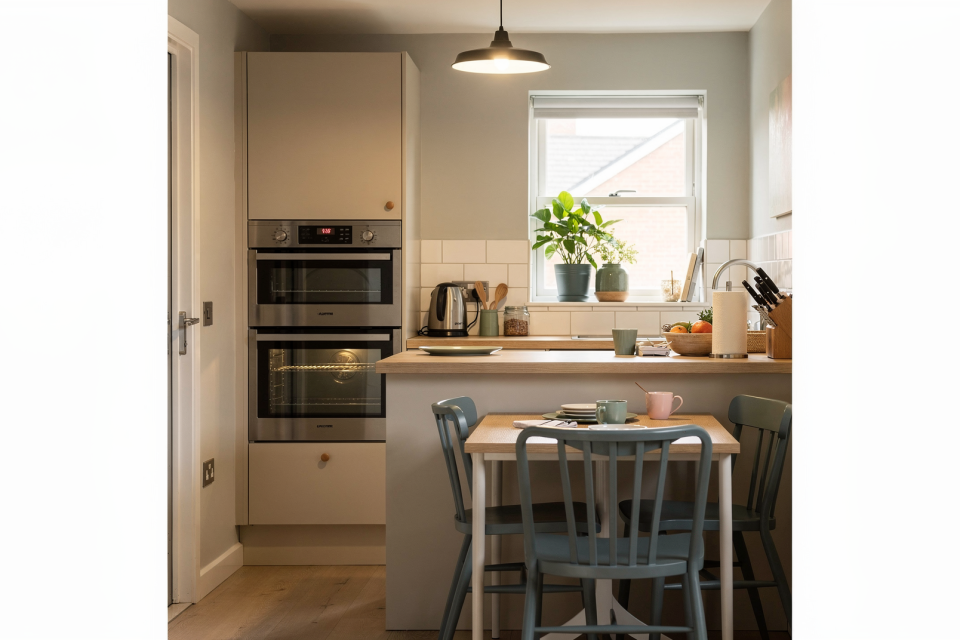
To stop yourself dancing around the kitchen like you’re at a ceilidh, divide the space into zones based on what you actually do there. Even in a tiny galley kitchen, this works.
- Prep Zone: Near the sink and your main chopping board. Where you wash and chop vegetables.
- Cook Zone: Near the hob and oven. Where pans, oil, and spices live.
- Storage Zone: Near the fridge, freezer, and cupboards. Where ingredients are kept.
- Clean Zone: Near the dishwasher or drainer. The washing-up spot.
How to Implement: Keep your chopping board and knives close to the sink (Prep Zone). Pans and cooking oils sit right near the hob (Cook Zone). Spices and dry ingredients go in a cupboard or rack within arm’s reach of the cooker (Cook Zone). The fridge and freezer should be positioned so you can swing from the prep area to grab an onion without trekking across the room.
Foundational Cooking Techniques: The Skills You Need
Get these five techniques under your belt and you can tackle almost anything.
1. The Perfect Boil (Potatoes, Pasta, Rice)
- Potatoes: Always start in cold water. Add plenty of salt. Bring to the boil, then simmer until a knife slides in without resistance. Overcooked spuds disintegrate into the water, and nobody wants that.
- Pasta: Use the biggest pot you have, water as salty as the sea, and stir once in a while. Cook until “al dente”—tender but still with a bit of chew.
- Rice: Stick to the ratio: 1 part rice to 2 parts water. Bring to a boil, then cover and leave on the lowest possible heat. Don’t lift the lid, don’t stir. Just wait.
2. The Perfect Sauté (Vegetables, Meat)
- Heat the pan first, then add the oil.
- Add your ingredients but don’t crowd the pan—if everything is piled on top of itself, it’ll steam instead of fry.
- Cook until browned and tender.
- Tip: Harder veg like carrots go in first; softer things like spinach or courgettes go in later.
3. The Perfect Roast (Vegetables, Meat)
- Preheat your oven to 200°C (400°F).
- Cut your veg into even-sized chunks so they cook at the same rate.
- Toss in oil, salt, and pepper. Spread them out in a single layer—no overlapping.
- Roast until golden and tender.
- Tip: For meat, let it rest for a good 10 minutes after roasting. This keeps the juices in the meat instead of on the chopping board.
4. The Perfect Sauce (Tomato, Cheese, Butter)
- Tomato Sauce: Soften an onion and some garlic gently, tip in a can of tomatoes, and let it blip away for 20 minutes. A pinch of sugar helps if it’s too sharp.
- Cheese Sauce: Melt butter, stir in flour and cook for a minute, then whisk in milk gradually until smooth. Add cheese off the heat and stir until melted.
- Butter Sauce: Melt butter, squeeze in lemon juice and chopped fresh herbs. Serve straight away—it’s delicate.
5. The Perfect Stock (Vegetable, Chicken)
- Vegetable Stock: Use those saved freezer scraps. Cover with water, simmer for an hour, then strain. It costs pennies.
- Chicken Stock: Use the carcass and any skin. Simmer with an onion, a carrot, and a bay leaf for a couple of hours. Strain and refrigerate; the fat will harden on top and can be scooped off.
- Tip: Freeze stock in ice cube trays. One cube is roughly a tablespoon and perfect when you need just a splash.
Common Mistakes in Skill-Building
- Mistake 1: Not Prepping Enough.
Why: You fire up the hob then realise you’ve not peeled the garlic.
Fix: Embrace “mise en place”. Chop, measure, and arrange everything before the heat goes on. It takes the panic right out of cooking. - Mistake 2: Overcrowding the Pan.
Why: You tip in too much food at once.
Fix: Cook in batches. If the pan is too full, the temperature drops and everything steams into a soggy mess instead of getting that lovely golden colour. - Mistake 3: Not Seasoning.
Why: You forget the salt and pepper and wonder why it tastes flat.
Fix: Season at every stage. A pinch of salt in the pasta water, a pinch on the veg as it fries, a final check of the sauce—you build flavour instead of just scattering some on top at the end.
Phase 4: UK Lifestyle and Culinary Routine
As you get the basics down, the next step is weaving cooking into the reality of a busy UK week. We’re talking long working hours, a draining commute, and the need for a plan that means you’re not spending every evening chained to the hob. This section is about meal prepping, feeding a family without losing your mind, and decoding what’s actually on the supermarket shelves.
Meal Prepping for the Working Week
The average UK work week is long, and if you’re commuting on top of that, the last thing you want is to start peeling potatoes at 7pm. Meal prep is the answer.
The “Sunday Prep” Strategy:
- Choose 3-4 Meals: Pick things that reheat well and don’t turn to sludge in the fridge.
- Cook in Bulk: Make a large batch of each—a pot of curry, a tray of pasta bake, a big soup.
- Portion and Store: Divide into individual containers. Glass ones with clip-on lids are brilliant, but resealable bags work too.
- Label and Date: A bit of masking tape and a marker pen will stop you playing “what’s that?” three weeks later.
- Reheat: Grab a portion the night before or on your way out the door. A quick blast in the microwave or a gentle reheat in a pan and you’re sorted.
Best Meals for Prepping:
- Curries: Lentil curry, chicken curry, or a root veg curry all taste even better the next day.
- Pasta: Bolognese, lasagne, or a baked pasta with roasted vegetables hold up well.
- Soups: Lentil, chunky vegetable, or chicken soup—freeze them flat in bags to save space.
- Stews: A good beef stew or a chicken and vegetable stew is hearty and reheats like a dream.
Family-Friendly Batch Cooking
Cooking for a family means juggling different tastes and making sure nobody pushes their plate away. A few ground rules help.
The “One-Pot” Rule: Stick to meals you can make in one pot or tray. It slashes the washing-up and keeps things simple. Think one-pot pasta, one-pot curry, or a tray of roasted sausages with veg.
The “Customise” Rule: Make a plain base and let everyone add their own toppings. A big pot of pasta with a simple tomato sauce can be customised with grated cheese for the little ones, fresh herbs for the adults, and maybe a sprinkle of chilli flakes for anyone who likes a kick.
The “Freezer” Rule: Always, always have a backup frozen meal ready. On a night when you’re too shattered to even boil water, a homemade frozen lasagne or a tub of soup is a lifesaver. It stops you reaching for the takeaway menu.
Understanding UK Supermarket Ingredients
Supermarkets are a labyrinth of labels and brands. Knowing what to look for makes you a smarter shopper.
1. The “British” Label: That red and white label means the produce was grown here. It’s often fresher, cheaper, and has done fewer food miles. I always check it on meat, dairy, and veg.
2. The “Value” Range: Tesco, Sainsbury’s, Asda—they all have entry-level value ranges. Often the product inside is near-identical to the pricier version. Tinned tomatoes, plain rice, dried pasta, and basic veg are good candidates.
3. The “Ready-to-Eat” Range: Pre-washed salads, pre-chopped onions, ready meals. They save time, but the markup can be huge. Use them sparingly—maybe for a busy week when you just can’t face the chopping board, but not as your default.
4. The “Seasonal” Range: Supermarkets often flag seasonal produce with special displays or offers. Take advantage. Those plums or blackberries that are in season will be bursting with flavour and much cheaper than anything flown in.
Practical Example: The “Work Week” Meal Plan
Here’s a realistic plan that gets you through the working week without a daily panic.
- Monday: Roasted chicken with potatoes and carrots
- Tuesday: Lentil curry with rice
- Wednesday: Pasta Bolognese with roasted vegetables
- Thursday: Chicken soup with bread
- Friday: Fish and chips (homemade)
Prep Strategy: On Sunday, roast the chicken, cook the curry, make the Bolognese, and get the soup simmering. Monday you eat the chicken. Tuesday the curry. Wednesday the Bolognese. Thursday the soup. Friday you treat yourself to a fresh fish and chips—baked or shallow-fried to keep costs down. You’ve only had to properly cook on Sunday and Friday; the rest is reheating.
Phase 5: Community and Everyday Inspiration
Cooking isn’t just a chore. It can be a source of proper joy, connection, and inspiration. This last section is about finding your people, picking up new ideas from real kitchens, and remembering why we do this in the first place.
The “Real Families Cooked Tonight” Feature
Some of the best inspiration comes from ordinary people in ordinary kitchens—not from a stylist’s set. Seeing what someone else threw together after the school run or between meetings can spark your own ideas.
How to Start: Post a photo of your meal on social media with the hashtag #RealFamiliesCookedTonight. Take a scroll through the tag. You’ll spot clever shortcuts, new ways with leftovers, and the reassurance that everyone’s kitchen looks a bit chaotic at 6pm. Borrow the ideas that speak to you.
Weekly Home Cook Challenges
A gentle challenge can push your skills without feeling like homework. Keep it straightforward: “cook a meal with only 5 ingredients,” or “make something entirely from seasonal produce.”
How to Start: Pick a theme—British classics, budget meals, meat-free Monday. Rope a friend or your family into joining in. Share the results. It’s surprising how a small constraint gets the creative juices flowing.
Seasonal Produce Spotlights
Seasonal produce is the heartbeat of British cooking. Each season, shine a little spotlight on one ingredient and let it lead the week.
How to Start: Pick something that’s peaking right now—asparagus in spring, mushrooms in autumn. Hunt down two or three recipes, cook them, and share the results. It’s a low-effort way to discover flavours you might have overlooked.
The “Everyday Cooking Chronicle” Spirit
The whole point of Everyday Cooking Chronicle is to be that reassuring voice in your kitchen. It’s about helping you cook just a little better, waste a little less, and genuinely look forward to feeding yourself and the people you live with.
Key Principles:
- Real Schedules: Meals that slide into the cracks of a busy day, not ones that demand your full attention for two hours.
- Real Budgets: Recipes built around what’s actually affordable, with plenty of swaps for when you can’t find a particular ingredient.
- Real Appetites: Portions that fill you up and leave enough for lunch the next day.
- Real Joy: The quiet satisfaction of putting a homemade meal on the table, even if it’s just beans on toast with a poached egg.
Final Thoughts: The Journey of Home Cooking
Home cooking is a journey. It starts with getting to know the ingredients that grow around you and stretching a tight budget. It builds with getting your kitchen organised and picking up the techniques that let you cook without a recipe. It settles into the rhythm of your week, and eventually it connects you to a community of people who are doing exactly the same thing—just trying to put a decent meal on the table.
You don’t need to be a chef to cook better everyday meals. You just need to start with the basics, build your skills one dinner at a time, and let yourself enjoy the process. Whether you’re a complete beginner or a seasoned hand, the home cooking basics for better everyday meals are always right there, in your cupboards and in your common sense.
So the next time you’re staring into the fridge at 5pm on a rainy Tuesday, remember: you’ve got the tools, the skills, and the spark to make a meal that fits your real life. And that, truly, is the greatest joy of home cooking.
FAQ: Home Cooking Basics for Better Everyday Meals
Q: What is the most important home cooking basic for better everyday meals?
A: The most important basic is seasonal sourcing. When you buy produce at its peak, you get better flavour, lower prices, and far less waste. It’s the foundation that everything else builds on.
Q: How can I save money on my UK grocery bill without sacrificing flavour?
A: Focus on budget-friendly staples like potatoes, pasta, rice, and tinned tomatoes. Buy seasonal specials and reduced items at your supermarket. Plan your meals for the week and cook in bulk to save both time and cash.
Q: What are the essential tools for a small British kitchen?
A: A sharp chef’s knife, a large frying pan, a deep saucepan, a roasting tray, and a wooden spoon. These five bits of kit will handle almost every everyday cooking task you throw at them.
Q: How do I reduce food waste in my kitchen?
A: Learn the difference between “Use By” and “Best Before”. Use the “Fridge First” rule to eat things closest to expiry first. Repurpose leftovers—stale bread becomes croutons, overripe fruit becomes compote. And store food correctly so it stays fresh longer.
Q: What is the best way to meal prep for the working week?
A: The “Sunday Prep” strategy works a treat. Pick 3–4 meals, cook them in bulk, portion them into containers, label and date, and reheat as needed. Curries, pasta bakes, and soups all hold up beautifully.
Q: How can I find inspiration for my everyday meals?
A: Look for the “Real Families Cooked Tonight” hashtag on social media to see what ordinary people are cooking. Join in weekly home cook challenges. And celebrate seasonal produce by spotlighting one ingredient and building a few meals around it. Inspiration is everywhere—you just need to spot it.
Q: What is the difference between “British” and “Imported” produce?
A: “British” produce is grown here in the UK; it’s generally fresher, cheaper, and supports local growers. “Imported” produce comes from overseas and may have travelled for days, costing more and often tasting bland.
Q: How do I cook a perfect roast for a family meal?
A: Preheat your oven to 200°C. Cut your veg into even chunks, toss in oil, salt, and pepper, and spread in a single layer. Roast until golden and tender. For meat, let it rest for at least 10 minutes before carving so the juices stay locked in.
Q: What is the “Mise en Place” method?
A: It’s the practice of chopping, measuring, and preparing everything before you start cooking. It strips away the stress and makes the whole cooking process smoother and faster.
Q: How can I make cooking more enjoyable for my family?
A: Cook meals that are nutritious, filling, and actually appealing to the kids. Use the “One-Pot” rule to keep things simple and the “Customise” rule so everyone can add their own twist. Involve your family in the cooking when you can, and celebrate the small, everyday pleasure of putting food on the table together.