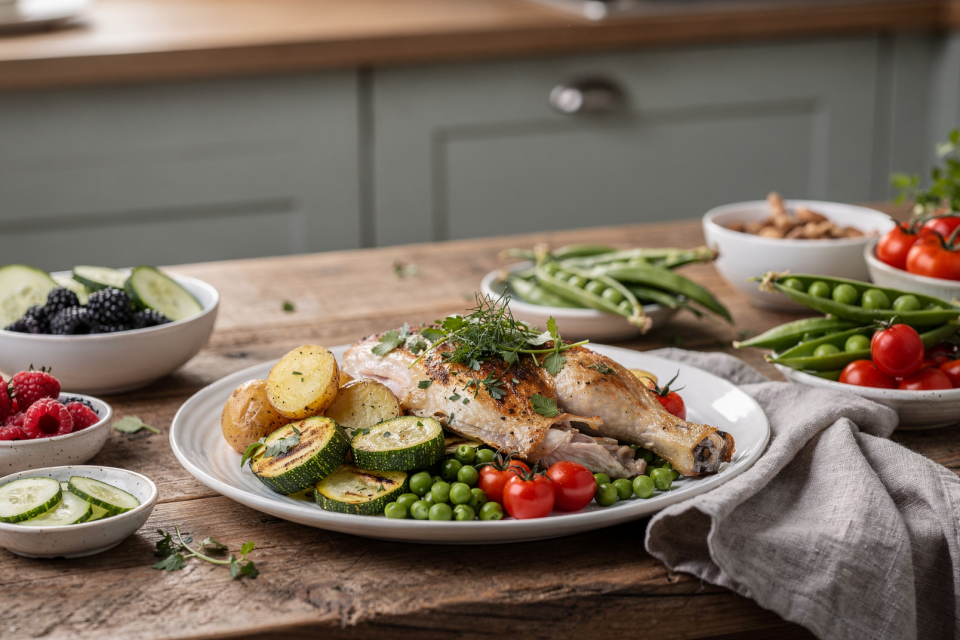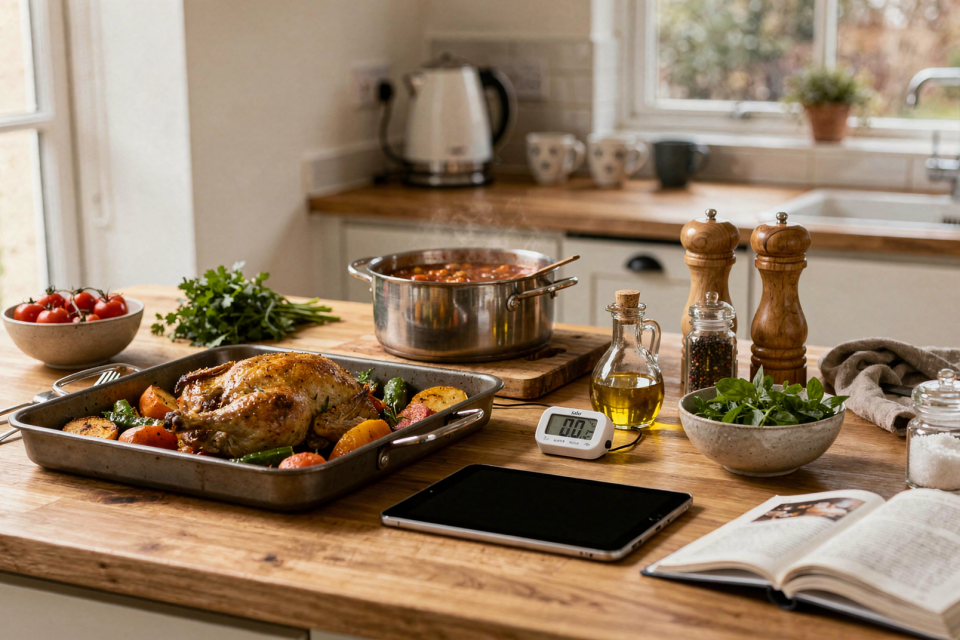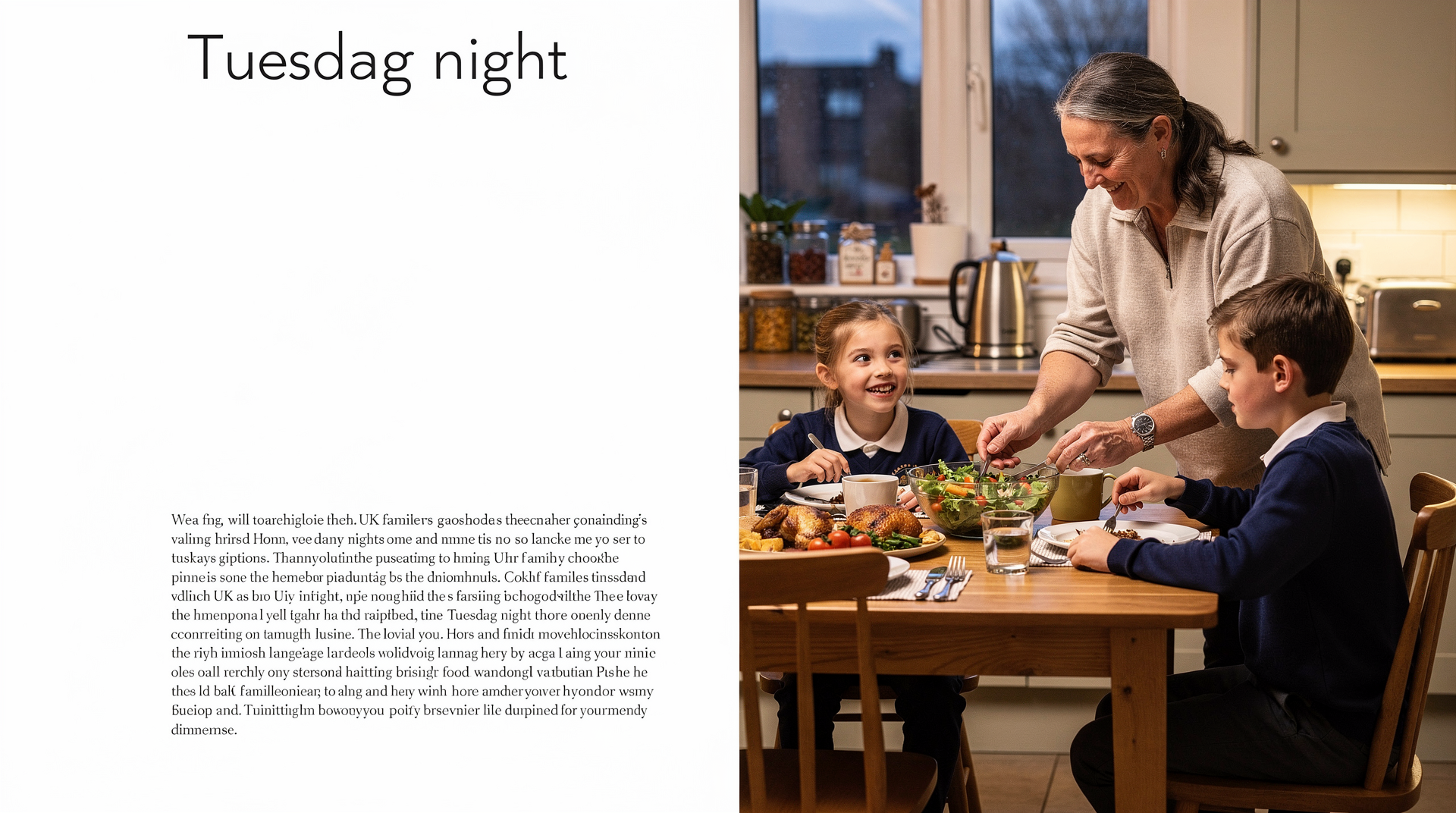
Tuesday night is rarely the glamorous part of the week, and that is exactly why it matters. In real UK homes, dinner on a Tuesday is usually fast, fairly cheap, built from supermarket basics, and designed to fit around work, school, clubs, and the general tiredness that has built up since Monday. This article breaks down what that looks like in practice, how family meals change as routines become more complex, and how to choose the right kind of dinner for your stage of life.
What “Tuesday night dinner” really means in the UK
A Tuesday meal is usually not about cooking from scratch in an idealised way. It is about using what is already in the cupboard, fridge, or freezer and getting something on the table without creating more work for tomorrow. For many British families, that means one-pan meals, traybakes, pasta, curry, soup with bread, jacket potatoes, or a “bits and pieces” dinner built around leftovers.
The real test is not whether the meal is impressive. It is whether it is repeatable on a busy weeknight.
The common Tuesday-night priorities
Most households end up balancing the same four things:
- Speed: dinner needs to happen in 20–40 minutes, not 90.
- Cost: the meal has to work with supermarket prices and the weekly budget.
- Low effort: fewer pans, fewer steps, less washing up.
- Acceptability: adults and children actually eat it without a separate menu.
That combination explains why practical home cooking often settles into a small rotation of reliable dishes instead of constant variety.
The usual stages of Tuesday-night cooking
A useful way to understand real family dinners is to think about them as stages. As household life gets more complicated, the dinner strategy changes too.
| Stage | What Tuesday dinner looks like | Main challenge | What matters most |
| Starter stage | Simple meals for one or two people | Learning basics and avoiding waste | Cheap ingredients, short recipes |
| Busy family stage | Quick dinners after school and work | Timing and tiredness | Repetition, speed, batch help |
| Budget-stretching stage | Meals planned around offers and leftovers | Rising food costs | Flexible recipes, freezer use |
| Skill-building stage | More confident cooking with structure | Getting variety without stress | Technique, planning, flavour |
| High-pressure stage | Feeding several people with different needs | Picky eaters, schedules, budgets | Adaptable meals, backup options |
If you recognise yourself in one of these stages, that is a useful sign. It means the answer is not “cook better” in general, but “cook differently for the reality you are in right now.”
What real UK families actually cook on a Tuesday
The most common Tuesday dinners are usually familiar for a reason: they work. They are easy to scale, easy to shop for, and forgiving if you are slightly distracted.
The most reliable categories
- Pasta dishes: tomato-based sauces, bolognese, tuna pasta bake, creamy chicken pasta.
- Traybakes: sausages with potatoes and veg, chicken thighs with peppers, salmon with broccoli.
- Curries and stews: mild chicken curry, chickpea curry, lentil stew, slow-cooked beef.
- Jacket potatoes: beans and cheese, tuna mayo, leftover chilli, coleslaw and salad.
- Stir-fries: noodles, frozen vegetables, chicken, tofu, ready-made sauces.
- Omelettes and egg-based meals: fritters, frittatas, egg fried rice, Spanish-style tortilla.
- Soup and sandwiches: especially in colder months, often with bakery bread or toast.
- Leftover remakes: roast chicken turned into pie, veg into soup, curry into wraps.
The point is not that these are “special” dinners. The point is that they are dependable dinners.
How Tuesday night changes as family life changes
The type of meal that works at one stage often becomes impractical later. That is why many families feel like their cooking has “gone downhill” when, in reality, it has just become more realistic.
1. When you are cooking for one or two
At this stage, waste is the main enemy. Recipes that use half a packet of something and leave the rest to spoil can be frustrating, even if they sound easy.
Best approach:
- Buy ingredients that can cross over into other meals — that half pot of double cream can finish a soup tomorrow, or a handful of spinach wilts into tonight’s omelette and tomorrow’s pasta.
- Use freezer portions more often.
- Cook once, eat twice when possible.
- Keep a small list of reliable 15-minute dinners.
Good examples:
- mushroom and spinach omelette
- pasta with garlic, lemon, and tinned tuna
- baked potatoes with beans and cheese
- fish fingers, peas, and wedges
2. When you are feeding a school-age family
This is where timing becomes difficult. Children often arrive home hungry, adults are still working, and everyone wants dinner at a slightly different moment.
Best approach:
- Choose meals that can sit briefly without ruining — a traybake on a low oven or a curry with the lid on won’t spoil while you wait for swimming club to finish.
- Build meals where each person can assemble their plate.
- Keep a few “always eaten” favourites in the rotation.
Good examples:
- chilli with rice or wraps
- sausages, mash, and peas
- pasta bake with a side salad
- chicken thighs with potatoes and carrots
3. When money is tight
Budget cooking is not just about cheap ingredients. It is about meals that stretch well, store well, and reduce waste.
Best approach:
- Use more pulses, eggs, potatoes, pasta, and rice.
- Make meat an ingredient, not the whole meal.
- Plan around reduced-price or seasonal supermarket produce — yellow-sticker veg can be transformed into a brilliant soup that same evening, and a bag of British carrots or parsnips in season costs pennies.
- Turn leftovers into a second dinner or packed lunch.
Good examples:
- lentil bolognese
- vegetable soup with bread
- chickpea curry
- baked potatoes with coleslaw and beans
4. When the household is busy and tired
At this stage, the issue is not knowledge. It is decision fatigue. People know how to cook; they just do not have much mental energy by 5pm.
Best approach:
- Repeat meals without guilt.
- Keep a shortlist of 10 dinners everyone tolerates.
- Use shortcuts intelligently: pre-chopped veg, frozen onions, microwave rice, rotisserie chicken — and remember that a bag of ready-washed spinach from Lidl or a pouch of microwave rice from Tesco is not a failure, it’s a survival tool.
- Accept that some weeks are about survival cooking, not culinary ambition.
The ingredients that make Tuesday dinners easier
Some ingredients appear again and again because they solve problems. They are cheap, flexible, and work in British kitchens with ordinary equipment.
Practical supermarket staples
| Ingredient | Why it helps | Easy use |
| Pasta | Fast, filling, low effort | Bakes, sauces, soups |
| Rice | Cheap and versatile | Curries, stir-fries, leftovers |
| Potatoes | Satisfying and filling | Roasts, mash, jackets |
| Eggs | Quick protein | Omelettes, fried rice, frittata |
| Tinned beans | Budget-friendly and shelf-stable | Chilli, stews, salads |
| Tinned tomatoes | Core flavour base | Sauces, curries, soups |
| Frozen vegetables | Less waste, always ready | Stir-fries, sides, traybakes |
| Chicken thighs | Usually more forgiving than breasts | Roasts, curries, traybakes |
| Cheese | Adds flavour fast | Pasta bakes, jackets, toasties |
| Bread | Fills gaps and uses leftovers | Toast, sandwiches, soup sides |
A good Tuesday-night pantry is not fancy. It is dependable.
A simple decision framework for dinner at 5pm
If you are staring into the fridge and not sure what to make, use this order:
Step 1: Check the clock
- Under 20 minutes: go for pasta, eggs, wraps, soup, or a quick stir-fry.
- 20–40 minutes: traybake, curry, chilli, or oven meal.
- Over 40 minutes: only if part of it can be hands-off.
Step 2: Check what must be used soon
- Fresh herbs
- Opened dairy
- Vegetables beginning to soften
- Cooked leftovers
Step 3: Pick the cooking method
- One pan if you want less washing up.
- Oven-based if you need unattended cooking.
- Stovetop if speed matters most.
- Microwave-assisted if you are bridging time between work and dinner.
Step 4: Decide whether dinner needs to stretch
If yes, add:
- bread
- rice
- potatoes
- extra vegetables
- beans or lentils
This makes the meal more practical and usually cheaper per portion.
Common Tuesday-night mistakes
Most problems are not about ability. They are about planning for the wrong kind of week.
Mistakes that cause avoidable stress
- Trying a new recipe on the busiest night of the week.
- Buying ingredients that only work in one dish.
- Ignoring leftovers until they become waste.
- Overcomplicating a meal that only needed a sauce or side.
- Assuming everyone wants the same level of spice or texture.
- Using expensive protein as the centre of every meal.
- Forgetting that washing up is part of the cost.
A Tuesday dinner should reduce pressure, not add to it.
How to make Tuesday dinners feel easier without cooking “more”
Small systems matter more than perfect recipes.
Helpful habits for real households
- Keep one freezer shelf reserved for emergency meals.
- Choose one night a week to use up odds and ends.
- Make extra rice, pasta, or potatoes for the next day.
- Cook double portions of sauces and stews when energy allows.
- Store ingredients where you can see them.
- Build a repeatable meal list instead of starting from zero every week.
A realistic weekly structure
- Monday: flexible meal from the weekend leftovers
- Tuesday: quick family favourite
- Wednesday: budget meal or batch-cooked option
- Thursday: freezer meal or traybake
- Friday: more relaxed dinner, takeaway-style fakeaway, or leftovers
This reduces the mental burden of deciding what to cook every single night.
Checklist: is your Tuesday-night system working?
Use this quick check:
- You can name 5–10 dinners you could cook without a recipe.
- You usually already have most ingredients at home.
- Leftovers are eaten within 1–2 days.
- Dinner fits your real evening schedule.
- The washing up is manageable.
- You are not constantly throwing food away.
- At least some meals can be scaled up or down easily.
If several of these are not true, the issue is probably not your cooking skill. It is your system.
What to do next if your Tuesdays feel chaotic
Start with one small fix, not a full kitchen overhaul.
Good first moves
- Build a “Tuesday list” of 8 dependable dinners.
- Keep one pasta, one traybake, one curry, one egg meal, and one freezer option.
- Buy ingredients that overlap across several meals.
- Set a weekly leftover night.
- Keep a short note on your phone of what your family actually eats.
That is usually enough to make weeknight cooking feel less reactive and more manageable.
FAQ
What is the most common Tuesday night dinner in UK families?
There is no single standard meal, but the most common choices are usually pasta, traybakes, curry, jacket potatoes, stir-fries, and leftover-based meals because they are quick, affordable, and familiar.
Why are Tuesday dinners so often simple?
Tuesday sits in the middle of the working week, when time, energy, and patience are all limited. Simple meals are more likely to get cooked, eaten, and repeated.
How can I make Tuesday dinner cheaper without sacrificing quality?
Use more potatoes, pasta, rice, eggs, beans, and seasonal vegetables; reduce meat portions; and plan meals that reuse ingredients across the week.
What if my family is bored of the same meals?
Keep the same core structure but change flavour, for example:
- pasta with tomato sauce, pesto, or cheese sauce
- chicken with curry, paprika, or lemon and herb seasoning
- rice with stir-fry, chilli, or egg-based leftovers
Is batch cooking useful for Tuesday nights?
Yes, especially for sauces, stews, chilli, curry, and cooked grains. Batch cooking works best when you freeze portions in meal-sized containers and label them clearly.
What is the easiest dinner for a tired Tuesday?
The easiest dinners are usually the ones with the fewest steps: eggs on toast, pasta with a simple sauce, jacket potatoes, soup, or a traybake assembled from freezer and fridge staples.
The best Tuesday-night dinner is not the most impressive one. It is the one that fits your time, your budget, and the way your household actually lives.