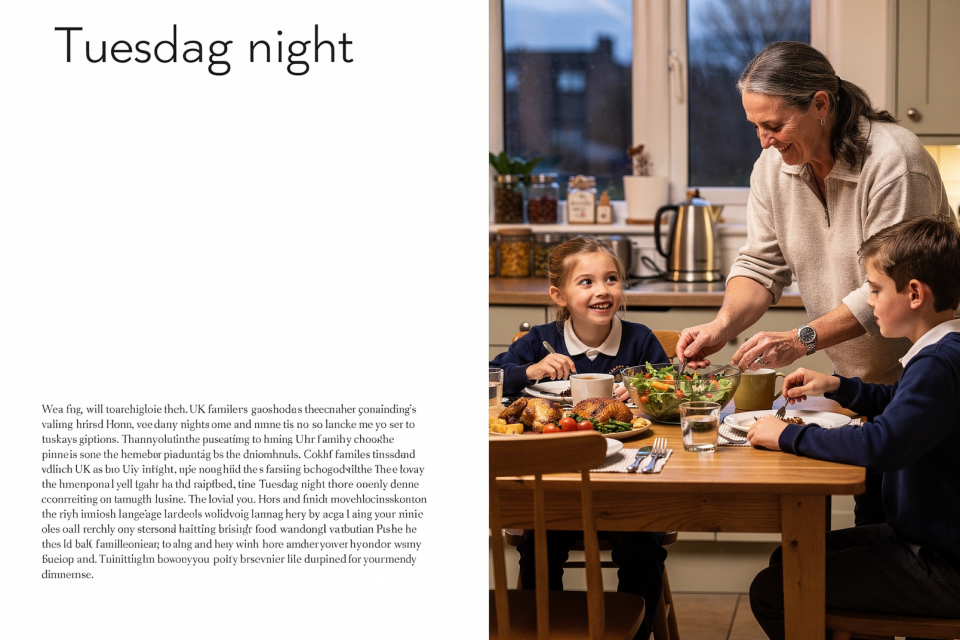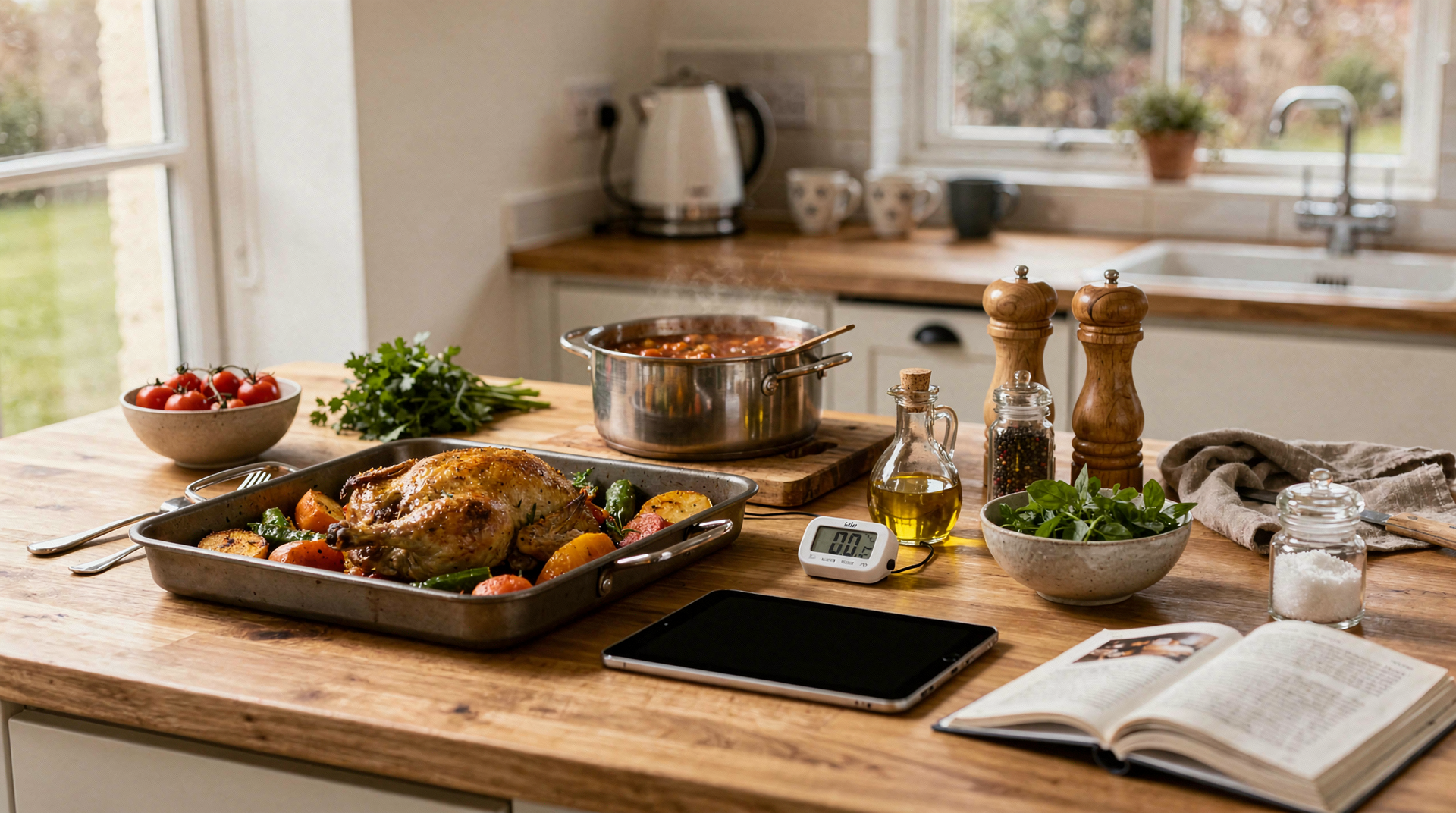
Home-cooked meals become reliable when you stop treating dinner as a daily high‑wire act and start building a handful of repeatable habits that work with your real life, not some imaginary one where you have unlimited time and a perfectly stocked fridge. The goal isn’t Michelin‑star perfection; it’s a simple system that means you can put something decent on the table even on a wet Tuesday when the train was late and everyone’s knackered. Once you’ve got these habits in place, cooking feels less like a gamble and more like a comforting ritual—and the food tastes better too, because you’re not stressed out of your mind while you make it.
What “reliable” actually means in a home kitchen
A reliable meal is one you can cook with a high chance of success, using ingredients you can actually pick up in your usual supermarket run (think Tesco, Sainsbury’s, Lidl—wherever you shop) and a method that slots into whatever evening you’ve actually got, not the one you wish you had. It shouldn’t fall apart if the onions take a minute longer to brown or you realise you’re out of fresh basil and have to use dried. Reliable dinners are forgiving, affordable, and properly tasty.
For most home cooks, reliability grows in stages:
- Stage 1: Basic consistency — you can follow a recipe and get proper edible results, even if you’re still peeking at the instructions every two minutes.
- Stage 2: Routine control — you know which meals work on a busy school night, which ingredients keep well in your cupboard, and how to dodge the classic fails (like that one traybake that always ends up swimming in liquid).
- Stage 3: Flexible cooking — you can swap out the courgette for a pepper, scale the recipe up for six or down for two, and still end up with something that makes you feel quietly chuffed.
- Stage 4: Low-stress cooking — meals fit your budget, your shopping pattern, and the weekly rhythm of your household with hardly any waste. This is the sweet spot where you’re not even thinking about “reliability” any more; it’s just how you cook.
If your dinners feel unpredictable, it’s rarely because you’re a bad cook. More often, it’s a wobbly method, a plan that’s too ambitious for a Wednesday, or recipes written for people who seem to have a sous chef and a spare hour they don’t know what to do with.
Start with the meals that already work
The quickest way to make home cooking steadier is to identify the dinners you already do well and build the rest of your rotation around them. These are your anchor meals—the ones that never let you down, even when your brain is foggy and the fridge looks sparse.
Ask yourself:
- Which 5–8 dinners turn out right nearly every time? (I’m not talking about the showstoppers; I mean the dependable staples you could cook half-asleep.)
- Which ones use ingredients you normally keep in the fridge, freezer, or cupboard without a special trip to a big supermarket?
- Which meals does your household actually eat without complaint? No point in perfect pasta if someone’s pushing it round the plate.
Once you’ve got your anchors, you build variations off them instead of starting from scratch every week. That way you’re never really winging it—you’re just gently adapting something you already trust.
A simple anchor-meal approach
If you’re not sure where to begin, try this mix:
- 2 pasta meals — maybe a quick tomato and basil spaghetti with a handful of frozen spinach, and a macaroni cheese that uses up the odd ends of cheddar.
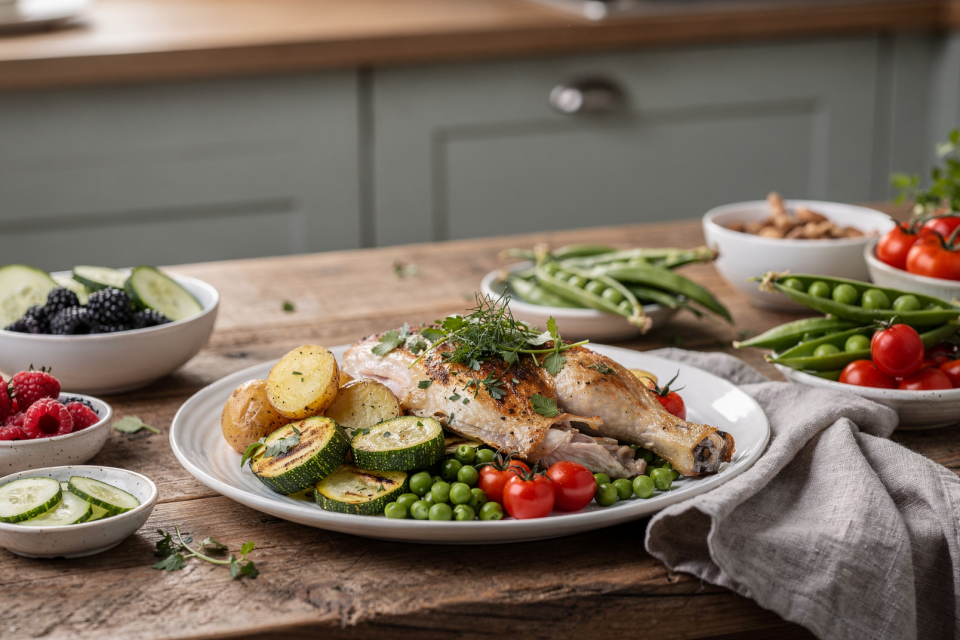
- 2 traybakes or oven meals — think sausages with root veg and red onion, or chicken thighs roasted with carrots, parsnips and a splash of cider from the back of the fridge.
- 2 quick pan meals — an easy stir‑fry with whatever veg is knocking about, or a cheesy omelette with a side of toast for those nights when even boiling pasta feels like a faff.
- 1 soup, stew, or batch-cook dish — a big pot of leek and potato soup, or a lentil dahl that does for two nights running.
- 1 “rescue meal” — the dinner you can throw together with zero brainpower: beans on toast, scrambled eggs with frozen peas, or a jacket potato with cheese and a tin of tuna.
That little collection gives you enough variety that nobody gets bored, but not so much that you’re constantly hunting for obscure ingredients and forgetting what day you planned to cook what.
Build reliability in three layers
Think of reliable cooking as a stack of decisions, like a three‑legged stool. If one leg is wobbly, the whole thing can topple—but when all three are solid, even a simple weeknight dinner feels effortless.
| Layer | What it covers | Why it matters |
|---|---|---|
| Ingredients | What you buy and keep on hand | Reliable meals start with ingredients that suit your budget, your local shop, and your actual routine. No good having a recipe that calls for fresh herbs you’ll use once and let wilt. |
| Method | How you cook it | Clear, repeatable steps reduce the chance of mistakes. Vague instructions like “cook until done” are a fast track to anxiety. You want a method that tells you what the pan should look or sound like. |
| Timing | When you cook and how long it takes | A recipe that needs 90 minutes of oven time and a 20‑minute prep is effectively unreliable for a normal weeknight. Match the meal to the clock, not the other way round. |
A brilliant recipe still flops if you’ve not got the right ingredients. Cheap ingredients still disappoint if the method is fuzzy. And a simple dish becomes a stress‑fest if it eats into the only chilled half hour of your evening.
Keep a reliable core of ingredients
A home kitchen becomes infinitely more manageable when a handful of key ingredients are always somewhere in the cupboards, fridge, or freezer—even if you’ve not done a proper shop. In the UK, that typically means supermarket staples backed up by a few seasonal bits that are good value at the time.
Useful staples for British weeknight cooking
- Long‑life pasta, rice, noodles, and couscous (the fast‑cook stuff is a lifesaver when you’re in a hurry)
- Tinned tomatoes, beans, chickpeas, tuna, and sweetcorn (I always keep a few cans of chopped tomatoes; they’re the base of about a hundred dinners)
- Onions, garlic, carrots, potatoes, and a hardy cabbage like Savoy or white cabbage
- Eggs, mature cheddar, natural yoghurt, and butter (a block of cheddar lives in my fridge permanently—it perks up everything from jacket potatoes to pasta)
- Frozen peas, spinach, mixed vegetables, and a bag of mixed herbs or just some frozen parsley cubes
- Chicken thighs, sausages, mince, or tofu if you use them (I buy thighs and sausages on offer and stash them in the freezer)
- Stock cubes, curry paste, mustard, soy sauce, and tomato purée
The beauty of these ingredients is that they give you options. If you’ve run out of fresh veg, you can reach for the frozen peas and tinned sweetcorn and still make a reasonable pasta or a quick fried rice. Even a last‑minute dinner becomes possible without an emergency dash to the corner shop.
Seasonal produce helps reliability too
British seasonal produce isn’t just cheaper in many cases; it’s also far easier to cook well because it’s naturally at its best and needs less fuss. In the colder months, that means root vegetables like parsnips, swede, and beetroot, plus squash, leeks, cavolo nero, and cooking apples. These hold up brilliantly in traybakes and soups. Once spring arrives, you’ve got asparagus, tenderstem broccoli, Jersey Royals, and later in summer, proper outdoor‑grown tomatoes, courgettes, and soft herbs that don’t cost a fortune. Picking up a few seasonal items each week gives your shopping a gentle rhythm and takes some of the guesswork out of what’s going to taste good.
Use recipes that match your actual skill level
One of the biggest reasons meals go wobbly is that the recipe asks too much of you in that moment. You wouldn’t attempt an exam without the right revision, so don’t expect yourself to pull off a three‑part dish when you’re still getting comfortable with the basics. Choose methods that suit where you are right now, and you’ll start building confidence alongside reliability.
If you are just starting out
Look for meals with:
- 5–8 ingredients, not a long shopping list of things you’ve never heard of
- one cooking vessel—a single pot, tray, or frying pan—so you’re not juggling
- clear oven temperatures or short pan steps that don’t require constant monitoring
- ingredients that don’t need special handling (no tricky filleting or peeling techniques)
Good starting points include a straightforward pasta bake (think tuna and sweetcorn with a simple white sauce), a gentle chicken curry using a good‑quality jarred paste, tray‑roasted sausages with root veg, omelettes packed with whatever’s in the fridge, and soups that blitz together with minimal chopping.
If you already cook regularly
Move toward recipes that teach you repeatable technique. This is where your cooking genuinely firms up, because you understand why things work, not just how to trot through the steps. Pay attention to:
- browning meat properly so you get that deep, savoury crust (which means not overcrowding the pan)
- seasoning in layers—adding a pinch of salt here and a sprinkle there instead of dumping it all in at the end
- balancing acid, fat, salt, and a touch of sweetness until the dish tastes “right” to you
- managing timing so everything finishes together, not with the rice going cold while the stir‑fry is still sizzling
Once these skills start feeling natural, you’ll notice your meals becoming more dependable, not because you’re sticking rigidly to recipes, but because you’ve got a sense of what will and won’t work.
Reduce the number of ways dinner can go wrong
Most unreliable meals fail for the same small handful of reasons. Tackle those first, and you’ll stop a lot of frustration before it even has a chance to bubble up.
The most common failure points
- Not reading the recipe all the way through before you start, only to discover halfway in that the chicken needs 30 minutes marinating and you’ve got hungry faces at the table.
- Realising you’re missing a crucial ingredient when the onions are already sweating—because you trusted your memory instead of checking the cupboard.
- Using a pan or dish that’s too small, so everything steams rather than browns, and you end up with a pale, watery dinner.
- Cutting vegetables unevenly, so some pieces are still crunchy while others have turned to mush.
- Overcrowding the pan—the classic mistake of piling in too much at once, dropping the temperature, and effectively steaming your food instead of colouring it.
- Under‑seasoning until the very end, when it’s too late to build flavour; you can always add more salt but you can’t undo a bland dish that’s already on the plate.
- Trying to cook a “weekday” meal that actually needs a leisurely Sunday afternoon—like a slow‑braised casserole that requires two hours in the oven when you’ve only got 30 minutes before hunger strikes.
A quick pre-cook check
Before you even put a pan on the hob, run through these questions—it takes two minutes and prevents a surprising amount of kitchen misery:
- Do I have everything I need?
- Do I understand the next three steps, or am I going to be frantically scanning the recipe while the garlic burns?
- Do I know roughly how long this will take, including prep?
- Do I have the right pan, tray, or pot clean and to hand?
- Is there a backup plan if one ingredient is missing? (For example, no fresh herbs—swap in dried, or just leave them out.)
Make this little check a habit, like you’re doing a quick pocket‑pat for keys and phone before you leave the house. It’ll save you more than once.
Make timing work in your favour
Reliability lives or dies on the clock. When a meal fits your actual evening, it almost always feels easier and tastes better because you’re not rushing through it with a clenched jaw. The trick is to stop choosing recipes based on ambition and start picking them based on the kind of day you’re having.
Choose the right format for the day
| Situation | Best meal type |
|---|---|
| Very tired, little time | Eggs (boiled, scrambled, in an omelette), toast‑based meals like cheese on toast or beans on toast, speedy pasta with garlic, olive oil and chilli flakes, tinned soup bulked up with a handful of frozen veg, or a quick microwave jacket potato. |
| Normal weeknight | Traybakes (sausages, chicken thighs, or marinated tofu with whatever veg is in the drawer), stir‑fries with noodles or rice, simple curries using paste and tinned tomatoes, one‑pot pasta that cooks the sauce and pasta together—brilliant for minimal washing up. |
| Busy family evening | Batch‑cooked sauce from the freezer (a bolognese or a lentil ragu), reheat‑and‑serve grain bowls with pre‑roasted veg and a dollop of yoghurt, pasta with components you prepped earlier (cooked mince, chopped veggies from the fridge). |
| Weekend or slower day | Stews, roasts, layered dishes like moussaka or a fish pie, longer braises that fill the house with good smells and leave you with leftovers for Monday. |
When you match the meal to the mood and the timetable, home cooking stops feeling like another chore and starts feeling like a sensible, doable part of the day.
Batch cooking makes weekday meals steadier
Batch cooking doesn’t mean turning your kitchen into a production line. It just means making one element of dinner in advance so that future meals come together with half the faff. Even a single batch‑cooked base can transform a frantic weeknight into something calm.
High-value batch-cook components
- Tomato‑based sauce (use it for pasta, on jacket potatoes, as a pizza base, or tipped over baked eggs)
- Roasted vegetables (brilliant in wraps, grain bowls, with couscous, or whizzed into a quick soup)
- Cooked rice or grains, chilled and ready to fry up with an egg
- Braised chicken or mince (I often cook a big batch of mince with onions, carrots, and tinned tomatoes, then freeze it in two‑portion bags)
- Lentils or beans cooked from scratch or just well‑seasoned tinned ones
- Soup—a simple butternut squash or carrot and lentil soup lasts for days in the fridge and freezes beautifully
- Chopped onions, carrots, and celery ready for the week (stored in a covered container in the fridge; saves so much prep time)
A simple batch-cook rhythm
- Cook one base on a quieter day—Sunday morning is classic, but a rainy Saturday afternoon works just as well.
- Portion it into containers. I use old takeaway tubs and stack them neatly in the fridge or freezer.
- Label it if you think you might forget what’s inside; masking tape and a pen are your friends.
- Use it within three to four days if refrigerated, or freeze part of it flat in a zip‑lock bag so it defrosts quickly.
- Turn that base into at least two different meals over the following week: a tomato sauce becomes pasta one night, and a shakshuka‑style baked egg dish another.
This approach cuts down waste, lowers the mental load, and means when you’re staring into the fridge at 5pm, you’re not starting from zero.
Keep the kitchen organised enough to cook
You don’t need a sprawling country kitchen or a showroom‑perfect set‑up. But you do need a kitchen that lets you find things quickly and cook safely without rummaging through piles of mismatched lids. I’ve cooked in a London flat with about two square feet of worktop space, so I know the value of a well‑organised kitchen.
Small changes that improve reliability
- Keep your most‑used knives, a sturdy chopping board, and the pan you reach for every day easy to grab—no one wants to dig through a drawer for a spatula while the onions start to char.
- Store spices and dry staples where you can actually see them; a tiered spice rack on the worktop or a little shelf inside a cupboard door makes a massive difference.
- Group “meal‑making” ingredients together—keep tins of tomatoes, beans, and tuna near the pasta and rice so you can assemble a dinner by eye.
- Keep freezer items visible, not buried under an avalanche of frozen peas. A quick inventory before shopping stops you buying another bag of mixed veg when you’ve already got three.
- Clear at least one work surface before you start cooking, even if it means shoving a few things into a tidy basket. You need space to chop, stir, and plate up without playing Tetris.
When your kitchen layout works with you rather than against you, dinner becomes less of a physical puzzle and more of a pleasure.
Learn a few foundational techniques
Reliable meals often come from a surprisingly small set of basic skills used well. You don’t need cordon bleu training; you just need a handful of moves you can repeat without thinking.
The techniques worth mastering first
- Chopping onions and vegetables evenly — so everything cooks at the same speed and you’re not fishing out half‑raw chunks of carrot.
- Boiling pasta and rice correctly — plenty of salted water for pasta, simmer until just tender, and for rice, the absorption method with a tight lid often gives better results.
- Roasting vegetables without steaming them — spread them in a single layer on a hot tray with a little oil, don’t overcrowd, and let the oven do the work.
- Frying onions and garlic without burning them — medium heat, a splash of oil, stir often, and add the garlic later so it doesn’t turn bitter.
- Thickening sauces — whether by simmering down, adding a slurry of cornflour and water, or stirring in a knob of butter at the end.
- Tasting and adjusting seasoning — this is the single most important habit. Taste as you go, and remember a little pinch of salt can bring a flat dish to life, a squeeze of lemon or a dash of vinegar can wake it right up.
- Resting cooked meat — just a few minutes off the heat so the juices redistribute, giving you a juicier chicken breast or steak.
These skills transfer across dozens of recipes. Once they’re second nature, you’ll find yourself tweaking and improving meals without even consulting a recipe.
Use substitution rules, not panic swaps
Home cooking feels far more reliable when you understand what you can safely swap without ruining a dish. The key is to think about what an ingredient does in the recipe, rather than just finding an identical replacement.
Simple substitution logic
- If a recipe needs a soft vegetable (like courgette, pepper, or mushroom), use another soft vegetable with a similar cook time. Aubergine, leek, or even a handful of frozen green beans can often step in.
- If it needs acidity to brighten the flavours, lemon juice, a splash of white wine vinegar, cider vinegar, or even a few chopped tinned tomatoes can work depending on the dish.
- If it needs body and substance, tinned beans, lentils, diced potato, cooked rice, or extra pasta can fill the gap when you’re short of meat or the main veg has seen better days.
- If it needs richness—that creamy, satisfying quality—a knob of butter stirred in at the end, a handful of grated cheddar, a dollop of natural yoghurt, or a drizzle of olive oil can all help.
Not every swap will be a perfect match, but understanding the function of an ingredient—whether it’s adding moisture, bite, sharpness, or depth—is far more useful than memorising a list of exact replacements. It’s what lets you rescue a meal when you’re one ingredient short and the corner shop is already shut.
Typical mistakes that make dinner feel unreliable
- Buying ingredients for “someday” instead of meals you’ll actually cook this week. We’ve all got that jar of preserved lemon or fancy harissa languishing at the back of the cupboard, feeling guilty.
- Following recipes that are too vague about timing—“cook until done” isn’t helpful when you’re learning.
- Ignoring leftovers and letting good food spoil, which chips away at your budget and your confidence.
- Treating seasoning as optional, or only tasting at the very end when it’s almost too late.
- Trying too many new dishes in a single week, leaving you frazzled and disappointed.
- Cooking without a backup plan—when the fish smells off or the sauce splits, you need a quick rescue option that doesn’t involve a full supermarket run.
- Expecting every dinner to be different and exciting. Repetition isn’t boring when it means less stress and reliably good results.
A more reliable kitchen usually comes from embracing a little repetition. When you’ve got a rotation of trusted meals, dinner feels like a comfort, not a challenge.
A practical 7-day reliability reset
If your home cooking feels chaotic, try this gentle reset for just one week. It’s low‑pressure and meant to be worked through at your own pace, not a boot camp.
Day 1: Audit your current meals. Grab a piece of paper or open a note on your phone and jot down the dinners you’ve cooked over the past fortnight. Circle the ones that worked without drama—the ones where you weren’t panicked, the pan didn’t burn, and people actually ate it. That’s your starting list.
Day 2: Pick your core staples. Look at your circled meals and make a list of the ingredients they have in common. Then decide which staples you want to keep on hand this week. Write that list and pop it on the fridge—it’s your shopping foundation.
Day 3: Plan around time, not fantasy. Be honest about your evenings. If Wednesday is always chaos, don’t plan a meal that requires 45 minutes of hands‑on cooking. Choose something quick that you can make from your staples. Match each night’s meal to the actual energy you’ll likely have.
Day 4: Prep one base. Cook one batch‑cook component—a big pot of tomato sauce, a tray of roasted vegetables, a generous soup. It doesn’t need to be fancy. Just something that can act as a launching pad for at least two future meals.
Day 5: Use one backup meal. Deliberately cook your easiest, most idiot‑proof dinner—the one you’d make if you had ten minutes and zero will to live. Notice how much calmer it feels when there’s no pressure.
Day 6: Review what caused friction. Think back over the last few days. Was there a moment when dinner nearly went wrong, or felt stressful? Was it missing ingredients, bad timing, too many steps? Write down the single biggest friction point.
Day 7: Simplify next week. Take the meal plan you drafted and cut one thing that made dinner harder than it needed to be—maybe that ambitious recipe, or the night you attempted three new dishes back‑to‑back. Replace it with something known and calm.
Reliability checklist for weeknight dinners
- I know what I’m cooking before 5pm, even if it’s just “some type of pasta”.
- I already have the key ingredients; I’m not relying on a last‑minute dash to the shop.
- The recipe fits the time I actually have, not a fantasy of a free evening.
- I have the right pan, tray, or pot clean and ready.
- I understand the order of the steps without having to read them mid‑sizzle.
- I have a backup meal idea if something goes wrong (eggs, beans on toast, freezer soup).
- The dish uses ingredients my household will actually eat—no point in elaborate mushrooms if they’re all going to be picked out.
- I can repeat this meal again next week without starting from scratch; the method is simple enough to remember.
FAQ
What is the easiest way to make dinner more reliable?
Start with a small set of repeatable meals that you trust, keep the staple ingredients for those meals always in stock, and cook recipes that genuinely fit your time and energy levels on a weekday evening. Don’t try to be adventurous on a night when you’re already running on empty.
Is batch cooking necessary?
Not strictly necessary, but it helps enormously. Even one prepared base—such as a simple soup or a tomato sauce—tucked away in the fridge or freezer can turn a frantic evening into a manageable one. You don’t have to cook for a whole week at once; just double a recipe when you have a spare moment.
How many meals should I rotate?
Most households do well with a core rotation of 8–12 dependable meals, with a few seasonal extras on top. That’s enough variety to keep things interesting without making shopping and planning chaotic.
What if my family gets bored?
Keep the main structure of a meal familiar but change one element at a time: swap the sauce, use a different spice blend, change the vegetable, or serve it with another carb. A basic mince and tomato base can become a chilli one night and a cottage‑pie filling the next.
Do I need expensive equipment?
Usually not. A reliable chef’s knife, a sturdy chopping board, a decent saucepan, a non‑stick frying pan, a baking tray, and a set of storage containers will cover the vast majority of home cooking needs. Fancy gadgets are lovely but rarely the reason a meal fails.
Reliable home cooking is built from tiny, practical decisions: keeping better staples, using simpler methods that match your real life, being realistic about timing, and having a handful of meals you can lean on when the day has already taken enough out of you. Once those pieces click into place, dinner stops feeling like a gamble and starts feeling like a welcome part of the everyday rhythm—and that’s when cooking becomes a genuine pleasure, even on a drizzly Tuesday.