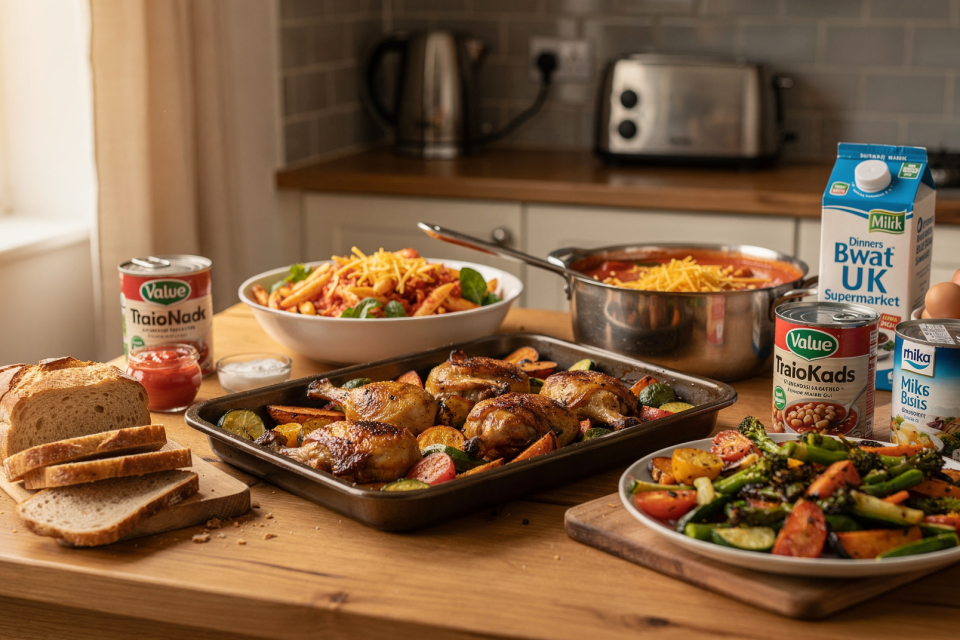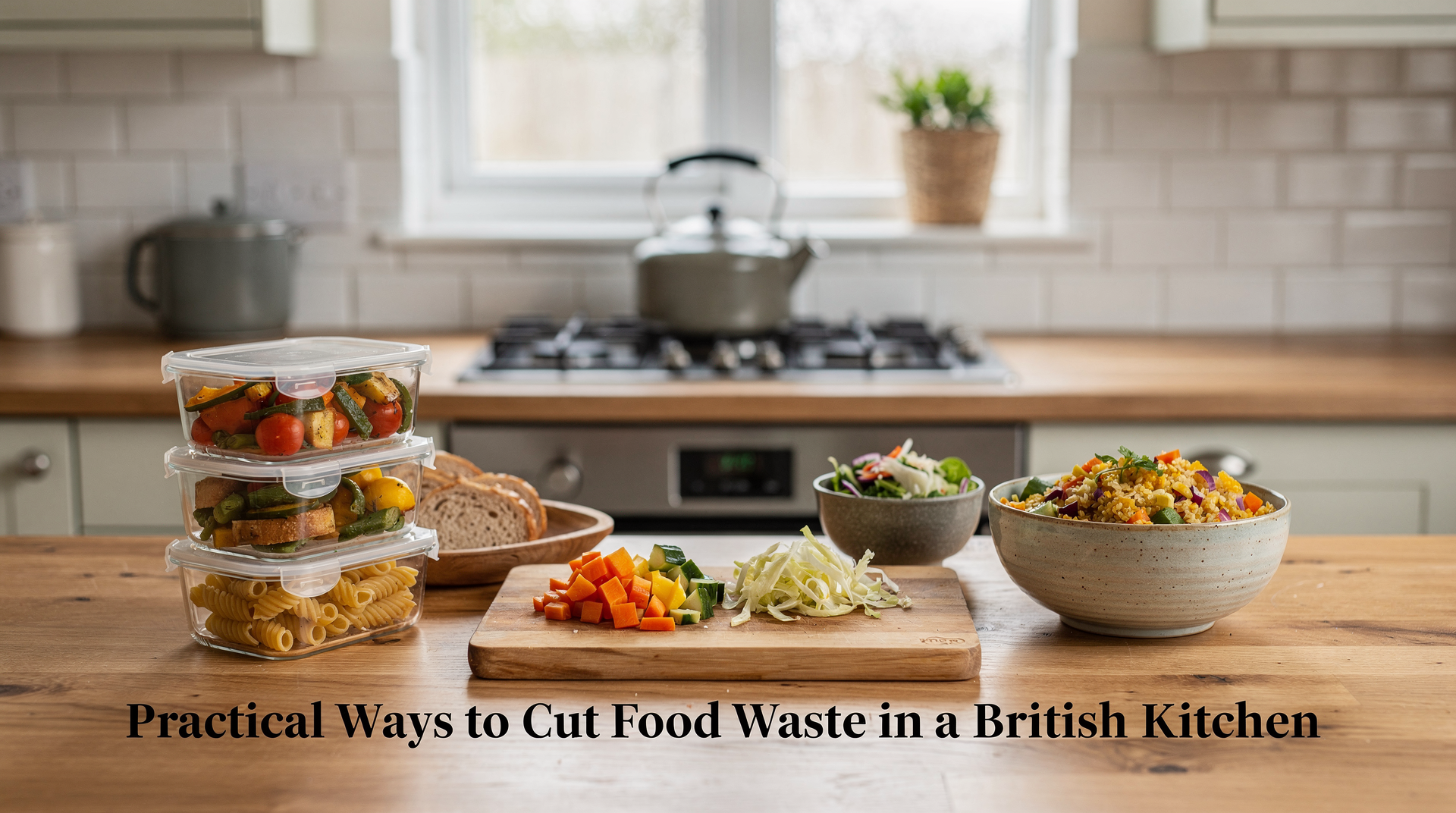
Food waste in a British kitchen doesn’t announce itself with fanfare. It creeps in quietly — a bag of spinach turning to sludge at the back of the fridge, that second loaf of bread you grabbed because it was two-for-one at Tesco, the shepherd’s pie leftovers you genuinely meant to eat on Tuesday but now it’s Friday and you’re not entirely sure what day you made it. The reassuring thing is this: you don’t need a colour-coded meal planner or a refrigerator the size of a small car to fix it. What you need are a handful of simple systems that actually work with how British households shop, cook, and eat.
Why food waste builds up so easily in UK homes
Most food waste happens not because we’re careless, but because we’re optimistic. We buy with good intentions — the courgettes for that virtuous stir-fry, the fresh herbs for the recipe we saw online — but without a concrete idea of when those ingredients will actually meet a pan. In British kitchens, this problem gets amplified by a few specific realities: fridges that are narrower than we’d like, working weeks that rarely follow a predictable rhythm, and supermarket promotions designed to make us buy more than we need right now.
The cost of this isn’t just environmental guilt. It’s actual money leaving your bank account every time you scrape a plate into the bin. And with energy bills making every oven hour more expensive, cooking a meal only to throw half of it away stings more than it used to.
The most common waste patterns
- Fresh produce bought for “healthy eating” but not used quickly enough.
- Leftovers stored without a plan, then hidden at the back of the fridge.
- Half-used ingredients from one recipe that do not appear in the next.
- Bread, herbs, milk, and salad items going off before the household gets to them.
- Overreliance on bulk deals that suit the till receipt but not the week ahead.
Start with the waste audit: find out what you are actually throwing away
Before you change a single habit, spend one week simply noticing what ends up in the bin. This isn’t about making yourself feel guilty — it’s about gathering data. Most of us have a vague sense that we waste “salad stuff” or “bread,” but until you see the same item appearing day after day, the pattern stays invisible.
A simple 7-day waste check
- Keep a small note on your phone or a scrap of paper.
- Each time food is thrown away, write down what it was and why.
- Group the reasons into a few categories: spoiled, forgotten, overcooked, too much, not liked.
- Look for the same item appearing more than once.
- Fix the pattern first, not the symptom.
| Waste pattern | What it usually means | Practical fix |
|---|---|---|
| Wilted veg | Too much fresh produce bought at once | Buy less often or add a midweek veg-free meal |
| Leftovers ignored | No plan for second meals | Cook with a “next-day” dish in mind |
| Bread going stale | Loaf is too large for the household | Freeze slices straight away |
| Opened dairy discarded | Fridge items not visible | Store at eye level and label open dates |
| Cooked rice/pasta wasted | Portions are too generous | Measure once, then reduce slightly |
Stage 1: Buy food with a use plan, not just a shopping list
Here’s the thing about shopping lists: they’re useful, but they’re only half the job. A list tells you what to buy; it doesn’t tell you when you’ll use it. Without that second piece, you end up with a fridge full of ingredients that don’t quite add up to meals. The real shift happens when you start thinking in terms of dishes rather than individual items.
What to do before you shop
- Check what needs using first in the fridge, freezer, and cupboard.
- Plan around those items before adding anything new.
- Choose 3–5 flexible meals rather than a different dinner every night.
- Avoid shopping hungry or relying only on promotions.
- Ask: Will I realistically cook this in the next three days?
A British kitchen version of “shop your fridge”
This is the habit that genuinely changed how I cook at home. Before reaching for the shopping bag, I open the fridge and ask: what’s already here that needs eating? Then I build meals around those ingredients rather than starting from scratch with a recipe. It sounds obvious, but most of us do the opposite — we choose a recipe first, then buy everything for it, ignoring the half-used bits already sitting on the shelves. Here are some combinations that work brilliantly with typical British staples:
- Potatoes + onions + cheese = frittata, tray bake, or soup
- Bread + eggs + tomatoes = brunch, eggy bread, or panzanella-style salad
- Chicken leftovers + veg = pie filling, fried rice, or wraps
- Yogurt + fruit = breakfast, snack, or dessert base
- Frozen peas + pasta + soft cheese = quick supper
This approach works because it shrinks the gap between buying something and actually using it — and that gap is where most waste begins.
Stage 2: Store food where you can actually see it
If I had to name the single biggest cause of food waste in British homes, it would be this: things get lost. A tub of yoghurt slides behind a jar of pickles. A bag of rocket wilts underneath a cucumber. The half-used tin of coconut milk gets pushed to the back and forgotten until it develops its own ecosystem. Visibility isn’t just about neatness — it’s about whether food actually gets eaten.
Practical storage habits that make a difference
- Keep older food at the front of the fridge and newer items behind it.
- Use clear containers whenever possible.
- Put open packs together in one zone so they are easy to spot.
- Store herbs like flowers in a jar with a little water, or wrap them in damp paper and refrigerate.
- Freeze bread, wraps, and grated cheese if you know they will outlast your plans.
- Label leftovers with the date and what they are.
What belongs where
| Item | Best storage habit | Why it helps |
|---|---|---|
| Bread | Freeze sliced or keep in a cool, dry place | Stops mould and stale loaves |
| Salad leaves | Keep dry with paper towel in a container | Reduces sogginess |
| Herbs | Treat as delicate produce, not garnish | Extends life by a few days |
| Milk | Place at the back of the fridge | Colder temperature helps it last |
| Cooked leftovers | Cool quickly, refrigerate, and label | Makes them easier to use safely |
Stage 3: Cook portions that match the household, not the recipe
Most recipes are written for a version of family life that doesn’t quite exist — four people with identical appetites, all eating at the same time, all enthusiastic about the same dish. Real households are messier than that. Maybe you’re cooking for one and recipes serve four. Maybe your children eat three things on rotation and none of them include the sauce you’ve just made. Whatever your situation, portion control is where waste reduction gets practical.
How to reduce waste at the cooking stage
- Start with slightly less pasta, rice, and potatoes than you think you need.
- Serve dinner in bowls rather than bringing the whole pan to the table.
- Cook vegetables with flexibility so extras can be used elsewhere.
- Make sauces and fillings that can work in more than one meal.
- Freeze half of a batch before it becomes “leftovers fatigue.”
Good “double-duty” dishes
- Tomato sauce: pasta tonight, baked eggs tomorrow
- Roast vegetables: side dish tonight, soup or grain bowl tomorrow
- Minced beef or lentils: chilli tonight, jacket potato topping later
- Roast chicken: Sunday dinner, sandwiches, then soup stock
This is the point where waste control becomes easier, because one cooking session creates more than one meal. And honestly, there’s something deeply satisfying about doing the work once and eating well twice.
Stage 4: Turn leftovers into ingredients, not scraps
The biggest mental shift in a low-waste kitchen is learning to see leftovers differently. A small portion of cooked veg, a handful of rice, a few slices of roast chicken — none of these is a meal on its own, but they’re also not rubbish. They’re building blocks. Once you start treating them that way, the contents of your fridge stop looking like a problem and start looking like possibilities.
The “leftover transformation” method
- Separate leftovers by type.
- Ask what each item could become: soup, wrap, toast topper, omelette filling, salad base, or pie filling.
- Pair leftovers with one fresh item, such as eggs, cheese, salad, or bread.
- Use them within 24–48 hours if they are in the fridge.
- Freeze anything you will not use in time.
Easy leftover ideas
- Roast potatoes → fried breakfast hash
- Cooked veg → omelette or frittata
- Rice → stir-fry or rice salad
- Chicken → sandwich filling or soup
- Bolognese → toast topper or jacket potato filling
- Soft fruit → compote or porridge topping
Stage 5: Use the freezer as a waste-saving tool, not a graveyard
Every British kitchen I’ve ever known has a freezer drawer that’s become a bit of a mystery. Unlabelled containers, frost-covered bags of something that might be soup or might be stew, bread crusts saved for a bread-and-butter pudding that never materialised. A freezer only helps if it’s a system you actually use, not a place where food goes to be forgotten at a lower temperature.
What freezes well in a British kitchen
- Bread and rolls
- Cooked rice and grains, cooled properly
- Sauces and soups
- Grated cheese
- Herbs in olive oil or water-based ice cubes
- Overripe bananas for baking
- Portions of cooked meat or beans
What makes freezing actually useful
- Freeze in portions you will use.
- Label with the name and date.
- Keep a simple freezer list on the door or phone.
- Rotate older items to the front.
- Defrost with a plan, not on impulse.
Quick freezer rule
If you freeze it, write down what it is and when you need it by. Otherwise, you have only delayed the waste.
Stage 6: Learn the small preservation tricks that suit home cooking
You don’t need to become a homesteader with shelves of mason jars and a fermenting crock. A few simple techniques can stretch the life of your weekly staples by days, and they take barely more effort than throwing something away.
Useful low-effort preservation habits
- Turn limp herbs into pesto, green sauce, or herb butter.
- Make stock from vegetable ends, onion skins, and chicken carcass leftovers where appropriate.
- Pickle surplus onions, cucumbers, or carrots in the fridge.
- Roast tomatoes before they become overripe.
- Grate and freeze cheese near the end of its life.
These methods are especially useful in UK kitchens where produce can vary in size and freshness depending on supermarket, season, and storage. A bunch of basil from Lidl in January might not have the same staying power as one from a farmers’ market in July, and that’s fine — you just adapt.
Common mistakes that create more waste
Don’t do this
- Buying “just in case” items that no one actually eats.
- Keeping too many open condiments and half-used ingredients.
- Cooking every meal from scratch when the week is busy.
- Ignoring the fridge before shopping.
- Treating leftovers as a fallback instead of a planned meal.
- Saving food too long because it “still looks fine.”
Better habits
- Build repeatable meals into the week.
- Keep a small list of household staples that get used.
- Plan one or two “use it up” meals every week.
- Accept that some food should be frozen or repurposed immediately.
- Decide what gets eaten first the moment shopping is unpacked.
A practical weekly routine for a lower-waste kitchen
| Day | Action | Outcome |
|---|---|---|
| Shopping day | Check fridge, freezer, and cupboards first | Avoids duplicate buying |
| Unpack day | Move older food to the front | Improves visibility |
| Midweek | Use one leftovers meal | Clears space before spoilage |
| End of week | Make soup, fry-up, frittata, or tray bake from odds and ends | Uses remaining ingredients |
| Before next shop | Quick waste check | Identifies patterns early |
Checklist: signs your kitchen is becoming lower waste
- You know what needs using up before you shop.
- You throw away fewer forgotten vegetables.
- Leftovers are portioned and labelled.
- Bread, herbs, and dairy last longer because they are stored properly.
- The freezer has a clear system.
- At least one meal a week is built from what is already in the house.
When waste is a symptom of a bigger problem
Sometimes food waste isn’t about willpower or organisation. It’s about a kitchen that’s genuinely too small for the way you need to cook, a schedule that shifts week to week, or a household where people eat at completely different times. If that sounds like your setup, chasing perfection isn’t the answer — reducing friction is.
If that sounds familiar, focus on:
- fewer but more flexible meals,
- ingredients that work across multiple dishes,
- a tighter shopping cycle,
- and a freezer routine that suits your actual week.
FAQ
What is the easiest way to cut food waste in a British kitchen?
Start by checking what is already in the fridge before every shop, then plan meals around those items. That single habit prevents duplicate buying and helps older food get used first.
Is it better to freeze leftovers or keep them in the fridge?
Freeze anything you will not eat within a day or two. Keep only the food you genuinely plan to use soon in the fridge, and label it clearly so it does not get forgotten.
How do I reduce waste if I cook for one person?
Cook fewer components at once, buy smaller packs where possible, and use ingredients that can become several different meals. Freezing bread, sauces, and portions of cooked food helps a lot in solo households.
What foods are most often wasted at home?
In UK kitchens, the usual culprits are bread, salad leaves, herbs, fruit, milk, and leftovers from cooked meals. These are all vulnerable to poor storage or lack of a plan.
Can I still save money if I buy fresh food often?
Yes, if you buy with a short use plan. Smaller, more frequent shops can reduce waste, especially for produce that spoils quickly, as long as you stay disciplined about what you already have at home.
Food waste falls fastest when shopping, storage, cooking, and leftovers all work together. Once those parts are aligned, a British kitchen becomes easier to manage, cheaper to run, and far less likely to end with good food in the bin.