Cooking dinner for a family doesn’t have to mean running the oven for an hour or standing over multiple pans every night. The most energy-efficient approach is often the simplest: pick methods that heat food quickly, keep lids on, batch cook cleverly, and match the technique to the meal rather than defaulting to the oven for absolutely everything. On a damp Tuesday when you’re staring into the fridge, these habits genuinely make a difference—not just to your energy bill, but to how smoothly the evening runs.
This guide walks through energy-saving cooking methods in stages, from the effortless tweaks you can adopt tonight to the more considered habits that add up across dozens of family meals a week.
Why energy-saving cooking matters in a normal family kitchen
In a typical UK home, cooking energy use stacks up because dinner is repetitive. We’re not trying to turn every meal into a technical project; we’re trying to reduce wasted heat, shorten cooking time, and make everyday meals cheaper to run without making them any less filling or comforting. I’ve learned this the hard way in my compact London flat, where the kitchen can turn into a sauna if the oven’s on for too long.
Energy-saving cooking works best when you think in layers, like building a good stew:
- Level 1: small habits that save energy immediately
- Level 2: choosing the right cooking method for the job
- Level 3: planning meals so one cooking session does more work
- Level 4: upgrading your kitchen routine for long-term savings
This progression matters because the biggest gains usually come from behaviour—not from buying expensive gadgets. Once these habits feel automatic, you’ll notice the difference without even thinking about it.
Level 1: Easy habits that cut waste straight away
These are the changes most families can adopt with no new equipment, no special ingredients, and no extra washing up. They’re dead simple, but they compound beautifully over a week of cooking.
Use the right pan size
A small saucepan on a large hob ring wastes heat and leaves the handle worryingly cool while the flame licks up the sides. A large pan on a tiny ring heats unevenly and takes an age to come to the boil. Match the pan to the burner so the base sits comfortably over the heat source—you’ll hear the difference in how quickly things start bubbling. On an induction hob this is even more important because the ring only works where the pan makes contact.
Keep lids on
Lids trap heat and dramatically reduce cooking time. This is especially useful for:
- boiling potatoes for mash or wedges
- simmering sauces (think Bolognese or a quick tomato sauce)
- cooking rice or grains
- softening vegetables for soups or curries
- reheating soup or stew from last night
A lid makes a surprising difference because it keeps steam inside the pan instead of letting it escape up the extractor fan. I often pop a lid on and turn the heat down a notch—it shaves minutes off cooking and stops the kitchen from steaming up like a laundry.
Boil only what you need
Overfilling the kettle or boiling a huge pot of water for a modest handful of pasta wastes energy and time. Measure more carefully, especially on busy weeknights when the temptation is to overdo everything “just in case.” For pasta, a rough rule is 1 litre of water per 100g, and you can get away with a bit less if you stir more often. For vegetables, a shallow pool of water in the pan works fine; you’re steaming them as much as boiling once the lid’s on.
Turn heat down once food is simmering
Many dishes need high heat only at the start to bring things to the boil. Once a pan is bubbling, a lower setting usually maintains the right temperature. If the pan is bubbling aggressively and spitting, you’re probably using more energy than necessary. For a steady simmer, a medium or even low flame often does the job perfectly, and your sauce won’t catch on the bottom.
Use residual heat
Some foods keep cooking after the heat is turned off, which is a brilliant little cheat. This works well for:
- pasta finished in hot sauce (the sauce carries enough heat to meld everything)
- eggs taken off just before they’re fully done—they’ll firm up in their own warmth
- vegetables with a short steam finish, where you put the lid on and let them sit for a minute
- casseroles and traybakes resting on the side before serving; they actually carry on cooking gently
Knowing when to switch off early is one of the simplest energy-saving habits. It also stops your greens turning to mush.
Level 2: Choose the most efficient method for the meal
Different cooking methods behave differently, and the most efficient option isn’t always the one that sounds most “proper.” Here’s a handy table to guide you, with some real-world context thrown in.
| Cooking method | Best for | Energy-saving strengths | Main drawbacks |
|---|---|---|---|
| Hob simmering | soups, sauces, rice, pasta, vegetables | heats quickly and can be controlled precisely; every British kitchen has a hob | easy to waste energy if left too hot; you need to be around to turn it down |
| Microwave | reheating, steaming vegetables, melting butter, quick single portions | very fast, low energy use for small jobs; perfect for a quick jacket potato for one | not ideal for browning or crisping; can’t produce a golden crust |
| Pressure cooking | stews, pulses, tougher cuts | shortens long cooking times dramatically; a beef stew in 30 minutes rather than hours | needs a suitable pot and some learning; can be intimidating at first |
| Slow cooking | stews, soups, some batch meals | efficient for long unattended cooking; ideal if you’re out all day | not always best if the food could cook faster another way; uses energy for longer |
| Oven roasting | traybakes, chicken, root veg, baked dishes | good for cooking several items at once; makes the most of that heated space | can be costly if used for small portions; heating a big oven for a handful of chips is wasteful |
| Air fryer | small roasts, chips, fish fingers, vegetables | quicker than a full oven for many jobs; crisps food beautifully with little oil | limited capacity for larger families; might need to cook in batches |
When the microwave is the smart choice
A microwave is one of the most energy-efficient tools in a family kitchen for small tasks—and it doesn’t deserve its reputation as just a reheating box. It’s especially useful for:
- steaming broccoli, carrots, or green beans (a few tablespoons of water, a covered bowl, and 2–3 minutes)
- reheating leftovers like last night’s chilli or curry
- cooking jacket potatoes for one or two people—prick the skin, microwave for 6–8 minutes, then crisp under the grill if you fancy
- warming sauces or gravy without a pan
- softening butter straight from the fridge or melting chocolate for baking
For a weekday family dinner, the microwave can handle side dishes like steamed veg while the main hob does the heavy lifting. Two jobs at once, no extra rings lit.
When the oven is worth it
The oven is less efficient for small amounts, but it becomes a good investment when you’re cooking several components together. If you are already heating the oven—say for a Sunday roast or a midweek traybake—make it work harder by filling those shelves:
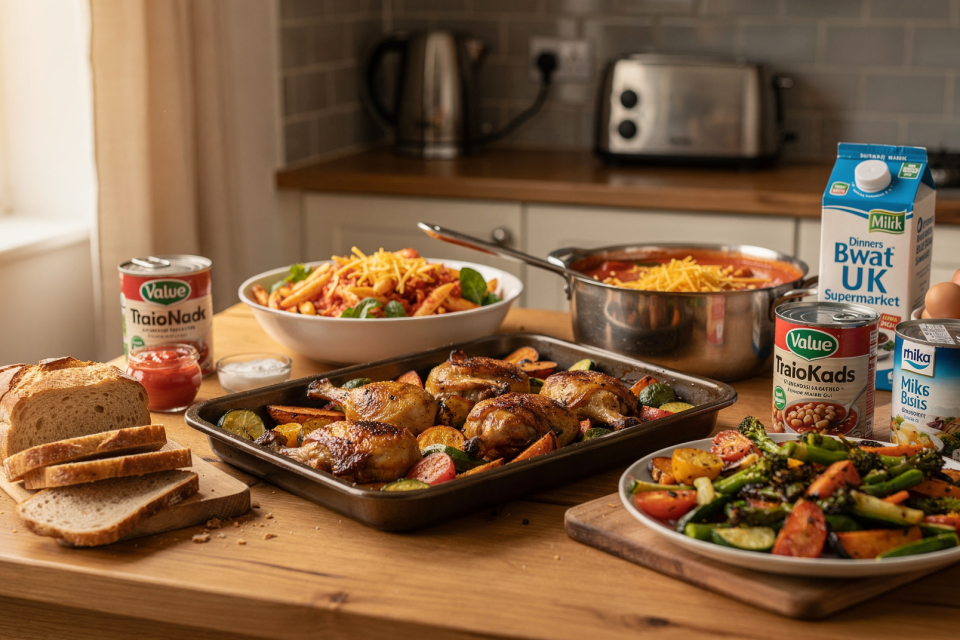
- roast a chicken with potatoes and carrots all in one big tin
- bake a tray of sausages with onions and peppers; add some halved cherry tomatoes 10 minutes before the end
- cook a crumble after a roast while the oven is still hot—you’ve already paid to heat the cavity, so use the leftover warmth
- prepare two trays at once if space allows (swapping shelves halfway through if your oven has hot spots)
The rule is simple: use the oven when you can fill it. An almost-empty oven is like heating the whole living room to warm your hands.
Level 3: Batch cooking and meal structure that save energy
This is where family meals start to become noticeably cheaper to run, and it’s a strategy I rely on heavily. Cooking one bigger dish often uses less energy than cooking several separate meals across the week, and it saves your sanity on busy evenings.
Cook once, eat twice
Batch cooking saves energy because the hob or oven is used more efficiently. A pot of chilli, Bolognese, curry, lentil soup, or casserole can become:
- tonight’s dinner
- tomorrow’s lunch (packed in a flask or reheated quickly)
- a freezer meal for later in the month when you’re tapped out
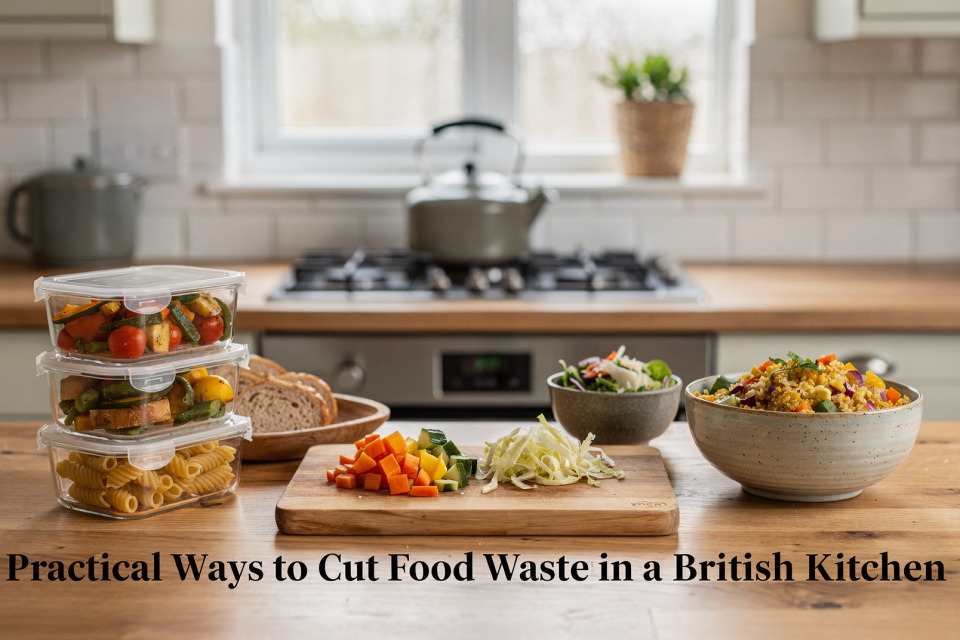
This reduces repeat heating and makes better use of ingredients already in the fridge. I often double a recipe on purpose, even if I only need one meal’s worth, because the extra portion will be a lifesaver. Use sturdy, stackable containers from Tesco or Lakeland, label them with the date, and you’ll have a ready-made homemade ready meal.
Build meals around one main heat source
A “one-pan” or “one-pot” meal doesn’t have to be trendy to be deeply practical. It means fewer burners lit, less oven time, and—gloriously—less washing up. On a typical Tuesday, I’ll bung everything into a single tin or pot and let it do its thing.
Good examples for family meals include:
- chicken thighs and root vegetables roasted together with a splash of oil and some dried herbs
- pasta cooked with sauce and a couple of handfuls of spinach in one deep frying pan (add the spinach at the end so it just wilts)
- sausage and bean casseroles where everything bubbles in one pot on the hob
- rice dishes with frozen vegetables and leftover cooked meat—like a quick pilaf or kedgeree-style meal
- fish baked with new potatoes and cherry tomatoes in a tray, all drizzled with olive oil
Use pre-cooked ingredients wisely
Not every ingredient needs to be cooked from scratch every night. Leftover roast chicken, a tub of cooked rice, a few boiled new potatoes, or yesterday’s roasted vegetables can be turned into a fast meal with very little extra energy. This is where energy-saving and waste reduction meet beautifully.
- fried rice with leftover rice and frozen peas—the trick is cold rice so it doesn’t clump
- bubble and squeak with cooked cabbage and potatoes, pressed into the pan until golden
- soup made from leftover roast vegetables blitzed with stock
- pasta bake built from cooked sauce and leftover meat, topped with cheese and grilled briefly
It’s the opposite of starting from square one, and it means your hob or oven runs for a fraction of the time. I always cook extra rice or potatoes precisely for these second-day wins.
Level 4: Cooking techniques that are efficient for family meals
Once the basics are in place, technique becomes even more important. The aim is to cook food well while using less time and heat—and still get a proper dinner on the table.
Steaming
Steaming is excellent for vegetables because it cooks them quickly and keeps their texture and colour. You can steam over a pan of simmering water using a collapsible steamer basket, or use a microwave steamer that sits directly in the microwave. I love this for broccoli, which comes out bright green in under 5 minutes.
Best for:
- broccoli and tenderstem
- carrots sliced into batons
- green beans
- fish parcels (wrap a fillet with herbs and a slice of lemon in parchment and steam for 10–12 minutes)
- dumplings or bao buns if you’re doing a fun tea
Pressure cooking
A pressure cooker or multi-cooker (like an Instant Pot, which many home cooks now swear by) can slash the time needed for beans, pulses, stews, and tougher cuts. This is one of the most effective methods for dishes that would otherwise simmer on the hob for an hour or more. And because the cooking time is so short, less energy escapes into the kitchen.
Best for:
- dried beans and lentils (no soaking required for many)
- beef stew with root veg
- chicken soup that tastes like it’s been going all day
- stock-based meals where you want deep flavour fast
- batch cooking in large quantities—a 6-litre pot does a week’s worth of curry
If you haven’t used one before, start with something forgiving like a lentil soup; you’ll be converted.
Slow cooking
A slow cooker can be a real energy friend for meals that need many hours anyway, especially if it replaces a long oven run. It’s a set-and-forget tool that works well while you’re at work or out running errands. I use mine for:
- pulled pork or gammon for sandwiches
- casseroles packed with root veg from a Lidl wonky veg box
- soups that benefit from a mellow all-day simmer
- curry-style dishes using cheaper cuts of meat
- cheaper cuts of beef like shin or brisket that turn butter-soft
The key point is that slow cooking is not automatically the most energy-saving option. It’s best when it replaces an even more expensive method—like a 3-hour oven braise—not when the same dish could be finished in 20 minutes on the hob with a lid. Do the mental maths: a 150W slow cooker on for 8 hours uses about 1.2kWh, similar to an oven running for perhaps 30–40 minutes depending on your model. So pick your battles.
Air frying
An air fryer often uses less energy than a full-sized oven for small family portions because its cavity is tiny and it heats up in moments. It’s brilliant for that after-school fish finger and chips situation, or for giving leftover roast potatoes a new lease of life. We use ours a lot for:
- fish fingers (crispy in 10 minutes)
- frozen chips or wedges
- roasted vegetables like courgette batons or cauliflower florets
- chicken portions—thighs come out beautifully crisp-skinned
- sausages with no sizzling fat splatters
- reheating crisp foods (pizza, pastry) that would go soggy in a microwave
For larger families, the limitation is capacity. If you need three batches to feed everyone, the savings can shrink and you might be better off with a big tray in the oven. Know your numbers and don’t be afraid to switch methods mid-cook: start in the air fryer and transfer to a warm oven to keep things hot while you do the next batch.
A practical decision guide: which method should you use?
| Situation | Best method | Why |
|---|---|---|
| Reheating one portion of leftovers | Microwave | fast and low-energy; doesn’t need a pan |
| Cooking vegetables for dinner | Microwave or steaming | quick and efficient; keeps colour and bite |
| Making a large stew for two days | Pressure cooker, slow cooker, or hob simmer | efficient for batch cooking; suits make-ahead meals |
| Roasting a full family traybake | Oven | makes sense when cooking several items together |
| Crisping frozen food for a few people | Air fryer | quicker than heating a full oven; no preheat needed |
| Cooking rice, pasta, or sauce | Hob with a lid | flexible and easy to control; every kitchen has a hob |
Think of this table as a cheat sheet to pin inside a cupboard. Once you start instinctively choosing the method that fits the job, those pence add up.
Common mistakes that waste energy
Even well-meaning home cooks slip into these habits. Catching yourself is half the battle.
Putting the oven on for too little food
Heating a large oven for one small portion—say, a single jacket potato or a handful of frozen chips—is usually inefficient. If the meal could be done on the hob, in the microwave, or in the air fryer, that’s often the better choice. If you must use the oven for something tiny, at least add a tray of something else to fill the space: roast some garlic for the week, dry out bread for breadcrumbs, or bake a crumble base.
Leaving pans uncovered
Uncovered pans lose heat fast and take longer to cook. If you’re simmering or steaming, a lid almost always helps—and it stops your hob from having to work overtime. A glass lid is handy so you can peek without lifting.
Using too much water
More water takes longer to heat and more energy to boil. For pasta, vegetables, and potatoes, use only as much as needed to cover the food or create steam. You can always add a splash more if things look dry; you can’t take it back.
Opening the oven door repeatedly
Every time the door opens, heat escapes and the oven has to work to get back up to temperature. Check through the window first if possible. If you’re roasting something that doesn’t need basting, trust the timer.
Cooking each part of the meal separately
If vegetables, protein, and starch are all cooked on different appliances, energy use rises and you’re juggling too many things. Combine tasks where you can: roast veg alongside the meat, throw greens into the pasta water for the last minute, or reheat a sauce in the same pan as the rice. This is what professional kitchens do intuitively.
Energy-saving cooking for different family meal styles
Quick weeknight meals
For Tuesday-to-Thursday dinners, the most efficient approach is usually a combination of hob and microwave. I stick to:
- hob-based meals (stir-fries, quick curries, pasta)
- microwaved vegetables on the side
- one-pan dishes that cook in under 30 minutes
- leftovers reused creatively—last night’s roast becomes today’s quick hash
This keeps cooking time short and avoids heating the whole flat unnecessarily, which is especially welcome in a smaller kitchen where you’re already dodging the cat and the laundry rack.
Batch-cooked meals
For family meal prep, choose foods that freeze and reheat well—nothing that will turn watery or grainy. My go-to list includes:
- soups (cream-free ones freeze best)
- stews and casseroles
- curry, both chicken and lentil
- pasta sauce (freeze the sauce separately and cook fresh pasta later)
- chilli con carne
- cottage pie filling (top with mash on the day you eat it)
These meals reward one efficient cooking session instead of several smaller ones. Portion them into reusable containers straight into the fridge or freezer, and you’ve got a stockpile of proper dinners for the cost of one big cook-up.
Seasonal British meals
UK seasonal produce often works brilliantly with low-energy cooking because it’s naturally suited to simple methods. There’s a rhythm to the year that makes sense:
- spring greens steamed or quickly wilted in a pan with a knob of butter
- summer courgettes and tomatoes pan-cooked quickly with a little olive oil and garlic
- autumn squash roasted in one tray, or blitzed into soup with no faff
- winter root vegetables simmered in soups and stews, bringing their own sweetness
Seasonal cooking means ingredients need less processing, less flavour rescue, and less fuss. A handful of fresh peas in June just need a flash of heat; a swede in February wants a long gentle simmer—both of which can be energy-smart if you pick the right technique.
A simple step-by-step approach for saving energy tonight
- Choose one main cooking method for the meal—don’t light all the rings and the oven if you can avoid it.
- Check whether any side dishes can be microwaved or steamed alongside.
- Use lids on pans from the moment the liquid comes to the boil.
- Heat only the amount of water you actually need.
- Cook several components together if at all possible—the traybake is your best friend.
- Switch off early and use residual heat where safe; let the food finish in its own warmth.
- Reuse leftovers instead of cooking a separate meal later—tomorrow’s lunch is tonight’s victory.
Try this sequence once, and you’ll see how natural it feels. It’s not about being perfect; it’s about making small choices that collectively lighten the load.
Checklist: is your dinner as energy-efficient as it could be?
- I am not using the oven for a meal that could be cooked faster another way.
- I am cooking more than one item at the same time when practical.
- I am using a lid on pans.
- I am not boiling more water than I need.
- I am reheating leftovers in the microwave when suitable.
- I am batch cooking meals that freeze well.
- I am choosing methods that suit the portion size, not just the recipe habit.
Tick these off mentally as you cook, and you’ll spot the places where heat slips away unnoticed.
When energy-saving should not come before food quality
Energy efficiency is a brilliant habit, but it shouldn’t ruin the meal. Some dishes need proper roasting, browning, or slow caramelisation for flavour. A tray of root vegetables roasted in the oven may use more energy than steaming, but it may also be the right choice if the meal depends on those crispy edges and deep savoury notes. Sunday lunch with crispy roast potatoes and a well-browned chicken is not the time to swap the oven for a microwave.
The best rule isn’t “always use the cheapest method.” It’s use the most efficient method that still gives the result you want. If that means firing up the oven for a proper crumble after a roast, do it—and fill that oven with a batch of baked apples for the next day’s breakfast while you’re at it. Smart, not Spartan.
FAQ
What is the most energy-saving cooking method for everyday meals?
For small tasks like steaming a handful of veg or reheating a single portion, the microwave tends to be the most energy-efficient. For larger family meals, a hob with a lid, a pressure cooker, or a well-planned batch cook in the oven generally offers the best balance of speed, savings, and proper results. It all depends on the quantity and the dish you’re making.
Is an air fryer always cheaper to run than an oven?
Not always, but it’s often more efficient for smaller portions because it heats faster and has less space to warm up. If you’re doing fish fingers for two kids, the air fryer wins hands down. For a massive tray of roast potatoes to feed six, a full oven might be the better bet if you can fill the shelves. The savings shrink if you need multiple batches in the air fryer.
Does slow cooking save energy?
It can, especially when it replaces a long oven braise or turns a cheap cut into several meals. But it’s not automatically the lowest-energy option. If the same dish could be done in 20 minutes in a pressure cooker or under a hob lid, the slow cooker might end up using more electricity overall. Think about the total cooking time and the appliance’s wattage.
How can I save energy when cooking pasta or rice?
Use only the amount of water you need—for pasta, enough to just cover it plus a bit extra for stirring. Keep the pan covered once it’s boiling, and turn the heat down to maintain a simmer. For rice, the absorption method (where all the water gets taken up) is efficient, and you can let it finish off the heat with the lid on for a fluffy result.
What is the easiest change to make first?
Start with lids on pans, using less water for boiling, and getting into the habit of microwaving or steaming veg. Those changes are simple, immediate, and usually make a noticeable difference to your energy consumption without any extra kit. Once those feel natural, you can think about batch cooking and swapping methods.
Cooking efficiently is mostly about matching the method to the meal, then using that method without wasting heat. Once that becomes routine, family dinners get cheaper to run, quicker to prepare, and a lot easier to manage on those rainy Tuesday evenings when all you really want is a hot plate of something comforting without a side of guilt.