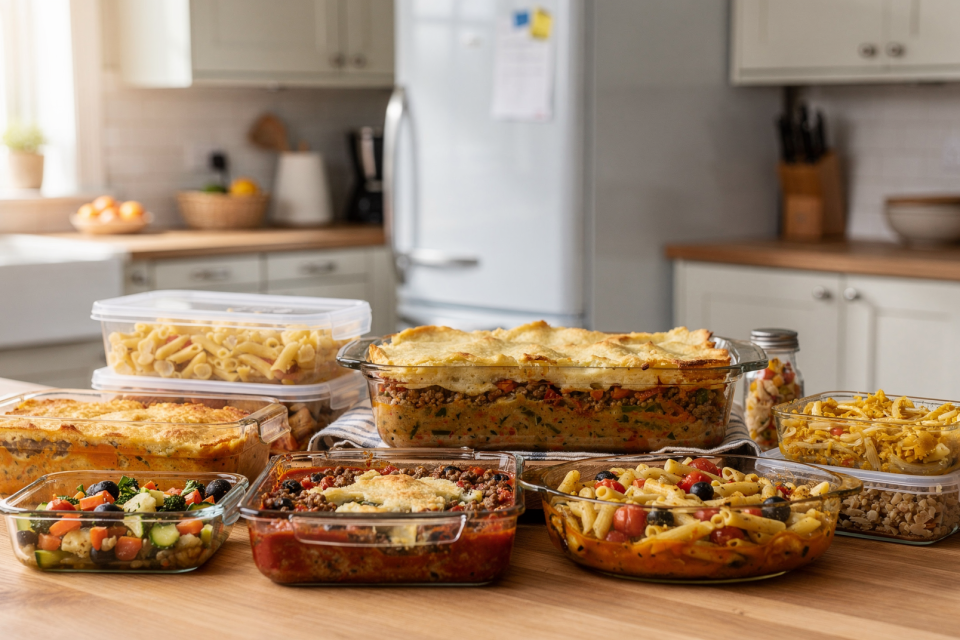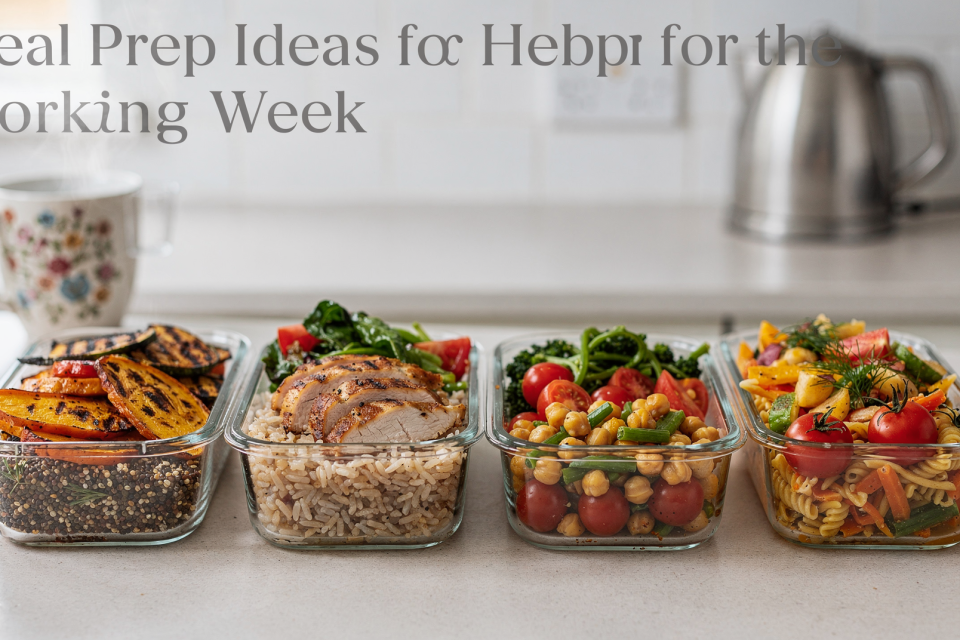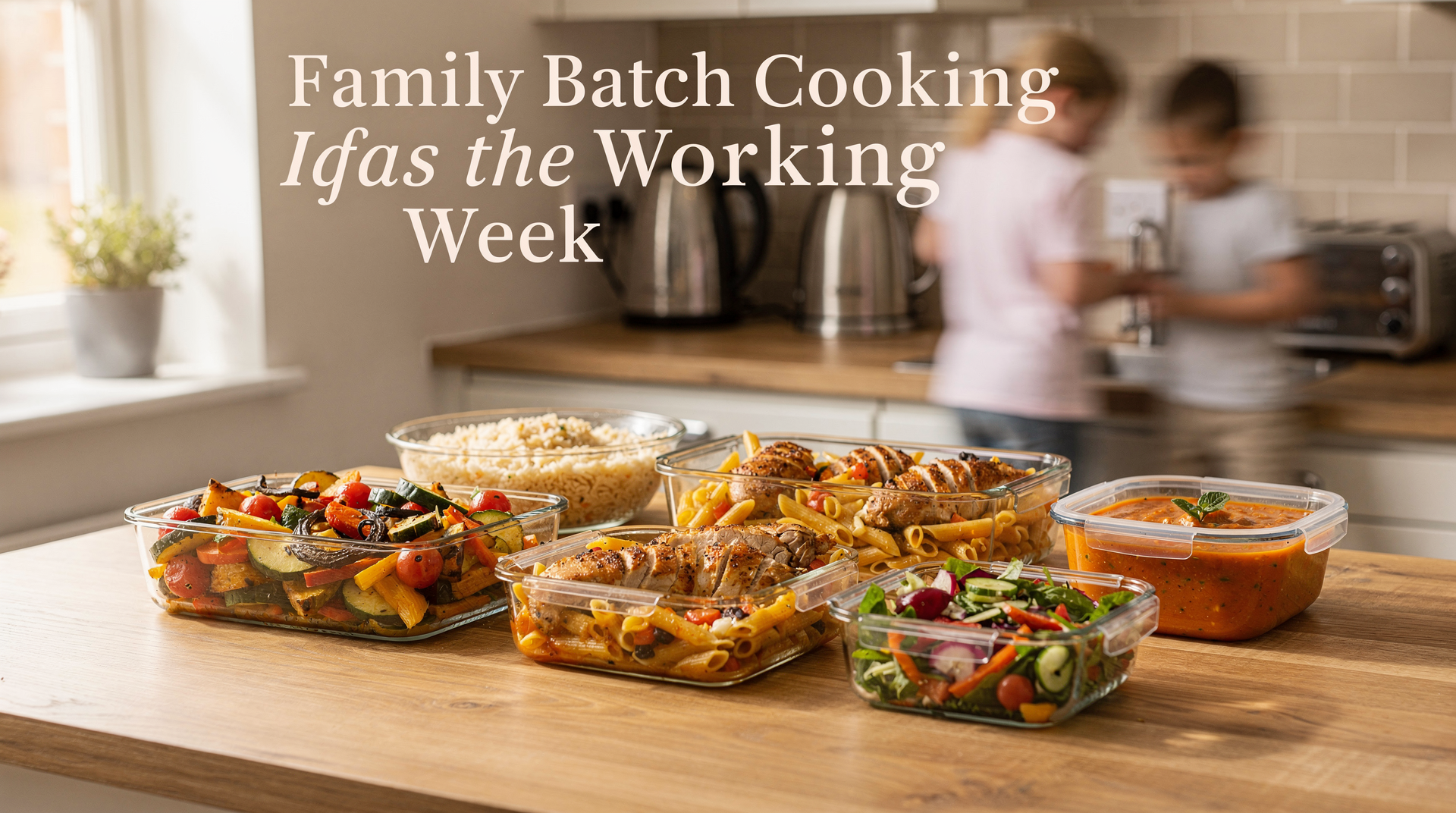
It’s 5pm on a drizzly Tuesday, you’ve just got in from work, the kids are asking what’s for dinner, and the fridge is looking back at you with half a bag of carrots and a lonely block of cheddar. We’ve all been there, staring into the abyss, hoping inspiration will strike before someone reaches for the biscuit tin. That’s exactly where a bit of batch cooking can change the entire rhythm of your week. It’s not about spending your entire Sunday sweating over a stove or eating the same meal five nights running. It’s about building a flexible, realistic system that fits your freezer space, your schedule, and your family’s actual appetite. Once you get the hang of it, you’ll wonder why you ever relied on last-minute dashes to the corner shop.
What batch cooking actually means
Let’s clear this up straight away, because the phrase “batch cooking” can sound like you’re supposed to turn your kitchen into a small factory. It’s really about preparing several portions of core foods in advance so you can assemble meals later with far less effort. Think of it as doing the slower, more repetitive work once, then using those building blocks in different ways through the week.
That might be:
- a big pan of tomato sauce, made with tinned tomatoes from Tesco or Sainsbury’s basics range
- cooked rice or grains, like a batch of fluffy basmati or nutty pearl barley
- roasted vegetables – a tray of carrots, onions, and peppers, perhaps with a few courgettes when they’re in season
- shredded chicken from a couple of thighs you’ve simmered gently
- lentils, beans, or a mince-based filling that can live in the freezer for weeks
- a few ready-to-freeze portions of soup, curry, or pasta bake
The goal isn’t to eat the same dinner every night until you’re bored of your own cooking. It’s to do the slow work once, then reuse it in different ways – a bit like having a well-stocked pantry, but with fresh, homemade food ready to go.
The real benefit for working families
For most households, batch cooking becomes genuinely useful when time is tight but you still want to put something decent on the table. The wins are practical, not just aspirational. You’ll find yourself relying less on takeaways, which is kinder to your wallet and your health. Food waste drops because you’re using up what you’ve bought rather than letting it languish in the crisper drawer. Those “empty fridge” emergencies – you know the ones, where you’re convinced you’ll have to serve toast for dinner – become far less frequent. Packed lunches practically make themselves, and the 5pm panic melts away because you already have a plan.
It also helps when family members eat at different times. One base dish can become dinner for the adults, lunch for the next day, or a child-friendly version with a simpler sauce or a side of plain rice. That flexibility is worth its weight in gold when you’re juggling after-school clubs, late finishes, and different tastes.
The 4 stages of a good batch cooking routine
Stage 1: Build a few dependable base recipes
Start with recipes that are forgiving and easy to portion. At this stage, speed matters more than variety – you’re not trying to impress anyone, just get a few reliable staples under your belt. Good first batch recipes include:
- bolognese-style mince sauce (use beef mince from any major supermarket, add a couple of finely chopped carrots and a stick of celery for extra veg, and let it simmer while you get on with other things)
- vegetable soup – a chunky one with whatever’s in the reduced bin, plus a handful of red lentils for body
- chicken and leek pie filling, the kind that tastes like a proper British kitchen on a cold evening
- chickpea curry, mild enough for the whole family and brilliant for using up a tin of coconut milk
- lentil chilli, which costs pennies and freezes like a dream
- traybake vegetables – just chop, toss with oil and a pinch of salt, and roast until they’re soft and slightly caramelised
- cooked grains such as rice, couscous, or barley
These are useful because they reheat well and can be changed later with simple add-ons. A basic tomato sauce can become a pasta dish, a shakshuka, or even a quick pizza base on a busy night.
Stage 2: Cook components, not full meals
Once you have a few favourites, stop thinking only in terms of “complete dinners”. Instead, cook components that can mix and match. This is the point where batch cooking becomes genuinely sustainable, because it gives you choice instead of repetition.
| Batch-cooked component | Can become |
|---|---|
| Roast chicken | Sandwiches for packed lunches, wraps, a quick pasta bake with cheddar melted on top, or a chunky soup |
| Tomato sauce | Pasta, shakshuka with a couple of eggs poached in the sauce, a pizza base, or a posh upgrade for baked beans |
| Roasted vegetables | Grain bowls with a dollop of hummus, omelette fillings, quesadillas, or tossed through pasta with pesto |
| Mince filling | Jacket potatoes, tacos on a Friday night, or a shepherd’s pie topping with a quick mash on top |
| Rice or quinoa | Fried rice with leftover veg and a splash of soy sauce, lunch boxes, or a speedy side for a stir-fry |
| Soup | Lunch with a hunk of bread, a light starter, or a comforting dinner with a cheese toastie on the side |
I find this approach works especially well in a compact kitchen – you’re not juggling multiple full recipes at once, just a few key elements that can be combined in different ways.
Stage 3: Plan by meal, not by recipe
At this level, the question changes from “What should I cook?” to “What should I prep so I can build meals quickly?” A simple weekly structure might look like this:
- 1 protein base (say, a tray of roasted chicken thighs or a pot of lentil chilli)
- 1 vegetarian base (a chickpea curry or a big batch of herby roasted veg)
- 1 sauce (tomato, a simple cheese sauce, or a herby yogurt dressing)
- 1 tray of vegetables (roasted or steamed, depending on what’s in season)
- 1 carb base (rice, pasta, or a batch of jacket potatoes ready to reheat)
- 1 breakfast or lunch backup (a batch of overnight oats, or a few portions of soup)
That gives enough structure to cover most busy weekdays without cooking from scratch every night. It’s not about rigid meal plans, but about having a safety net of ready-to-use ingredients.
Stage 4: Refine for family life
This is where batch cooking becomes a proper household system. You start planning around school pickup times, after-work fatigue, different ages and appetites, freezer capacity, leftover tolerance, and budget pressure. At this point, success is not about producing the most food. It’s about making the week feel easier and more predictable. For instance, you might realise that you need to double the carb portion on nights when your teenager has football practice, or that a mild base sauce works better than a spicy one if your youngest is going through a fussy phase. The system should bend to fit your life, not the other way round.
How to choose the right batch cooking method
Not every household needs the same approach. The best method depends on how you actually live, not on what looks impressive on a meal-prep Instagram post. Here’s a quick guide to help you pick what suits your situation.
| Situation | Best approach | Why it works |
|---|---|---|
| Very limited time | 1-hour prep with 2–3 recipes | Low effort, low commitment – you can still feel like you’ve achieved something without losing your entire Sunday |
| Small kitchen | Component cooking | Less equipment, less washing up, and you won’t run out of worktop space |
| Tight budget | Base ingredients cooked in bulk | Lower cost per portion – buying a big bag of rice or a sack of onions from Lidl or Aldi makes a real difference |
| Picky eaters | Neutral bases with separate toppings | Easier to customise – everyone can add what they like, from grated cheese to a dollop of yogurt |
| Freezer-heavy household | Double portions and freeze half | Reduces weekday cooking time – you’ll always have a backup meal ready to go |
| Mixed work patterns | Flexible meal components | People can eat at different times without you having to cook twice |
If your household changes from week to week, keep the system simple. Batch cooking should support your life, not create another chore list that makes you feel guilty when you don’t tick everything off.
A practical Sunday batch cooking plan
A sensible prep session does not need to take all day. In fact, shorter sessions are often easier to repeat, and you’re less likely to burn out. I usually aim for about an hour to an hour and a half, and I treat it like a quiet, focused bit of kitchen time with a podcast on in the background.
Step 1: Decide the week’s anchor meals
Choose 2–3 mains that can be reused in different forms. For example:
- chicken traybake (thighs roasted with root veg and a few herbs)
- vegetable soup (a big pot using up whatever’s in the fridge)
- beef or lentil ragu (rich, slow-cooked, and perfect for pasta or jacket potatoes)
Step 2: Write a short shopping list
Build the list around overlapping ingredients so nothing sits unused in the fridge. If you’re buying carrots for the soup, they can also go into the ragu. A bag of spinach can wilt into the soup, the ragu, or an omelette later in the week. This is where a quick scan of your cupboards before you head to Tesco or Sainsbury’s saves both money and waste.
Step 3: Cook in the right order
A simple order saves time and stops you from standing around waiting for things to finish. Here’s the sequence I follow:
- Start anything that takes longest, such as stew, curry, or sauce. Get it on the hob, then you can forget about it while it bubbles away.
- Put vegetables in the oven. A tray of roasting veg takes about 30–40 minutes, so it can cook while you get on with other bits.
- Cook grains, pasta, or potatoes. A pot of rice or a pan of pasta can be done in the background.
- Portion snacks, lunch items, or breakfast extras while the main food cooks. I’ll often decant a big pot of yogurt into smaller jars or mix up a batch of overnight oats during this window.
- Cool everything properly before refrigerating or freezing. I pop containers into a shallow sink of cold water to speed things up if I’m in a rush – just don’t leave them sitting out on the worktop for ages.
Step 4: Portion immediately
Do not leave one large pan in the fridge and promise yourself you will “deal with it later”. Portioning straight away makes it easier to grab meals quickly and helps food cool safely. I use a mix of reusable plastic containers and old takeaway tubs – nothing fancy, just what’s already in the cupboard.
Step 5: Label and date
This matters more than people think. A simple label helps you remember what is in the container and when it was made. I use a bit of masking tape and a permanent marker – it’s cheap, effective, and saves you from playing freezer roulette three weeks later when you’re not sure if that’s lentil chilli or bolognese.
Batch cooking ideas that work well in the UK
British home cooks often rely on ingredients that are easy to find in major supermarkets and local shops. These work especially well in batch cooking because they’re affordable, versatile, and they hold up well to reheating or freezing:
- carrots, onions, celery, and leeks – the holy trinity of British soups and stews
- potatoes and sweet potatoes – for mashing, roasting, or turning into jacket potatoes
- cabbage, kale, spinach, and frozen peas – the frozen peas are a lifesaver for adding a bit of green at the last minute
- tinned tomatoes – a storecupboard staple that forms the base of countless sauces
- chickpeas, beans, and lentils – cheap, filling, and brilliant for bulking out meat dishes or going fully vegetarian
- chicken thighs – more flavourful and forgiving than breasts, and often cheaper too
- sausages – a pack of decent pork sausages can be turned into toad-in-the-hole, casseroles, or pasta sauces
- mince – beef, lamb, or pork, depending on what’s on offer
- cheddar – a good, strong cheddar melts beautifully and adds instant comfort
- oats, pasta, rice, and bread – the backbone of so many quick meals
Seasonal produce can be woven in easily and it’s often cheaper when it’s at its peak:
- spring: leeks, asparagus, spring onions, and soft herbs like parsley and chives
- summer: courgettes, tomatoes, peppers, and berries for a quick crumble or topping for porridge
- autumn: squash, mushrooms, root vegetables, and apples – a tray of roasted squash and onions is pure autumn comfort
- winter: cabbage, swede, carrots, parsnips, and cauliflower – perfect for hearty soups and stews
Using seasonal produce keeps costs sensible and gives you more flavour for less effort. A tomato that’s actually ripened in the sun tastes infinitely better than one that’s been flown halfway round the world in February.
The best foods to batch cook and freeze
Some dishes freeze beautifully. Others lose texture or become bland. Knowing the difference saves disappointment and wasted freezer space.
Freezer-friendly choices
- soups – a chunky vegetable or lentil soup will be just as good after a month in the freezer
- stews – beef and ale stew, or a simple chicken and vegetable one, both freeze brilliantly
- curries – a mild chickpea or lentil curry is a weeknight hero
- chilli – whether it’s meaty or bean-based, it thaws and reheats perfectly
- bolognese – portion it flat in freezer bags so it defrosts quickly
- cooked beans and lentils – keep a few bags of these in the freezer to add to soups or salads
- bread dough – if you’re a baker, a batch of dough can be frozen after the first rise
- cooked grains – rice, barley, and quinoa all freeze well; spread them on a tray to freeze loosely, then bag them up
- cooked chicken in sauce – shredded chicken in a tomato or gravy base stays moist and flavourful
- cottage pie filling – the meaty base freezes perfectly; just top with fresh mash when you’re ready to bake
Foods that need more care
- salads – leaves wilt and become soggy; dressings separate
- cucumber-heavy dishes – cucumber turns watery and limp when thawed
- fried foods – anything crispy will lose its crunch in the freezer
- cream-based sauces – they can split or become grainy; if you must freeze them, stir well when reheating and add a splash of milk
- boiled potatoes – they can go watery and mushy; roasted or mashed potatoes fare better
- delicate herbs added too early – basil, coriander, and dill are best stirred in at the last minute
These are not impossible to prep, but they are usually better made fresh or assembled at the end. I’ll often keep a bag of spinach or a punnet of cherry tomatoes in the fridge to add a fresh element to a reheated meal.
Common mistakes that make batch cooking fail
Batch cooking usually goes wrong for practical reasons, not because the idea is bad. Here are the pitfalls I’ve fallen into myself, and how to avoid them.
Mistake 1: Cooking too many different dishes
If you make six recipes in one go, you create a lot of washing up and mental load. I once tried to do a curry, a soup, a pasta bake, and a tray of roasted veg all in the same afternoon – by 4pm the kitchen looked like a crime scene and I was ready to order pizza. Start with fewer, bigger wins. Two or three things, done well, will feel far more manageable.
Mistake 2: Ignoring reheating quality
Some foods taste fine on day one but dry out badly later. Lean chicken breast without a sauce, for example, can turn into sad, stringy bits when microwaved. Choose recipes that stay moist or can be refreshed with a splash of stock, water, or sauce. A little pot of extra gravy or a drizzle of olive oil can work wonders.
Mistake 3: Forgetting to plan sides
A main dish is only half the job. Keep easy sides ready, such as:
- microwavable rice pouches (a lifesaver when you’re really in a rush)
- bread – a decent loaf from the bakery section, or a few part-baked rolls
- simple salad – a handful of leaves, a few cherry tomatoes, and a quick vinaigrette
- frozen vegetables – peas, sweetcorn, or green beans that can be steamed in minutes
- jacket potatoes – scrub them, prick them, and pop them in the oven while you reheat the main
- couscous – it’s ready in five minutes with just a kettle
Mistake 4: Overfilling the freezer
If your freezer is already packed with ice cream, bread, and mysterious bags of forgotten leftovers, batch cooking becomes frustrating. Keep one shelf or drawer available for your planned meals. I’ve learned to do a quick freezer audit before a big cook-up – it’s amazing what you’ll find lurking in there, and it frees up space for the things you actually want to eat.
Mistake 5: Not making food family-friendly
A batch-cooked meal should still work for the people who actually eat it. Mild spice, optional toppings, and separate garnishes often help with children and fussy eaters. For example, a chilli can be served with a pot of plain yogurt, some grated cheese, and a few tortilla chips on the side, so everyone can build their own bowl. That way, you’re not cooking separate meals, just offering choices.
A simple batch cooking checklist
Use this before your prep session – I keep a version of it stuck to the inside of my kitchen cupboard door:
- choose 2–3 recipes
- check freezer and fridge space (do a quick clear-out if needed)
- write a combined shopping list, grouping ingredients by where they are in the supermarket
- prep containers in advance – get them out, lids ready, so you’re not scrambling later
- start with the longest-cooking dish
- cool food before sealing (warm food in a sealed container creates condensation and can make things soggy)
- label each container with the name and date
- save one or two meals for the busiest nights – the ones where you know you’ll walk through the door and want dinner in ten minutes flat
How to keep batch cooking from becoming boring
The trick is to vary the finishing touches, not necessarily the base recipe. One tray of roasted vegetables can become:
- pasta with pesto and a sprinkle of pine nuts
- a grain bowl with feta, a handful of rocket, and a drizzle of balsamic
- a toasted sandwich filling with a bit of cheddar and a smear of harissa or mustard
- an omelette filling – just reheat the veg, then fold into eggs with some herbs
- a side for roast chicken or sausages, with a dollop of apple sauce or chutney
Try changing the sauce, the herb mix, the topping, the carb served alongside it, the vegetable side, or the cheese used for finishing. A simple tomato sauce can become completely different with a pinch of smoked paprika, a handful of olives, or a swirl of cream. This is the easiest way to get variety without starting from zero every night.
Batch cooking for different family stages
For young children
Keep one base meal mild and offer extras separately. A tomato sauce, rice, pasta, and vegetables can be split into adult and child versions very easily. For little ones, I’ll often set aside a portion of plain pasta with a bit of grated cheese and some chopped cucumber on the side, while the adults get the full works with chilli flakes and olives. It’s not about making two completely different meals, just about keeping elements separate.
For teenagers
Teenagers often need more food than people expect – especially after sports practice or a growth spurt. Keep an extra carb, bread, or protein option ready so they can assemble a bigger plate without you cooking twice. A batch of cooked rice, a few extra sausages, or a loaf of bread with butter can make all the difference. I’ve learned to always cook a bit more than I think we’ll need, because someone will inevitably wander into the kitchen at 9pm looking for a second dinner.
For mixed households
If adults and children want different things, use neutral bases with optional add-ons. Think baked potatoes, rice bowls, pasta, wraps, or soup with toppings. A big pot of soup can be a light lunch for one person, a hearty dinner with bread and cheese for another, and a quick snack for a third. The key is to keep the base simple and let everyone customise their own plate.
A realistic way to judge whether your system is working
Batch cooking is successful if it saves time without making the week feel heavier. Look for these signs:
- fewer evening decisions – you already know roughly what’s on the menu
- less food waste – the sad bag of salad at the back of the fridge becomes a thing of the past
- fewer last-minute shop runs – you’re not dashing to the corner shop for a jar of sauce at 6pm
- more home-cooked meals – and they actually taste good, not like a compromise
- fewer identical leftovers sitting untouched – because you’ve built in variety from the start
- easier lunches as well as dinners – a flask of soup or a container of grain salad makes the midday meal something to look forward to
If it creates stress, simplify it. A good system should feel like a helpful habit, not a hobby that demands all your free time. Sometimes, just having one batch of soup and a bag of frozen rolls in the freezer is enough to take the edge off a busy week.
FAQ
How many meals should I batch cook for the working week?
For most families, 3–5 meals’ worth of prepared food is enough. That gives you support on the busiest nights without crowding the fridge or freezer. You don’t need to cover every single evening – just the ones where you know you’ll be too tired or too rushed to cook from scratch.
Should I batch cook full meals or ingredients?
Ingredients are usually more flexible. Full meals are useful when you want maximum convenience – a complete cottage pie filling or a curry that just needs rice – but components give you more variety across the week. I tend to do a mix: a couple of full meals for the really chaotic nights, and then a few components like roasted veg or cooked grains that I can mix and match.
How long does batch-cooked food last in the fridge?
This depends on the dish, storage, and how quickly it was cooled. In general, use chilled leftovers within 3–4 days, and freeze anything you won’t eat by then. Always cool food quickly – don’t leave it sitting out for hours – and store in airtight containers. If something smells or looks off, trust your instincts and bin it.
What is the easiest batch cooking meal for beginners?
A tomato-based pasta sauce, a soup, or a simple curry is usually the easiest starting point because all three reheat well and can be served in different ways. A basic tomato sauce can be made with a tin of chopped tomatoes, an onion, a clove of garlic, and a pinch of dried herbs – it’s hard to get wrong, and it feels like a proper achievement.
Is batch cooking worth it for small households?
Yes, but the scale should be smaller. A single-person or two-person household may do better with one soup, one sauce, and one tray of vegetables rather than a full day of cooking. You can still benefit from the time-saving and waste-reducing aspects without ending up with a freezer full of food you’ll never eat. I’ve lived alone in a compact London flat, and I’d often just make a pot of soup and a batch of roasted veg on a Sunday – that was enough to see me through several lunches and a couple of dinners, and it felt completely manageable.
Batch cooking works best when it reflects your actual week: your time, your kitchen, your budget, and your family’s habits. Start small, cook the foods you already trust, and build from there until weekday dinners feel less like a daily crisis and more like a routine you can actually keep. It’s not about perfection – it’s about making life a little bit easier, one pot of soup at a time.