Right, let’s talk about meal prep for the working week—properly. Not the sort you see on glossy social media where someone cooks 21 identical containers on a Sunday afternoon and calls it a day. That might work for about a week, then you end up staring at the fifth portion of dry chicken and quinoa and reaching for the takeaway menu. The secret to meal prep that actually fits a British routine is building a flexible system: a handful of make‑ahead components, a realistic shopping list from your usual supermarket, and meals that still taste decent after a day or two in the fridge. This guide walks you through it in stages, from absolute basics to a repeatable weekly rhythm, so you can pick up what’s useful and skip the faff.
What meal prep really means in a real working week
Meal prep isn’t a full‑on catering operation. It simply means getting something ready in advance so that when you’re knackered after work and it’s tipping down outside, dinner doesn’t feel like a mountain to climb. That could be making three days of lunches, washing and chopping a pile of veg, or whipping up one sauce that turns into completely different suppers later on.
For most UK households, the approach that sticks is practical, not perfectionist. You’re looking at:
- prepping for the busiest parts of the week—not every single meal;
- using ingredients you can grab in a standard Tesco, Sainsbury’s, Aldi or Lidl run;
- choosing dishes that reheat well and don’t go watery or rubbery;
- cutting waste by letting the same handful of ingredients pop up in more than one meal.
The point is absolutely not to give yourself a second job on a Sunday. The point is to make weekday cooking quicker, cheaper, and a lot less stressful when you’d rather be on the sofa with a cuppa.
Stage 1: Start with the simplest version of meal prep
If you’re brand new to this, do not launch into a colour‑coded five‑day spreadsheet. Start with one or two repeatable actions that buy you back precious minutes on a Tuesday evening. That’s where the magic starts.
The easiest meal prep tasks for beginners
- Cook one grain or carb base: rice, pasta, couscous, or a pan of new potatoes.
- Roast a tray of vegetables—peppers, courgettes, carrots, whatever is in the veg drawer.
- Make one protein in bulk, such as chicken thighs, a lentil daal, or turkey mince.
- Mix one dressing, sauce, or marinade that’ll perk up several meals.
- Wash fruit and salad leaves so they’re ready to grab.
A realistic beginner example
On a Sunday afternoon, you might:
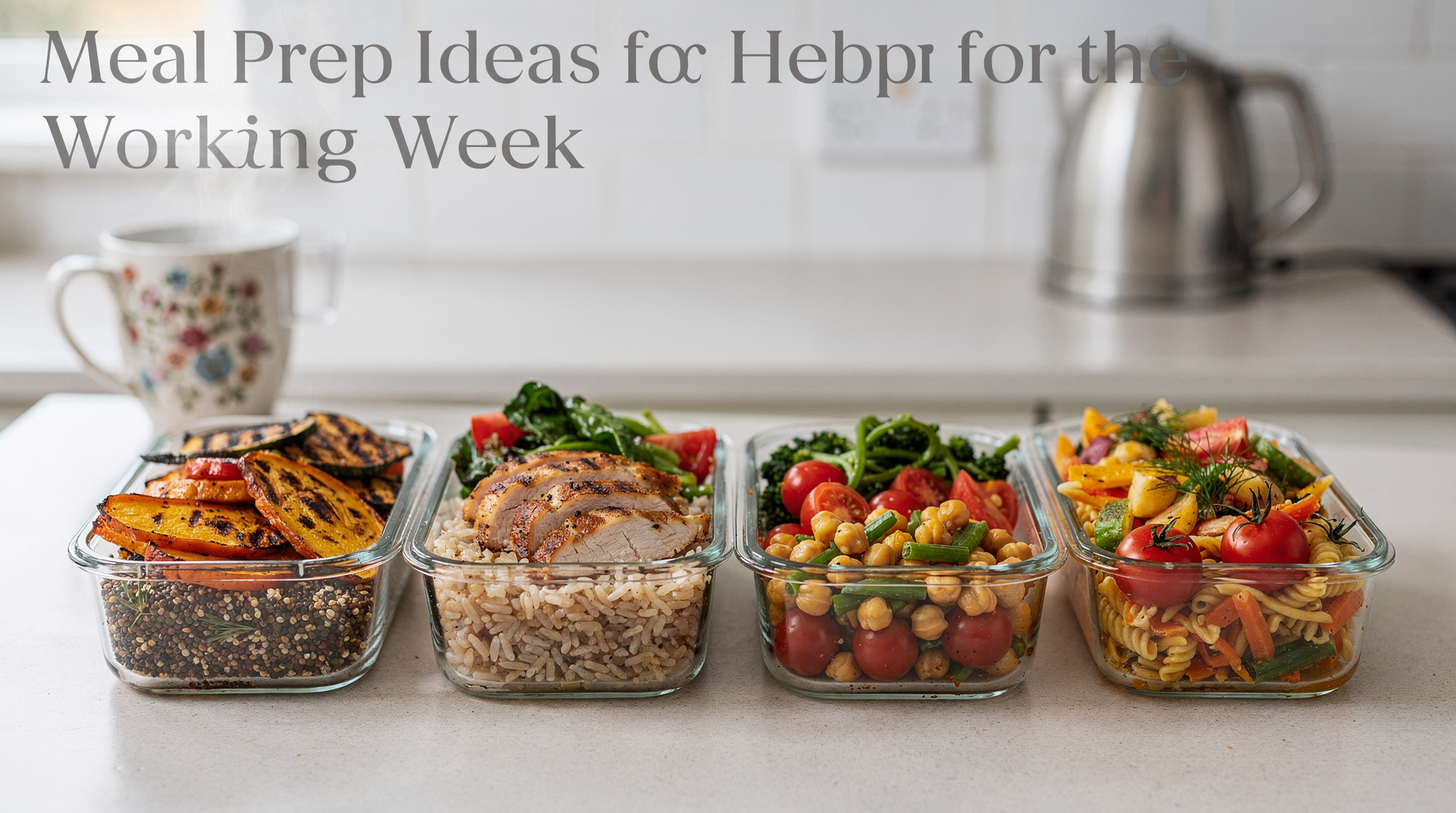
- roast a tray of peppers, courgettes, and red onions with a little olive oil and salt;
- cook a batch of brown rice (or whatever’s in the cupboard);
- whisk up a simple lemon‑yogurt dressing—three ingredients, done;
- poach or roast a pack of chicken thighs;
- boil six eggs for quick lunches.
That’s it. No marathon cooking. That little lot gives you the foundation for grain bowls, wraps with hot sauce, quick salads, and simple dinners that only need assembling, not cooking from scratch every night.
Why this stage matters
At the start, the biggest win isn’t variety—it’s removing friction. When lunch is already partly assembled, you’re far less likely to blow a fiver on a meal deal (tempting as that sometimes is) or skip eating properly altogether because you can’t face making a decision. Keeping it simple is the secret ingredient.
Stage 2: Build meals from components, not rigid recipes
Once you’ve got the hang of a basic prep session, shift your mindset from “making meals” to making components. This gives you flexibility, which is a lifesaver when the week goes sideways—late meeting, unexpected guest, or just a sudden craving for something different.
| Component | Good options | Why it helps |
|---|---|---|
| Base | Rice, pasta, couscous, potatoes, wraps | Gives meals structure in seconds |
| Protein | Chicken, eggs, beans, lentils, tinned tuna, tofu | Keeps meals filling and satisfying |
| Vegetables | Roasted veg, grated carrot, salad leaves, steamed greens | Adds nutrition and proper texture |
| Sauce/dressing | Pesto, tahini dressing, tomato sauce, curry sauce | Stops repeated ingredients from feeling boring |
| Crunch/topping | Seeds, nuts, crispy onions, croutons, pickles | Lifts flavour and makes it feel like a real meal |
How this works in practice
One tray of roasted vegetables—say, courgettes, peppers, and red onion—can become four completely different meals over the week:
- a wrap with hummus and crumbled feta;
- a pasta lunch tossed with pesto;
- a side for a simple salmon fillet and some boiled new potatoes;
- a grain bowl with chickpeas and a drizzle of tahini dressing.
That’s the real power of component‑based meal prep: you’re not forcing yourself to eat the same sad box every day; you’re repurposing one set of ingredients in ways that make each meal feel fresh. It’s a godsend for compact London kitchens too, where minimal washing‑up matters.
Stage 3: Choose meals that hold up well
Let’s be honest—not every recipe is cut out for make‑ahead life. Some foods dry out, turn soggy, or lose their spark after a day or two in the fridge. Knowing which ones to trust saves a lot of disappointment.
Best meal prep ideas for the working week
- chilli con carne or bean chilli (it gets better overnight);
- lentil curry;
- chicken and vegetable traybake;
- pasta bake;
- soups and stews;
- rice bowls with separate sauce;
- couscous salads with sturdy veg like cherry tomatoes and cucumber;
- baked jacket potatoes with pre‑cooked fillings (just reheat and stuff).
Foods that need extra care
- salads with delicate leaves—they wilt the moment they meet dressing;
- fried foods that lose all crunch;
- chips and wedges (soggy chips are nobody’s idea of a treat);
- avocado‑based dishes, unless you add the avocado at the last moment;
- anything with a very loose dressing mixed in too early.
If you fancy a salad, store wet ingredients separately. Keep dressing in a little pot or an old pesto jar and toss it through just before eating. The same goes for crunchy toppings—keep them away from the main container until it’s time to eat.
Stage 4: Plan around your actual week, not an ideal one
A solid meal prep routine reflects your real calendar, not the version where you’ve got endless energy and an empty diary. A week with late meetings, a gym session, and the school run looks very different from a quiet office week where you’re home by six.
Ask these questions before you cook
- Which days are genuinely chaotic?
- Do you need lunches, dinners, or both?
- Will you have reliable access to a microwave at work?
- Are you cooking for one, two, or a whole hungry family?
- How many times will you actually want to eat leftovers before they haunt you?
A simple weekday prep plan
- Monday–Tuesday: use food that holds well and often tastes better after a day—curries, stews, traybakes.
- Wednesday: reach for something fresh from the fridge, like wraps or a quick pasta dish that takes ten minutes tops.
- Thursday–Friday: lean on frozen portions, cupboard meals (hello tinned beans and passata), or a second mini‑prep session if you’ve got the headspace.
This is where so many people go wrong. They make five identical portions on Sunday and feel trapped by Wednesday. A better plan is to prep with enough repetition to save you time and money, but enough flexibility to keep eating enjoyable. That might mean cooking one double batch on Sunday and another quick cook‑up on Wednesday evening while you listen to a podcast.
Stage 5: Make meal prep fit a British supermarket shop
In the UK, a practical meal‑prep routine should be built around what you can easily find in Tesco, Sainsbury’s, Asda, Morrisons, Aldi, Lidl, or your local high‑street greengrocer. There’s no point in a recipe that depends on something you can only get at a specialty shop on the other side of town.
Smart budget ingredients for weekly prep
- oats
- rice
- pasta
- eggs
- chickpeas
- lentils
- tinned tomatoes
- frozen vegetables
- carrots
- onions
- cabbage (cheap, lasts ages, brilliant in slaws and stir‑fries)
- chicken thighs
- natural yogurt
- cheddar
- baked beans
- seasonal fruit
Those are the workhorses of a tight shopping list. They overlap like mad and won’t leave you with sad, single‑use ingredients at the back of the fridge.
Seasonal UK ingredients worth using
| Season | Good prep ingredients | Easy uses |
|---|---|---|
| Spring | Spring onions, spinach, asparagus, new potatoes | Salads, egg dishes, traybakes |
| Summer | Tomatoes, courgettes, peppers, berries | Pasta, wraps, chilled lunches |
| Autumn | Squash, leeks, mushrooms, apples | Soups, bakes, stews |
| Winter | Cabbage, carrots, parsnips, swede | Roasts, soups, slow‑cooked meals |
Sticking with what’s in season usually means better flavour and better value—proper win‑win when you’re planning several meals from one big shop. A tray of roasted autumn veg costs pennies and feels properly cosy on a rainy Wednesday.
Stage 6: Organise storage so food stays safe and edible
Meal prep only works if your food is stored sensibly. Otherwise, texture turns weird, and—more importantly—food safety becomes a genuine worry. No one wants an upset stomach alongside a busy week.
Basic storage rules
- Cool cooked food before you tuck it into the fridge (don’t leave it out for hours, but let steam dissipate first).
- Use airtight containers—old takeaway tubs are fine as long as the lids snap shut.
- Label containers with the day you made them if you’re prepping several portions. A strip of masking tape and a marker pen takes ten seconds.
- Keep sauces and dressings separate whenever you can; they’re the enemy of crisp textures.
- Use shallow containers so food cools faster and evenly.
- Freeze anything you won’t eat within a few days. Soup, chilli, and cooked grains all freeze brilliantly.
Common fridge‑life issues
- Rice can dry out if it isn’t sealed tightly. A light sprinkling of water before reheating helps revive it.
- Pasta can turn into a sticky block unless it’s lightly oiled or stored with a bit of sauce.
- Roast vegetables can go soft and weepy if packed while still warm; let them cool on the tray first.
- Salad leaves wilt in hours if they’re stored with anything damp—keep a piece of kitchen paper in the bag with them to draw off moisture.
If your prepped food looks unappetising on Thursday morning, you’re far less likely to eat it. Good storage is a proper part of the system, not an afterthought you deal with when you’re already running late.
Stage 7: Use a repeating weekly structure
Most of us do far better with a familiar rhythm than with a brand‑new plan every week. You don’t need to reinvent the wheel; you just need a pattern that works with your appetite and your schedule.
A useful working‑week structure
- One bulk‑cooked protein
- One tray of vegetables
- One grain or carb
- One sauce
- One quick fresh element (salad, pickles, a handful of spinach)
That basic formula can produce a surprising range of meals without much extra thinking. I’ve been using a version of this for years, and it stops me from standing in front of the fridge at 6pm looking lost.
Example weekly rotation
- Monday lunch: chicken, brown rice, roasted veg, and a dollop of yogurt dressing.
- Tuesday lunch: same chicken and veg, but shoved into a wrap with salad leaves and a splash of hot sauce.
- Wednesday dinner: rice bowl with chickpeas, a handful of spinach, the remaining roasted veg, and a drizzle of tahini sauce.
- Thursday dinner: pasta tossed with leftover veg, a tin of tomatoes, and a grating of cheddar.
- Friday lunch: soup from the freezer, some toast, and a couple of boiled eggs.
The repetition is deliberate—it shrinks the shopping list and cuts down on decision fatigue. Yet because you change the vehicle (wrap, bowl, pasta) and the extras, it doesn’t feel like the same meal on repeat. That’s the proper clever bit.
Typical mistakes to avoid
Even the best intentions can trip you up. Here are the slip‑ups I see most often, and how to sidestep them.
1. Prepping too much too soon
If you set out to prepare six different elaborate recipes on a Sunday, the time cost will be enormous and you’ll probably resent the whole thing by teatime. Start with two or three components max, and grow from there once you’ve got the hang of it.
2. Ignoring texture
A meal can taste fine and still feel like a chore to eat if everything is soft and same‑shaped. Always include something fresh, crunchy, or acidic—a handful of chopped spring onions, a few pickled red onions, or a crack of black pepper right before eating.
3. Overcomplicating the menu
Meal prep thrives when ingredients pull double duty. Chasing novelty every week leads to a fridge full of half‑open jars and things you’ll never use up. Stick to a few reliable favourites and ring the changes with a different herb or spice.
4. Forgetting the final assembly
If a dish takes ten minutes of juggling containers and rinsing sieves before it can be eaten, it’s too fiddly for a Tuesday lunch. Make sure your prep leads to meals that come together in a couple of minutes, not a production.
5. Buying ingredients that only suit one meal
A good prep shop thrives on overlap. One bag of salad, one pack of peppers, one large tub of yogurt, and a single bunch of herbs can support several completely different dishes. If each ingredient only has one job, you’ll end up with waste and a higher till receipt.
A practical checklist before you start
- Pick one prep day that suits you (Sunday morning, Wednesday evening, whenever).
- Choose three to five meals, not ten.
- Buy ingredients that overlap as much as possible.
- Cook one base, one protein, and one vegetable.
- Make one sauce—even a quick lemon and olive oil dressing counts.
- Use airtight containers that you can actually find lids for.
- Keep at least one fresh ingredient aside for the day of eating—a lemon, some herbs, a handful of leaves.
- Freeze anything you won’t finish in time; label it clearly.
Meal prep ideas by goal
| Goal | Best approach |
|---|---|
| Save money | Lean on beans, lentils, eggs, and seasonal vegetables—they’re cheap, filling, and endlessly flexible |
| Save time | Cook one batch and repurpose it across several meals during the week |
| Eat healthier | Prep plenty of veg, sensible portions of protein, and whole grains in advance so you’re not tempted by the biscuit tin |
| Reduce waste | Plan meals around ingredients you already have, and make a list before you shop |
| Feed a family | Batch‑cook one dinner that everyone will eat, then morph leftovers into packed lunches the next day |
FAQ
How many days ahead should I meal prep?
For most home cooks, two to four days is the sweet spot. That’s long enough to actually save you time, without the food starting to taste tired. I usually prep on Sunday for Monday–Wednesday, and do a quick Wednesday evening refresh for Thursday and Friday.
What are the best lunches to prep for work?
Grain bowls, pasta salads, soups (in a decent flask), wraps, chilli, and traybake leftovers are all reliable choices because they reheat well or hold safely in a cool bag until lunchtime. Just avoid anything too wet that’ll soak through its container.
Can I meal prep if I only have a small kitchen?
Absolutely—and a small kitchen actually benefits from a simpler system. Start with one pan, one oven tray, and a few stacking containers. Less kit means less washing up and less clutter on the worktop. Some of my best meal prep was done in a tiny London galley kitchen with two hob rings.
How do I stop meal prep from getting boring?
Keep the base the same and change the sauce, topping, or side. A neutral grain like rice or couscous can swing from Mediterranean to North African just by changing the dressing. Even swapping cheddar for crumbled stilton and adding a few pickled onions makes it feel like a new meal.
Is frozen food useful for meal prep?
Very much so. Frozen vegetables, sliced bread, chilled portions of cooked chilli, and frozen soups are proper secret weapons for a flexible, affordable week. I always keep a bag of frozen peas and some spinach in the freezer—they’ll rescue almost any meal.
Final thought
The best meal prep ideas for the working week aren’t the ones that look impressive on Instagram. They’re the ones you can repeat when you’re tired, busy, and the fridge is looking bare. Start small, build around ingredients you already know and use, and aim for a system that makes weekdays genuinely easier—not just more organised on paper. A little bit of prep goes a long way, and once you find your rhythm, you might even start looking forward to that quiet Sunday hour in the kitchen.