Freezer-friendly family meals are one of the easiest ways to make weeknights calmer, cheaper, and less wasteful in a UK home kitchen. The trick is not simply cooking in bulk, but choosing dishes that freeze well, reheat safely, and still taste like proper dinner after a trip to the freezer.
I learned this properly when I moved from a spacious Canadian kitchen into a compact London flat with one of those under-counter freezers that seems to fill up if you so much as look at it. You quickly realise that freezing everything in sight isn’t the answer — being selective is. This guide is built around that reality: small British freezers, unpredictable schedules, and supermarket ingredients that need using up before they turn sad in the fridge drawer. It’s about building a practical system rather than just piling up recipes.
Why freezer meals matter in a British home kitchen
Freezer cooking solves three everyday problems at once:
- Time pressure on busy weeknights when you’ve done the school run, battled through traffic, or simply run out of steam by 6pm
- Food waste when ingredients need using before they go off — something I’m painfully aware of every time I find a forgotten bag of carrots at the back of the fridge
- Budget strain when you need to stretch supermarket staples further, especially during that last week before payday
For British households, there is also a very practical reality: many kitchens have limited freezer space, so the best meal-prep approach is selective, not excessive. You’re not running a restaurant — you just need a few reliable backup meals that earn their keep. A good freezer-friendly meal is compact, flexible, and easy to portion so you’re not defrosting a massive casserole dish when only two of you are eating.
What makes a meal freezer-friendly
Not every dish survives freezing in the same way. I’ve had some proper disasters over the years — a creamy chicken dish that split into an oily mess, a potato gratin that went strangely watery, and a pasta bake where the pasta turned to complete mush. The best freezer-friendly family meals usually share these traits:
- Saucy or moist rather than dry — the liquid protects the ingredients during freezing
- Low in delicate dairy unless dairy is added after reheating (cream and soft cheeses are the usual culprits)
- Built from sturdy ingredients such as minced meat, beans, lentils, root vegetables, pasta bakes, and rice-based dishes
- Easy to portion so you can defrost exactly what you need
- Still tasty after reheating — some dishes, like curries and stews, actually develop more flavour after a rest in the freezer
Meals that usually freeze well
| Meal type | Why it works | Common UK examples |
|---|---|---|
| Stews and casseroles | Sauce protects texture | Beef stew, chicken casserole, sausage casserole |
| Bolognese-style sauces | Freezes cleanly and reheats evenly | Beef mince sauce, lentil ragù |
| Soups | Compact and budget-friendly | Vegetable soup, lentil soup, chicken and barley soup |
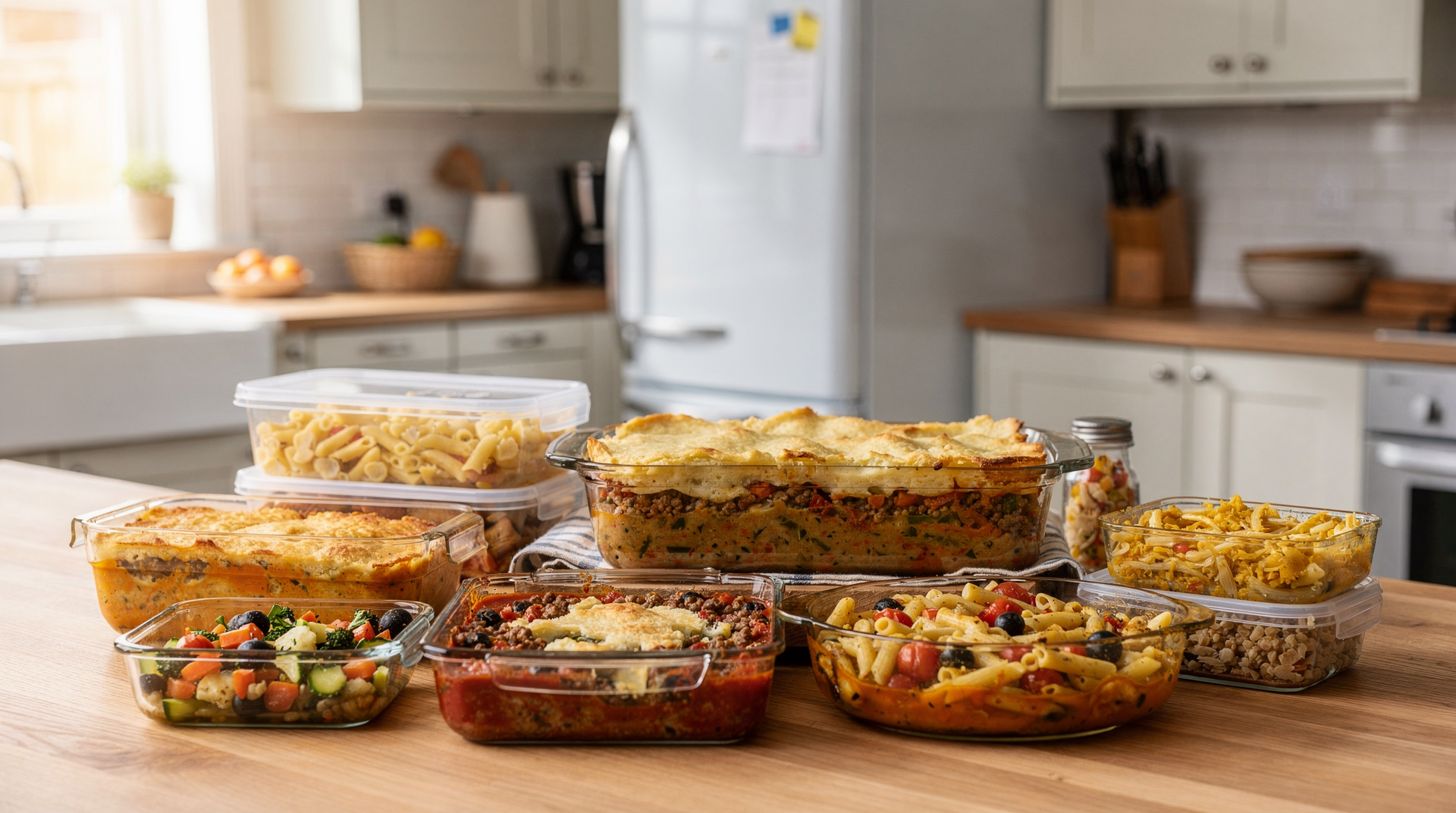
| Bakes | Good for family portions | Cottage pie, lasagne, shepherd’s pie |
| Curries and chilli | Flavour often improves after resting | Chickpea curry, beef chilli, chicken curry |
| Pasta sauces | Easy to pair with fresh pasta later | Tomato-based sauces, hidden-veg sauces |
Meals that need more care
Some dishes are trickier, and it’s worth knowing before you commit a whole batch to the freezer:
- Cream-based sauces can split after freezing — if you must freeze them, stir vigorously during reheating and add a splash of fresh cream or milk to bring them back together
- Cooked potatoes may become mealy if frozen in the wrong dish, though mash in pies tends to hold up better than plain boiled spuds
- Cucumber, lettuce, and salad leaves do not freeze well — they turn to watery mush, no exceptions
- Fried foods usually lose their crispness, which is why frozen fish fingers from the shops are coated in a particular way
- Cooked pasta can go soft if overcooked before freezing — if you’re making a pasta bake, slightly undercook the pasta before assembly
The 3 levels of freezer meal planning
I find it helpful to think about freezer cooking in stages. You don’t need to jump straight into being the most organised person on the street. Start where you are, and build up if it works for your household.
Level 1: Emergency freezer support
This is where most families begin, and honestly, it’s where plenty of people happily stay. The goal is to have a few backup meals for nights when everything goes wrong — the traffic’s awful, the kids are hangry, or you simply cannot face cooking from scratch.
Use this stage if:
- You are new to batch cooking and want to test the waters
- Your freezer space is limited (hello, under-counter freezer)
- You often forget to defrost dinner — so you need things that can go straight from freezer to oven or hob
- You need quick wins, not a full meal-prep routine that takes over your Sunday
Best meals:
- Cottage pie
- Bolognese sauce
- Vegetable soup
- Chicken curry
- Chilli
Level 2: Weekly freezer planning
At this stage, you freeze meals on purpose instead of by accident. You plan around shopping trips, leftovers, and the working week. This is where I am most weeks — it’s practical without being obsessive.
Use this stage if:
- You want fewer takeaway nights and the guilt that sometimes comes with them
- You cook for a family of 3–5 and the appetites vary wildly from person to person
- You need lunches and dinners to cover a busy week when after-school clubs and late meetings eat into cooking time
- You want to reduce waste from supermarket packs — you know, those multi-buy deals on mince that seem sensible until Tuesday morning
Best meals:
- Two or three family-sized mains that can be mixed and matched across the week
- One soup for lunches or light dinners
- One pasta sauce because it’s endlessly versatile
- One tray-bake or pie that you can just shove in the oven
Level 3: Full freezer system
This is the most organised stage, and I dip into it during particularly chaotic periods — think school holidays, festive seasons, or when someone in the house has been ill. The freezer becomes part of the household rhythm, with planned portions, labelled containers, and proper rotation.
Use this stage if:
- You cook for different appetites — a teenager who eats their body weight in pasta and a toddler who exists on three mouthfuls and optimism
- You batch cook on weekends and want to make the most of that effort
- You want a proper buffer for school runs, overtime, and illness (because there’s always one week where everyone gets the same bug)
- You need to manage a tight food budget carefully and every wasted portion stings
Best meals:
- Mixed portion sizes so you can defrost exactly what’s needed
- Component freezing — keeping sauces, proteins, and carbs separate so you can assemble different meals
- Double-batch sauces that form the foundation of several dinners
- Separate carb, protein, and veg elements so nothing gets monotonous
How to build a freezer-friendly family meal plan
Start small. A practical freezer system is easier to keep up with than an ambitious one that looks brilliant on paper but falls apart by Wednesday. I’ve been there — a freezer rammed with beautifully labelled containers and a family who suddenly decided they didn’t fancy any of it.
Step 1: Choose 2–3 anchor recipes
Pick meals your household actually eats. Do not freeze food just because it sounds efficient on a meal-prep blog. There’s no point having three portions of lentil curry if your children stage a protest at the sight of it.
Good anchors for British families include:
- Cottage pie — it’s basically a hug in a dish
- Lentil and vegetable soup — cheap, cheerful, and perfect for a Scottish winter or a drizzly February in Manchester
- Chicken and leek pie filling — freeze the filling only and top with pastry or mash on the day
- Beef or turkey bolognese — a proper workhorse that does pasta, jacket potatoes, and even nachos if you’re feeling flexible
- Chickpea and spinach curry — straightforward, filling, and good for meat-free nights without anyone complaining
Step 2: Think in portions, not casseroles
A single huge dish is awkward if your household has mixed appetites or if someone’s eating alone. Portioning gives more flexibility and means you’re not defrosting a family-sized lasagne for one person on a Tuesday.
Consider freezing:
- Single adult portions — ideal for work-from-home lunches or when someone’s eating solo
- Child-sized portions — because small people rarely eat adult quantities, and defrosting too much leads to waste
- Family portions for 3–4 people — the sweet spot for most households on a standard evening
- Sauce only, to pair later with pasta, rice, or mash — this is my favourite trick because it keeps meals feeling fresh rather than like reheated leftovers
Step 3: Match meals to your freezer space
This sounds obvious, but I’ve lost count of the times I’ve made a massive batch of something and then played Tetris with the freezer drawers. If you have a small under-counter freezer (standard in so many British kitchens), choose flat containers, freezer bags, and stackable boxes. Those rectangular takeaway-style containers from the supermarket are brilliant because they slot together neatly.
If you’re lucky enough to have a chest freezer in the garage or utility room, you can store more bulky family portions — but still keep things organised, or you’ll end up with mystery parcels from 2019 lurking at the bottom.
Step 4: Label everything clearly
I cannot stress this enough. Masking tape and a permanent marker live next to my freezer for a reason.
Write down:
- Meal name — be specific, because “stew” doesn’t help six weeks later when you’re squinting at a frozen block
- Date frozen — trust me, you will forget
- Number of portions — so you know whether to defrost one container or two
- Reheating notes if needed — especially useful if someone else is heating it up
This matters more than people think. An unlabelled container is how good food becomes mystery food, and mystery food often ends up in the bin.
Best freezer-friendly family meals for British kitchens
Cottage pie
A classic for a reason. The meat filling freezes beautifully, and the mash topping helps turn simple ingredients into a full meal. I make mine with beef mince, onions, carrots, and a splash of Worcestershire sauce — nothing fancy, but it works every time.
Best practice:
- Cool the filling first, then top with mash — don’t freeze it piping hot
- Freeze in portioned dishes if possible, or use a foil tray that can go straight into the oven
- Reheat until piping hot all the way through — the centre needs to be steaming
Shepherd’s pie
Similar to cottage pie, but traditionally made with lamb. It is ideal for using leftovers from a Sunday roast or for stretching minced lamb with lentils or vegetables. I often add a handful of frozen peas to the filling and a parsnip or two into the mash topping for sweetness. If lamb mince is pricey — and it often is in the supermarkets — mix it half-and-half with lentils and no one will notice.
Bolognese sauce
One of the most useful freezer staples in any family kitchen. It works with pasta, jacket potatoes, rice, or even as a base for a quick lasagne. I make a batch using two 500g packs of mince from Tesco or Lidl, bulk it out with finely grated carrot and courgette, and freeze it in flat bags of two portions each.
Tip:
- Freeze the sauce separately from the pasta for better texture — pasta that’s been frozen in sauce tends to go soft and a bit sad
Chilli
Chilli freezes extremely well and can be adapted for different diets. I make a beef version for the meat-eaters and a bean one for myself, and both sit happily side by side in the freezer.
Useful variations:
- Beef chilli — rich, smoky, and good with rice or jacket potatoes
- Turkey chilli — lighter and cheaper, especially after Christmas when turkey mince is reduced
- Bean chilli — use whatever tins you have: kidney beans, black beans, pinto beans
- Mixed bean and sweet potato chilli — proper comfort food that happens to be vegetarian
Chicken and vegetable casserole
A good option if you want something mild and family-friendly — the kind of meal that doesn’t provoke strong opinions from anyone at the table. Choose sturdy vegetables such as carrots, leeks, onions, and peas. I tend to use chicken thighs rather than breast because they stay more tender after freezing and reheating, and they’re usually cheaper too. Sainsbury’s often has good deals on thigh fillets if you keep an eye out.
Lentil soup
Cheap, filling, and ideal for lunch or a light dinner with crusty bread. Lentils freeze better than many other pulses because they hold their shape well in soup rather than turning to complete mush. Red lentils will break down and thicken the soup, while brown or green lentils keep more texture. A big pot of this costs barely anything — lentils, an onion, a couple of carrots, some stock — and makes enough for a week’s worth of lunches.
Lasagne
Lasagne is one of the best make-ahead family meals, but it needs a little care. Assemble it fully, then freeze before or after baking depending on your routine. If I’m organised, I’ll make two at once: one for now, one for the freezer. Use slightly less liquid in your béchamel than usual, and slightly undercook the pasta sheets if you’re freezing it unbaked — that way everything comes together properly when it’s cooked.
What to cook before freezing: a simple method
The basic workflow
- Cook the meal fully — don’t be tempted to undercook things, as the texture won’t improve later
- Cool it quickly and safely — leaving something on the side for hours isn’t great practice
- Portion it — this is the moment to think about who’s eating what and when
- Pack it in freezer-safe containers — not all plastic tubs are created equal, so check they’re rated for freezing
- Label and freeze — before you forget what’s in there
- Reheat until steaming hot — no shortcuts on this one
How to cool food properly
Do not put a large hot pan straight into the freezer. That raises the temperature inside the freezer and can affect other food, potentially causing partial thawing and refreezing — which isn’t safe or pleasant.
Better approach:
- Divide large batches into smaller containers so they cool faster
- Leave room for steam to escape — don’t seal the lids completely until the food has cooled
- Refrigerate once the steam has gone and the food is no longer scalding
- Freeze when fully chilled, usually after a few hours in the fridge
Smart freezing habits for real family life
Freeze in the right container
Use containers that fit your freezer shelf and your family’s routine. There’s no point having gorgeous glass dishes if they don’t stack in your particular freezer.
Good options:
- Freezer-safe tubs — the rectangular ones are more space-efficient than round
- Reusable meal boxes — good for packed lunches and individual portions
- Freezer bags for sauces and soups — lay them flat to save space
- Foil trays for bakes and pies — they can go straight from freezer to oven, which saves washing up
Keep air out
Air causes freezer burn, which dries out food and harms texture. I’ve pulled out soups with a leathery top layer and it’s never appetising. Press out excess air from bags and choose containers that fit the portion closely — minimal air gap means better quality.
Freeze flat where possible
Flat bags of soup, sauce, or curry are easier to stack and defrost faster than bulky tubs. Lay them on a baking tray to freeze initially, then once they’re solid, you can file them upright like books on a shelf. This is a genuine game-changer if you have a drawer freezer rather than shelves.
Rotate by date
Use the oldest meal first. A simple “first in, first out” habit prevents forgotten food at the back of the freezer — the sort that gets discovered during a deep clean and has to be thrown away. I keep a list on the freezer door showing what’s in there and when it went in, just a scribbled note that saves me rummaging.
Common mistakes to avoid
We’ve all made these, and I still catch myself sometimes:
- Freezing too much at once and then losing track of what you have — enthusiasm on a Sunday leads to bewilderment on a Thursday
- Under-seasoning meals, because flavours can seem flatter after freezing — be slightly more generous with herbs, spices, and seasoning than you would for immediate eating
- Overcooking vegetables before freezing, which makes them mushy and unappealing after reheating — aim for just-tender rather than completely soft
- Skipping labels — you think you’ll remember, but you really, really won’t
- Freezing dairy-heavy dishes without testing first — if you’re adapting a favourite recipe, freeze a small portion and see how it behaves before committing a whole batch
- Expecting every recipe to freeze well without adjustment — some dishes need tweaks to the liquid level, the cooking time, or the dairy content
How to reheat freezer meals safely
The safest method depends on the dish, but the core rule is simple: reheat until piping hot throughout. Not warm, not “probably fine” — properly hot, with steam rising.
Good reheating options
- Defrost in the fridge overnight, then reheat on the hob or in the oven — this is gentler on the food and usually gives better texture
- Reheat from frozen if the recipe and container allow it — foil trays of cottage pie or lasagne can often go straight into a hot oven, though they’ll take longer
- Stir sauces and soups during reheating so they heat evenly — a microwave can create hot spots, so give things a proper stir halfway through
Extra care with family meals
If you are serving children, older adults, or anyone vulnerable, do not guess. Make sure the meal is properly hot in the centre, not just around the edges. A food thermometer is genuinely useful here — you’re looking for at least 75°C throughout. If you don’t have one, cut into the middle and check that steam is rising from the very centre.
Budget-friendly ingredients that freeze well
For UK households trying to keep costs down — and isn’t that most of us these days — these ingredients are especially useful:
- Minced beef or turkey — often on offer at Lidl and Aldi, and freezes brilliantly whether raw or cooked
- Lentils — dirt cheap, filling, and they freeze without complaint
- Chickpeas — tinned or dried, they hold up well in curries and stews
- Beans — kidney beans, black beans, cannellini, whatever’s in the cupboard
- Carrots — the backbone of so many British meals and they cost pence
- Onions — buy big nets and freeze chopped onion in bags for quick cooking later
- Leeks — brilliant in soups and casseroles, and they’re a properly British vegetable
- Peas — frozen peas are already a freezer staple, but they’re also great stirred into cooked dishes before freezing
- Sweetcorn — adds a bit of sweetness and colour to savoury meals
- Tomatoes — tinned tomatoes are the base of countless sauces and freeze well once cooked
- Potatoes for mash-based dishes — mash freezes well in pies and toppings
- Rice-based fillings and curries — cooked rice can be frozen, though it’s best in saucy dishes rather than on its own
These ingredients are dependable because they are widely available in British supermarkets, easy to bulk out, and simple to combine into family meals. You can pick up most of them from any Tesco Express or corner shop, which matters when you’re fitting food shopping around everything else.
A practical freezer starter checklist
Use this checklist if you want to build your freezer system this week — no grand plans, just a few concrete steps:
- Choose 3 family meals your household already likes — don’t experiment, stick to the tried-and-tested
- Check how much freezer space you actually have — open the drawers, move things around, be realistic
- Buy or reuse suitable containers — you don’t need fancy kit, but you do need something freezer-safe
- Label containers before filling them — it’s easier when they’re empty and dry
- Cook one batch meal and portion it immediately — build the habit without overwhelming yourself
- Freeze one soup or sauce in flat bags — see how much space this saves compared to tubs
- Put the oldest food at the front — start the “first in, first out” habit today
- Plan one “freezer night” per week — a designated evening where dinner comes from the freezer, no cooking required
Sample 1-week freezer-friendly dinner plan
| Day | Dinner idea | Why it works |
|---|---|---|
| Monday | Cottage pie | Comforting, filling, family-friendly — the sort of meal that starts the week gently |
| Tuesday | Bolognese with pasta | Quick to assemble, easy for different appetites — the kids can have plain-ish portions while the adults add chilli flakes |
| Wednesday | Vegetable soup with bread | Cheap and good for lighter nights, especially in spring when you don’t want anything too heavy |
| Thursday | Chicken casserole with mash | Uses freezer stock well and feels properly homemade without much effort on the day |
| Friday | Chilli with rice | Flexible and good for leftovers — any extra can go into wraps or jacket potatoes for lunch |
| Saturday | Lasagne | Works well for a weekend family meal when you might have a bit more time to let it bake properly |
| Sunday | Homemade pizza or fresh meal | Lets you reset for the next batch cook — use up whatever’s fresh and check what the freezer needs restocking with |
FAQ
How long can freezer meals be kept?
That depends on the dish, packaging, and freezer temperature, but most cooked meals are best used within a few months for quality. After about three months, you might notice flavours fading or texture changing slightly, even if the food is still safe to eat. Labelled dates help you keep track — and they stop you from serving last spring’s lamb casserole in November.
Can I freeze meals with potatoes?
Yes, but the result depends on the recipe. Mashed potato in pies — like cottage pie or shepherd’s pie — usually freezes better than plain boiled potatoes. The mash acts as a protective layer, and the butter or milk in it helps keep the texture reasonable. Plain boiled or roasted potatoes, however, tend to go grainy and watery after freezing, so they’re best avoided or eaten fresh.
Is it better to freeze cooked or uncooked family meals?
For most British home cooks, cooked and cooled meals are easier and safer to manage. You know exactly what you’re getting, and reheating is straightforward. Some bakes and pies — lasagne, for instance — can also be frozen before baking, which is useful if you want fresher results later. The unbaked version can taste a bit more “just made” when it finally hits the oven, though it does take longer to cook through from frozen.
What is the best freezer meal for a picky family?
Bolognese, mild curry, cottage pie, and tomato-based pasta sauces are usually the easiest starting points because they are familiar and easy to adapt. Bolognese, in particular, is brilliant for picky eaters — you can blend the veg into the sauce so it’s smooth, and everyone just thinks it’s a normal meat sauce. Mild chicken curry is another good one, especially if you use coconut milk rather than anything too spicy.
How do I stop freezer meals from tasting bland?
Season meals well before freezing, use good stock, and add fresh herbs, cheese, or a squeeze of lemon after reheating if the recipe suits it. Freezing can dull flavours slightly — not dramatically, but enough that you notice — so be a touch more generous with salt, pepper, and spices than you would for immediate eating. A handful of fresh parsley or a grating of Parmesan just before serving can lift a previously frozen meal from decent to genuinely good.
Freezer-friendly family meals work best when they fit real British routines: a small kitchen, a busy week, and a need to make ordinary ingredients go further. Start with a few reliable dishes, portion carefully, and build a system that helps you feed people well without turning dinner into a daily scramble. The aim isn’t perfection — it’s having something decent in the freezer on a rainy Tuesday when you’d rather not think about cooking at all.