Let’s be honest: comfort food isn’t just for lazy Sundays or special occasions. On a wet Wednesday evening, when you’re staring at the fridge with a tired back, what you really need is something that comes together without a fuss and makes the kitchen feel like a hug. I’ve learned—often the hard way in my small London flat—that the trick is matching the recipe to the day you’re actually having, not the one you wish you were having. A 20-minute pasta is a perfectly respectable comfort dinner; so is a traybake when you can’t face washing up multiple pans.
This guide breaks comfort food into practical stages: figuring out what kind of meal you need, building flavour quickly, keeping it budget-friendly for a typical British supermarket shop, and scaling from a solo supper to something the whole household will eat (or that you can stash in the freezer for later). Think of it as a road map for making dinner a bit more soothing without turning it into a project.
What “comfort food” really means in a weeknight kitchen
Comfort food gets a bad rap for being heavy or indulgent, but in real life it’s simply food that feels reassuring when energy is low and the day has been long. It doesn’t have to be a three-hour stew or a roast with all the trimmings—though those are lovely when you’ve got the time. For most of us, weeknight comfort cooking does three jobs: it’s easy to cook after work (or after the school run), it uses ingredients you can grab at Tesco, Sainsbury’s or Lidl without a special trip, and it delivers that “Ah, that’s better” feeling of fullness and warmth.
For one person, comfort might be a bowl of buttery mash with sausages; for another, a baked potato oozing cheese and beans; for someone else, a quick bowl of noodles with soy and sesame. The common thread is that none of these require much mental effort—and that’s exactly the point. The best comfort recipes sit in a sweet spot between “quick enough” and “worth the small amount of effort”. That’s where we’re heading.
Stage 1: Start with the day, not the recipe
The biggest mistake I see (and one I’ve made many times) is scrolling through recipes looking for the “perfect” comfort dish without checking in with the reality of the evening. A glorious slow-cooked casserole that works on a calm Friday is pure misery on a Monday when the train was late, the fridge is bare, and you just want to eat something warm before collapsing on the sofa.
So before you even think about a recipe, ask yourself three honest questions:
- How much time do I actually have? (Be ruthless—if it’s 20 minutes, it’s 20 minutes.)
- How much washing up am I willing to tolerate? (A single pan is often the right answer on a Tuesday.)
- Do I need a full meal, or just something restorative that fills a gap?
Match the recipe to the situation
| Situation | Best comfort-food format | Why it works |
|---|---|---|
| Tired weekday, 20 minutes max (you’re knackered) | Pasta with a quick sauce, eggs on toast, speedy noodles, a loaded jacket potato | Fast, low-effort, filling. Everything can be on the table before the kettle boils. |
| Cold evening, medium effort (you want a proper warm-up) | Soup, stew, curry, baked pasta | Uses one pot, feels substantial, and the leftovers will see you through tomorrow’s lunch. |
| Family dinner, mixed appetites | Traybake, chilli, pie, sausage and mash | Easy to scale up; everyone can help themselves. Minimal last-minute fuss. |
| Low budget week (the purse strings are tight) | Beans, lentils, potatoes, seasonal veg | Ingredients are cheap, flexible, and surprisingly comforting when treated right. |
| You want leftovers for lunch (or the freezer) | Stews, casseroles, rice-based dishes, baked pastas | These improve with a night in the fridge and reheat beautifully. Portion them up straight away to avoid the “I’ll just have a bit more” trap. |
This is the first level of better comfort cooking: choosing the format before you even think about flavour. Once you know the vessel—pasta, potato, soup—you can raid the fridge with confidence.
Stage 2: Build comfort with a few dependable flavour bases
Comfort food doesn’t need exotic ingredients; it relies on repeatable foundations that make ordinary things taste like a proper meal. You don’t need a fully stocked pantry, just a handful of items that turn “edible” into “I’d make that again”.
The most useful flavour builders
- Onion, garlic and carrots – the backbone of stews, soups, and sauces. I almost always have a bag of onions and a few carrots lurking in the veg drawer, and they’ll rescue almost anything.
- Butter or olive oil – gives richness and carries other flavours. A knob of butter at the end of a pan of peas or mash takes it from plain to comforting.
- Stock – vegetable, chicken, or even a cube dissolved in hot water. It turns a pan of sautéed veg and rice into a proper meal.
- Tomatoes – passata, tinned chopped tomatoes, or a squeeze of purée. A tin of tomatoes costs pennies and adds depth to curries, pasta sauces, and casseroles.
- Cheese – a block of mature cheddar, a Parmesan-style hard cheese, or whatever odds and ends are in the fridge. Even a small grating can make a dish feel finished.
- Mustard, Worcestershire sauce, soy sauce, or vinegar – small amounts wake up the whole plate. A dash of Worcestershire in a stew or a glug of vinegar in a soup can transform it.
- Cream, crème fraîche, milk, or yogurt – soften harsh edges and add that creamy finish that spells comfort. Yogurt is brilliant swirled into a spicy lentil soup, while a splash of milk can save a sauce that’s too sharp.
These aren’t fancy. They’re the workhorses that live in my fridge and cupboard, and they’ll make a £1.50 cauliflower from Lidl taste like a treat.
A simple flavour rule
If a comfort dish tastes a bit flat, it’s usually missing one of four things: salt, acid, fat, or heat. (Yes, I know it sounds like a book title, but it works.)
For example:
- A bowl of tomato soup might need a splash of cheap white wine vinegar or a squeeze of lemon to lift it.
- Macaroni cheese can feel one-dimensional without a good teaspoon of mustard.
- A tomato sauce that’s too sharp will mellow beautifully with a tiny pinch of sugar and a pat of butter.
- A stew that’s been simmering for an hour often needs a final hit of salt and pepper, right before serving.
This little trick has saved countless dinners in my kitchen. It means you don’t need a recipe to fix a dish—you just need to taste and adjust.
Stage 3: Choose the right comfort food format for your week
Different days deserve different types of cooking. Once you know the formats, you can improvise more freely and stop staring at the fridge in desperation.
Quick comfort food for busy weeknights
These are the meals I turn to when time and patience are in short supply—the culinary equivalent of a deep breath. They all take roughly 15-20 minutes from start to finish.
- Pasta with a simple sauce: aglio e olio, store-cupboard tomato and basil, or just butter and Parmesan.
- Scrambled eggs on toast with wilted spinach (or a handful of frozen peas).
- Cheese toasties with a mug of soup—a tin of Heinz tomato soup or a quick homemade one.
- Noodles with peanut sauce (peanut butter, soy sauce, a dribble of hot water) or a garlic-soy toss with spring onions.
- Gnocchi with frozen peas and butter, finished with black pepper.
- Jacket potatoes—microwave for speed then crisp in the oven—loaded with tuna mayo, baked beans, or just cheese.
Why these work
They lean heavily on store-cupboard staples and things you probably already have. No special planning, no marathon chopping sessions. Best of all, they can be adapted to whatever’s lurking in the fridge—that half-courgette, the last slice of ham, a handful of wilted salad leaves. They’re forgiving, which is exactly what you need when you’re tired.
Mid-effort comfort food for when you want something more satisfying
Some evenings you actually have 45 minutes to an hour, and you want a meal that feels like a proper event without being a chore. These are the dishes that reward a modest extra effort with a genuine sense of occasion—and they often teach you skills that make everyday cooking easier.
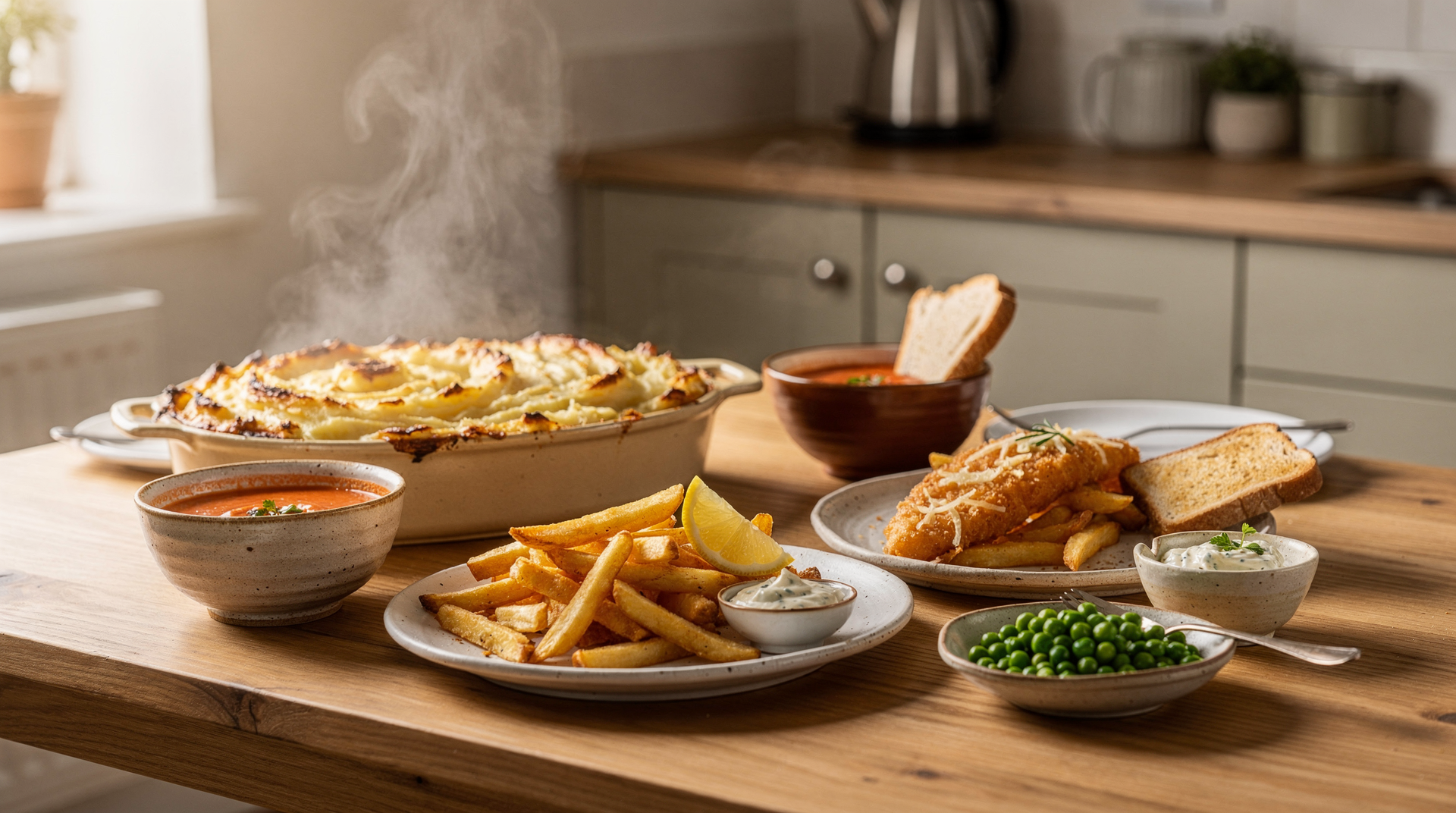
- Shepherd’s pie or cottage pie (the difference is lamb vs beef).
- Chicken and leek pie, using ready-made puff pastry to save time.
- Sausage casserole with root veg and a mustardy gravy.
- Mushroom risotto—stirring is therapeutic, and the result is pure comfort.
- Macaroni cheese, with a crunchy breadcrumb top.
- Vegetable crumble with a cheesy oat topping and a jug of gravy.
If you’re cooking for one, these often yield generous leftovers that improve in the fridge. For a family, they scale easily—just use a bigger dish.
Batch-cook comfort food for later in the week
Some of the best comfort meals taste even better the next day, after the flavours have had time to meld. That’s why I treat these as a gift to my future self. Cook once, eat twice (or three times).
- Chilli (freeze individual portions flat in zip-lock bags).
- Lasagne (assemble in two smaller dishes and freeze one before baking).
- Curry—anything from a simple dhal to a chicken tikka masala.
- Stew, whether it’s beef and ale or a root vegetable number.
- Soup—blitz and freeze in takeaway containers.
- Meatballs in tomato sauce.
- Lentil Bolognese, which costs a fraction of the meat version.
When you’re batch-cooking, let the container work for you. Portion straight into lunchboxes while you’re clearing up, so you’re not tempted to over-serve. Label and date anything going into the freezer—future you will thank you.
Stage 4: Make comfort food British, seasonal, and realistic
In the UK, comfort food changes with the weather, the supermarket offers, and what’s actually growing. A recipe that’s brilliant in January with a pile of root veg might feel leaden in July when you’ve got courgettes threatening to take over the kitchen. Matching your comfort food to the season doesn’t mean giving up on indulgence; it just means you’ll enjoy it more and probably spend less.
Seasonal comfort food ideas by season
| Season | Good ingredients | Comfort-food examples |
|---|---|---|
| Autumn | Squash, leeks, mushrooms, apples, blackberries | Roast squash soup with sage, mushroom and leek pie, baked pasta with autumn veg, apple crumble (it counts as comfort food). |
| Winter | Potatoes, cabbage, carrots, swede, onions, parsnips | Stews with dumplings, creamy mash with sausages, casseroles, bubble and squeak with a fried egg. |
| Spring | Peas, spinach, spring onions, herbs, early asparagus | Pea and mint risotto, frittata packed with green veg, light soups with a poached egg on top. |
| Summer | Tomatoes, courgettes, broad beans, lettuce, basil | Tomato and basil pasta bake, warm salad with new potatoes and grilled halloumi, courgette and cheese tart. |
Seasonal cooking matters because ingredients taste better and are often cheaper. A bag of British carrots in winter costs pennies and beats the flavour of imported ones grown for shelf life. Plus, it stops every comfort meal feeling heavy and beige.
British supermarket shortcuts that make life easier
I’m a firm believer in strategic shortcuts. These aren’t about avoiding cooking; they’re about making it realistic to cook on a Tuesday evening when you’ve got a million other things to do.
- Ready-made puff pastry – Jus-Rol or supermarket own-brand. A sheet of puff transforms left-over stew into a pie in 20 minutes.
- Frozen chopped onions and mixed veg – no tears, no fiddly chopping. A bag of frozen onion and carrot dice is a lifesaver for soup and stew bases.
- Jars of curry paste – Patak’s or similar. A couple of spoonfuls turn chickpeas, spinach, and coconut milk into a proper curry.
- Passata – smooth, ready-seasoned or plain. It’s the fastest route to a pasta sauce or a base for shakshuka.
- Pre-washed salad – a handful on the side of a rich dish adds freshness and texture. Florette or supermarket bags work.
- Frozen peas – I’d argue they’re the single most useful ingredient in a British kitchen. They go into risotto, pasta, soup, stew, or just as a quick side with butter.
Stage 5: Keep costs under control without sacrificing comfort
Comfort food can become expensive if you rely on pricey cuts of meat, mountains of cheese, or premium ready meals. But real thrifty comfort cooking is about using more affordable ingredients strategically so the meal still feels generous.
Budget-friendly swaps that still feel satisfying
- Base your meals on potatoes, rice, pasta, and oats – they fill the plate cheaply and absorb flavour brilliantly.
- Stretch mince with tinned lentils, beans, or finely chopped mushrooms. Half a pack of 5% fat mince goes much further when bulked out, and you won’t miss the meat.
- Use cheddar more sparingly but more deliberately. A smaller amount of strong mature cheddar grated over a dish gives more flavour impact than a handful of mild cheese. Grate from a block—it melts better and is often cheaper per kilo than pre-grated.
- Buy seasonal veg from the loose bins at the supermarket. It’s cheaper than pre-packaged and you buy only what you need.
- Treat leftovers as an ingredient, not an afterthought. Last night’s roast veg can become tomorrow’s soup or frittata filling.
Cheapest comfort-food building blocks
These are the ingredients I always keep on hand because they can pivot into dozens of meals:
- Potatoes (a 2.5kg bag from Lidl costs around £1.50 and makes mash, baked potatoes, soup, hash, or traybake)
- Onions
- Carrots
- Eggs (a dozen free-range for about £2)
- Pasta (supermarket own-brand)
- Rice (long-grain or basmati)
- Porridge oats (not just for breakfast—use them in crumble, toppings, or even savoury bakes)
- Tinned tomatoes (chopped or plum)
- Beans and lentils (tinned or dried)
- Frozen vegetables (peas, spinach, mixed veg)
With these ten items and a few extras like butter, cheese, and stock, you can make soup, stew, pie filling, pasta sauce, curry, or a countless array of comfort dinners without needing a special trip to the shops.
Common money-saving mistake
A mistake I see often is buying a “special” budget ingredient that only works in one recipe—like a jar of harissa or a specific spice blend you’ll use exactly once. A smarter approach is to stock flexible basics that show up in several meals across the week. For example:
- A bag of potatoes becomes mash on Monday, roast potatoes on Wednesday, and thickens a soup on Friday.
- A block of cheddar tops pasta, fills toasties, and finishes a baked leek gratin.
- A bag of carrots can go raw into slaw, roasted as a side, thrown into a stew, or blended into soup.
This way, your shopping spends work harder and you throw less away.
Stage 6: Improve texture, because comfort food is also about feel
Taste isn’t the whole story. A truly comforting meal plays with texture: creamy against crisp, soft against chewy, rich against bright. Without that contrast, dishes can feel one-dimensional and, frankly, a bit sad—think endless soft pasta without any crunch.
Easy texture upgrades
- Top pasta bakes with breadcrumbs or grated cheese and a knob of butter. Put it under the grill for a few minutes to get a golden, crispy top.
- Add fried onions or shallots to mashed potatoes or cottage pie—even the ready-fried crispy onions in a tub from the supermarket work brilliantly.
- Finish soup with croutons, a swirl of yogurt, or a slice of toast cut into soldiers.
- Serve curry with naan, rice, or quick-pickled onions (just red onion slices steeped in vinegar for 10 minutes).
- Include something green, even if it’s just a handful of frozen peas stirred into pasta or a scattering of fresh parsley. It adds visual life and a little bite.
- Offer pickles, chutney, or a dollop of tangy yogurt on the side of rich dishes like curry or pie.
A small effort here makes the difference between a meal that’s “fine” and one that you actively want to eat.
A practical step-by-step method for building a comfort dinner
When you’re standing in the kitchen without a plan, use this flexible framework. It’s how I cobble together meals when I haven’t had time to think.
- Choose a base: pasta, potatoes, rice, bread (toast, toastie, bruschetta), or soup. That decides the shape of the meal.
- Add a protein if needed: eggs, beans, tinned tuna, leftover chicken, sausages, tofu, or lentils. Even a handful of peanuts on a noodle dish adds protein and crunch.
- Add vegetables: fresh, frozen, or tinned—whatever you have. A pile of frozen peas or spinach turns a bowl of carbs into dinner.
- Build the sauce or seasoning: tomato-based, cheesy, a quick gravy from stock and a roux, curry paste, a simple butter-and-garlic, or just a good grinding of pepper and a squeeze of lemon.
- Add texture: breadcrumbs, herbs, crispy onions, croutons, a handful of crushed nuts, a side salad, or pickles. Something that snaps or crunches.
- Taste and adjust before serving. This is the step that turns a good-enough meal into a proper comfort dish. Add salt, acid, a bit more fat, or a pinch of chilli.
This method keeps dinner flexible. You’re not locked into a single recipe; you’re assembling a meal from dependable building blocks. It’s especially handy for using up odds and ends before they go to waste.
Typical mistakes that make comfort food less comforting
Even simple recipes can go sideways, and I’ve made most of these blunders more than once. Here’s what to watch out for:
- Making it too complicated. Comfort food should reduce stress, not create it. If the recipe has 15 ingredients and three separate pans, save it for the weekend.
- Using too few seasonings. Plain ingredients need more than a pinch of salt. Taste as you go and don’t be shy with pepper, herbs, or a little stock powder.
- Skipping acid. Rich, creamy, or meaty dishes almost always benefit from a small sharp note—lemon juice, vinegar, pickles, or a spoonful of yogurt.
- Overcooking pasta, veg, or sauce. Comfort food should be soft but not mushy. Keep an eye on the clock and drain pasta a minute early if it’s going back in a hot oven.
- Forgetting leftovers. If you’re cooking a big pot of stew, plan for lunch the next day. Portion it out before you sit down to eat so you’re not tempted to finish the lot.
- Trying to impress instead of feed. If your aim is to show off your culinary chops, you might miss the point. Practicality is a big part of comfort. There’s honour in a well-made cheese toastie.
A simple comfort-food checklist for busy evenings
Before you start cooking, tick through these six questions:
- I know how much time I actually have.
- I’ve chosen a recipe that fits the day—not one I’d like to have if life were different.
- I have at least one flavour builder (onion, garlic, stock, cheese, etc.).
- I have something for texture (crunchy topping, pickles, fresh herbs, salad).
- I know what leftovers I’ll keep and how I’ll store them.
- I haven’t overcomplicated the plan (no, you don’t need to make your own pasta on a Tuesday).
If you can tick most of these boxes, your dinner is likely to be a success—and you’ll enjoy the process more.
What to cook when you are at different stages of confidence
Different comfort dishes suit different levels of kitchen confidence. That’s fine—start where you are.
If you are just starting out
Stick to dishes with a short ingredient list and no tricky techniques. They’ll build your confidence without overwhelming you.
- Cheese toasties (experiment with fillings).
- Baked potatoes (oven or microwave-combo).
- Pasta with a jar of good tomato sauce, jazzed up with garlic and basil.
- Scrambled eggs with cheese, mushrooms, or spinach.
- Simple soups: a tin of chopped tomatoes, a stock cube, and whatever veg is wilting in the fridge, blitzed until smooth.
If you are cooking regularly
Now’s the time to tackle meals that teach transferable skills, like making a roux, browning meat properly, or assembling a pie.
- Cottage pie (a great lesson in layering flavour into mince).
- Traybakes (chop, season, roast—one pan, big payoff).
- Risotto (stirring teaches patience and texture control).
- Simple curries using paste and coconut milk.
- Quick pies with shop-bought pastry.
If you want to cook more efficiently
This stage is about working ahead so weeknights are less frantic. Small shifts make a big difference.
- Turn a Sunday roast chicken into Monday soup or pie filling.
- Use leftover roast veg in a Tuesday frittata or Wednesday fried rice.
- Stretch 500g of mince into a pasta sauce for Monday and stuffing for jacket potatoes on Thursday.
- Make double portions of soup or stew and freeze half in labelled containers.
FAQ
What is the best comfort food for a weeknight?
Honestly, the best comfort food is the one you can make without a meltdown. For most of us, that means something quick, filling, and low-stress. My top picks: pasta aglio e olio, a jacket potato with cheese and beans, a simple bowl of egg-fried rice with peas, or a tray of roasted veg and sausages. The key is to match it to the evening you’re actually having—20 minutes, minimal washing-up, and ingredients you already own.
How do I make comfort food taste better without adding lots of ingredients?
Season properly and remember the magic four: salt, acid, fat, and heat. A little mustard in cheese sauce, a dash of vinegar in soup, a finishing knob of butter on veg, or a pinch of chilli flakes can transform a dish. Taste before you serve and adjust; often all it needs is a crack of black pepper or a squeeze of lemon.
What are good British comfort foods for cold weather?
Classics are classics for a reason. Shepherd’s pie, cottage pie, sausage and mash with onion gravy, beef stew with dumplings, baked macaroni cheese, and a steaming bowl of leek and potato soup. Anything that comes out of the oven bubbling and fills the kitchen with a savoury smell will do the job.
How can I make comfort food on a budget in the UK?
Build meals around the cheapest, most flexible ingredients: potatoes, pasta, rice, beans, lentils, eggs, and seasonal veg. Use meat and cheese as flavour accents rather than the main event—a smaller amount of strong cheddar or a handful of mince stretched with lentils goes a long way. Shop at Aldi or Lidl for basics, and always check the reduced section for veg and bread you can use that day.
Which comfort food recipes work well for leftovers?
Chilli, curry, stew, lasagne, soup, and most baked pastas are brilliant the next day—flavours deepen, and they reheat without fuss. Portion them into microwave-safe containers so you’ve got lunch sorted. If you’re freezing, cool the food completely, label it, and freeze flat to save space.
The simplest way to think about comfort food
Comfort food for any day of the week isn’t about following elaborate recipes or having a perfectly stocked pantry. It’s about reading the room—your kitchen, your energy level, your actual Tuesday evening—and matching the meal to the moment. Once you get the hang of choosing the right format, building flavour quickly with a few trusted ingredients, and keeping things realistic for a British kitchen (with its unpredictable weather and limited counter space), comfort cooking stops being a fallback and becomes a skill that makes everyday life a little easier and a lot more enjoyable. And honestly, that’s what I hope you take away: that a simple, well-made dinner on a rainy evening is one of life’s quietest pleasures.