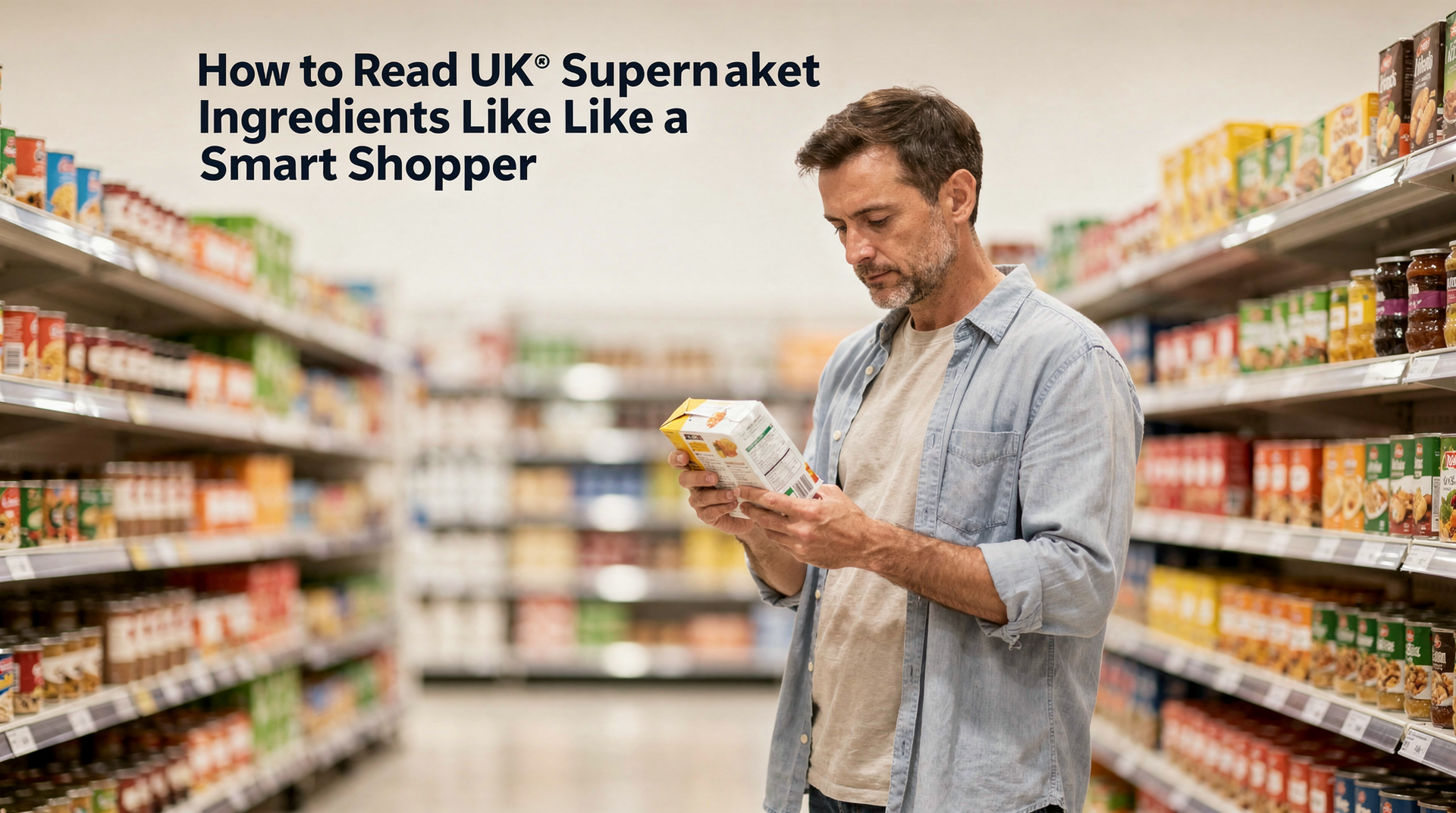
It’s 5:30 on a Tuesday, rain hammering the car park, and you’re dashing into your local Tesco or Aldi to grab a bottle of sauce, a packet of pasta, maybe a “healthy” granola for tomorrow’s breakfast. You pick up the glossy jar with “gourmet” written across the front, but something makes you turn it over. You squint at the tiny print, and suddenly it feels like you’re trying to decipher a lab report, not choose your dinner. What on earth is modified starch? Why is there so much sugar in a “low‑fat” yogurt? Is “natural flavouring” actually from real fruit, or is someone taking the mickey?
That moment, when you’re stood in the aisle with a packet in one hand and a vague sense of distrust in the other, is where smart shopping truly begins. Learning to read supermarket ingredients isn’t about turning into a food‑science bore or banning everything tasty from your trolley. It’s about knowing exactly what you’re feeding your family, getting the best value for your hard‑earned money, and walking out of the shop with food you can cook with confidence, even when the gas bill is due and the fridge is practically empty.
I’ve spent years elbow‑deep in compact London kitchens and tiptoeing through every supermarket from Lidl to Waitrose, working out which products deliver and which ones are all front and no substance. This guide will walk you through four simple stages of ingredient literacy. Whether you’re just starting to pay attention or you already eyeball every nutritional label, you’ll learn to:
- Spot the most common UK‑specific ingredient traps
- Understand what terms like modified starch or natural flavouring actually mean for your cooking
- Catch hidden sugars, salts, and fats that lurk in supposedly “good” products
- Compare the real value and quality between brands, not just the price tag
- Build your own quick‑fire shopping checklist so you don’t have to stand in the aisle forever
No jargon. No marketing fluff. Just practical, real‑world know‑how from someone who’s stood exactly where you are, hungry and a bit cross that a jar of pasta sauce can still taste like cardboard despite the fancy label.
Stage 1: The Beginner – Avoiding the Obvious Junk
Most of us start here. You’ve already got a rough mental list of things to swerve: anything with a paragraph of unpronounceable chemicals, the word “hydrogenated”, or a “low fat” sticker that feels too good to be true. That’s a solid beginning, but it’s easy to get stuck thinking that simply avoiding artificial colours means you’ve cracked it. Over the years I’ve watched too many friends fill their cupboards with low‑fat yogurt that tastes like a melted lolly and wonder why they’re still craving sugar at 10pm.
The real trick at this stage is learning to recognise the three most common junk ingredients that pop up all over UK supermarket shelves. They’re the ones that replace proper ingredients with cheap bulk and somehow still manage to sound innocuous.
| Ingredient | What It Is | Why It’s a Problem | Common Products |
|---|---|---|---|
| Modified Starch | A processed carbohydrate used to thicken or stabilise | Often used instead of real ingredients (like potatoes, tomatoes, or flour), adding bulk without flavour or nutrition | Ready meals, sauces, soups, breads |
| Natural Flavouring | A vague term for flavour compounds derived from natural sources | Can range from genuine fruit extracts to isolated molecules created in a lab; frequently used to mask cheap base ingredients | Cereals, snacks, ready meals, drinks |
| Glucose‑Fructose Syrup | A sweetener made from corn or wheat | Very high in free sugars, often hidden in products marketed as “healthy” or “low fat” to compensate for lost texture | Granola, yogurts, sauces, baked goods |
I remember picking up a “natural” chicken and vegetable soup from one of the big four a few winters ago, thinking I was being terribly virtuous. The first three ingredients? Water, modified starch, natural flavouring. There wasn’t much evidence of actual chicken or veg in that bowl. If you spot modified starch, glucose‑fructose syrup, or natural flavouring sitting right at the top of the list—especially in the first three items—put the packet back. You’re essentially paying for expensive filler.
A typical mistake I see again and again: assuming “natural flavouring” means the product is brimming with real fruit or herbs. In truth, it could be a single flavour molecule isolated from a leaf and multiplied in a factory, never having seen a strawberry in its life. That’s absolutely allowed under labelling rules, but it doesn’t make for a smarter buy.
Stage 2: The Intermediate – Spotting Hidden Sugars, Salts, and Fats
Once you’ve got the obvious junk sussed, it’s time to sharpen your eye for the things that sound okay but add up shockingly fast. This is where so many well‑meaning shoppers trip up because the front of the pack is doing a brilliant job of looking angelic while the back tells a different story entirely.
The Sugar Trap
Sugar hides under more names than you’d think. In UK supermarkets, you’ll bump into glucose, fructose, maltose, sucrose, dextrose, cane sugar, agave syrup, and honey—yes, honey is still sugar, no matter how artfully a jar is dressed. High‑fructose corn syrup is less common here than in the States, but glucose‑fructose syrup fills exactly the same niche.
When you pick up a product labelled “low fat”, your natural instinct is to think it’s better for you. But manufacturers often pump up the sugar to replace the mouthfeel that was lost when the fat was stripped out. I’ve stood in Sainsbury’s comparing a “low‑fat” strawberry yogurt with their ordinary full‑fat Greek style. The low‑fat version had 12g sugar per 100g; the full‑fat only 4g. That’s the difference between a balanced snack and something that might as well be a pudding.
Your best friend here is the nutritional table on the back. Look for the line that says Carbohydrates – of which sugars. If that figure creeps above 5g per 100g, you’re into moderate sugar territory. Above 10g per 100g? Put it back unless it’s a genuinely occasional treat and you’ve made peace with it. Don’t be fooled by the word “fruit” on the front—always double‑check the numbers.
The Salt Trap
Salt is just as sneaky, and on a cold evening when you just want a warming bowl of soup, it’s easy to swallow half your daily limit without realising. You’ll see it listed as salt, sea salt, rock salt, sodium chloride, sodium bicarbonate, and even monosodium glutamate in some savoury products.
Check the nutritional table for sodium. In the UK, if sodium is above 0.3g per 100g, the product is high in salt. More than 0.6g per 100g is very high—to put that in perspective, a 400g tin of soup with 0.5g sodium per 100g would give you about 5g of salt across the whole can. That’s nearly an entire day’s recommended maximum before you’ve even thought about the bread you’re dunking.
I once compared two ready‑made tomato soups from the same supermarket chain. The “low‑fat” version had 1.2g sodium per 100g, while the regular version clocked in at 0.4g. The low‑fat one might save you a few grams of fat, but you’re paying for it in salt and a serious lack of flavour complexity. Usually the regular version is made with more actual vegetables and less laboratory help.
The Fat Trap
Now, not all fat is the villain—far from it. A generous glug of olive oil or a knob of butter can make a dish sing. The trouble comes when cheap, highly processed oils are used to bulk out a product that’s pretending to be something special. Keep an eye out for vegetable oil blends (often a mixture of palm, sunflower, and rapeseed), palm oil, fully or partially hydrogenated oils (thankfully rare now in the UK but still worth watching for), and an awful lot of rapeseed oil in places where butter or olive oil should rightfully sit.
Turn to the nutritional table and look at total fat. If a product clocks more than 3g fat per 100g, it’s on the higher side; above 5g per 100g and you’d want to be sure that fat comes from something worthwhile, like nuts or extra virgin olive oil, rather than just bulking agents. A “gourmet” pasta sauce that lists vegetable oil as its second ingredient and contains 4g fat per 100g, but no sign of actual olive oil or cheese, is probably not the bargain it pretends to be. The cheaper, plainer sauce next to it might have 2g fat and a shorter ingredient list with real tomatoes and herbs—far better for your weeknight spaghetti.
Stage 3: The Advanced – Understanding Quality, Value, and Misleading Labels
By now, you’re reading the back of packets automatically and starting to feel a bit like a detective. The next level is all about cutting through the marketing words that sound so reassuring but often mean absolutely nothing—or cost you extra for no good reason.
The “Healthy” Label Trap
Supermarkets love to splash terms like “healthy”, “gourmet”, “premium”, “artisan”, “natural”, and “free from” across their packaging. But unlike “organic”, which is legally defined, most of these are marketing fluff. I’ve shaken my head in the cereal aisle at a “healthy” granola that listed sugar as the second ingredient and contained modified starch to bind the clusters. The front of the pack had pictures of berries and whispered promises of wellness; the back told a very different story.
As a rule of thumb, the more health claims plastered on the front, the more suspicious you should be. Flip straight to the ingredient list and the nutritional table. If you see modified starch, glucose‑fructose syrup, or a string of long words that sound more like a chemistry set than a kitchen storecupboard, the product doesn’t live up to its front‑label fairy tale.
The “Organic” Label Trap
“Organic” is a regulated term in the UK, which is great—it means no synthetic pesticides and higher welfare standards in many cases. But an organic biscuit is still a biscuit. An organic granola can still be swimming in sugar, and an organic ready meal can pack as much salt as its non‑organic twin.
I once nearly bought a beautifully packaged organic granola for £4.50, feeling very responsible. Then I compared it with a basic supermarket own‑brand granola at £1.80. The organic version had 28g sugar per 100g; the own‑brand had 14g. Yes, the organic one might have used slightly better oats, but my family would have been spooning up twice the sugar for more than double the price. Always compare the nutritional table side‑by‑side—if the organic product isn’t giving you noticeably better numbers, that “organic” label is just a premium price tag.
The “Free From” Label Trap
“Free from” labels are a boon if you have genuine allergies or intolerances, but for the rest of us they can lead a merry dance. A “free from sugar” chocolate bar might be packed with polyols like maltitol that can upset your stomach, and a “free from gluten” cake might compensate with extra fat and sugar to make up for the lost structure.
I always remind myself, especially when shopping for someone with an allergy, to scan the whole ingredient list. If you spot artificial sweeteners like aspartame or sucralose in a “free from sugar” item, consider whether you’d be better off with a smaller portion of the real thing, which often tastes nicer and satisfies more quickly. And if you see modified starch or glucose‑fructose syrup creeping in, the product is trying to fill a void that a few more honest ingredients could have managed.
The Value Trap
Price is a terrible guide to quality. That £5 jar of “premium” tomato and basil sauce might use the exact same base of tomatoes and modified starch as a £2 basic version, just with a fancier label and a glass jar. I’ve stood comparing two pesto pots in Marks & Spencer: the “gastropub” version had rapeseed oil as its first ingredient, while the standard one had basil and olive oil. The cheaper pot was genuinely better.
Develop the habit of comparing ingredient lists not just across brands, but across price points within the same supermarket. Sometimes the mid‑range or even the value range comes up trumps because it relies less on marketing and more on getting you to buy it again. Your wallet and your dinner will thank you.
Stage 4: The Expert – Building Your Personal Smart Shopper System
When you’ve done all this a few times, it stops being a chore and starts feeling like a superpower. You’ll walk into any supermarket—whether it’s a massive Tesco Extra or a corner Co‑op—and instinctively know where the value lies. The final stage is about turning all that know‑how into a system you can use every week without giving it a second thought.
Here’s a checklist I keep in my head. Some days I literally run through it in the aisle, and it’s never let me down.
✅ Before You Buy
- I’ve read the ingredient list, not just the pretty front.
- I’ve checked the nutritional table for sugar, salt, and fat.
- I’ve compared this product with at least one other brand or own‑label option.
- I’ve spotted any hidden junk (modified starch, glucose‑fructose syrup, natural flavouring at the top of the list).
- I’ve thought about whether the price reflects the actual ingredients inside.
✅ If You See Any of These Red Flags
- Modified starch in the first three ingredients – put it back.
- Glucose‑fructose syrup in the first three – put it back.
- Natural flavouring in the first three – put it back.
- Sugar > 10g per 100g – put it back (unless it’s a rare treat).
- Sodium > 0.6g per 100g – put it back.
- Total fat > 5g per 100g from cheap oils – put it back.
✅ If You Buy
- I’ve chosen the product with the shortest, most recognisable ingredient list.
- I’ve chosen the one with the best nutritional figures for what I need.
- I’ve picked the one that gives me honest value, not just the lowest sticker price.
- I know how this item will slot into the week’s cooking without creating waste.
Your Weekly Smart Shopper Routine
On a Sunday afternoon, while the kettle’s boiling, I sit down for five minutes and plan the week’s main meals. I check what’s already lurking in the fridge and the cupboard, write my list on the back of an envelope or in the notes app on my phone, and head to the shop with my mental checklist ready. When I get back, I unpack and mentally note anything that doesn’t match up—maybe I got caught by a “new recipe” label, or I forgot to compare the own‑brand option. Next week, I’ll be quicker and sharper. It’s a tiny ritual, but it saves me a fortune and stops those sad end‑of‑the‑week clear‑outs where you bin half a bag of something that wasn’t what you thought.
Your Smart Shopper Mindset
- Never trust the front label on its own—the truth is on the back.
- “Healthy” is a marketing word, not a guarantee. Check the numbers.
- A higher price doesn’t mean higher quality. Compare ingredient lists ruthlessly.
- Buying in bulk only saves money if the product is genuinely worth eating. Check the label first.
- The nutritional table is your most reliable shopping companion, so make it a habit.
Common UK Supermarket Ingredient Traps (And How to Avoid Them)
1. The “Low Fat” Trap
You see a yoghurt, a soup, or a ready meal with “low fat” proudly displayed and assume it’s the lighter choice. More often than not, the fat has been replaced with extra sugar or modified starch to keep the texture pleasant. The low‑fat strawberry yogurt can easily pack 12g sugar per 100g, while the full‑fat plain version might sail along at 4g. Always read the “of which sugars” figure—if it’s above 10g per 100g, consider whether you’d be better off with a smaller portion of the real thing.
2. The “Gourmet” Trap
“Gourmet” sauces and soups often dress up in glass jars and fancy script, but their ingredient lists tell a less luxurious tale. Modified starch and cheap vegetable oil might be the real stars, with only a whisper of tomato or cream. If modified starch appears in the first three ingredients, you’re paying for thickened water with a posh label.
3. The “Healthy” Trap
Granola, cereal bars, and juices are masters of this. The packaging shows wheat fields, berries, and yoga‑type fonts, yet the nutritional table reveals over 30g sugar per serving. That’s more than a slice of cake. Look beyond the visuals—if sugar per 100g is over 10g, the product is more of a dessert than a breakfast.
4. The “Organic” Trap
Organic certification tells you how the ingredients were farmed, but it doesn’t guarantee a lighter nutritional profile. An organic flapjack can still be swimming in golden syrup. Always compare the nutritional table with a standard option. If the organic version is higher in sugar, salt, or fat, the extra cost isn’t buying you better health.
5. The “Free From” Trap
A “free from sugar” biscuit might rely on artificial sweeteners like aspartame or sucralose, which some people prefer to avoid. Equally, “free from gluten” breads can be packed with salt and fat to improve flavour. Treat the “free from” claim as one piece of the puzzle, not the whole picture, and scan that ingredient list for unexpected additions.
FAQ: Smart Shopping Questions for UK Home Cooks
Q1: What does “modified starch” mean, and should I avoid it?
Modified starch is a carbohydrate that’s been physically or chemically altered to act as a thickener, stabiliser, or bulking agent. It’s a cheap way to give a sauce or soup body without using more tomato, cream, or vegetables. If it sits in the first three ingredients, it’s doing the heavy lifting at the expense of real food. I consider it a flashing amber light and almost always look for a version without it.
Q2: Is “natural flavouring” actually natural?
Technically yes, it must come from a natural source—plant, animal, or microorganism—but that doesn’t mean there’s a blueberry in sight. It can be a single molecule isolated in a lab and used to mimic a flavour. So a “natural strawberry flavouring” might never have met a strawberry. Don’t let the word “natural” lull you into thinking you’re getting fruit.
Q3: How do I spot hidden sugar in “low‑fat” products?
Turn straight to the nutritional panel and look for “Carbohydrates – of which sugars”. If it’s above 10g per 100g, the product is very high in sugar, regardless of the fat content. Low‑fat dressings, yogurts, and sauces are the usual suspects.
Q4: What’s the difference between “salt” and “sodium” on the label?
Salt is the familiar stuff in your kitchen cupboard, chemically sodium chloride. The nutritional table usually lists sodium (in grams). To get a rough salt figure, multiply the sodium value by 2.5. So if you see 0.5g sodium per 100g, that equates to about 1.25g salt. In the UK, a product with sodium above 0.6g per 100g is very high in salt.
Q5: Are organic products always healthier?
No. They might have been produced without synthetic pesticides, but they can still be high in sugar, saturates, or salt. An organic chocolate pudding is still a chocolate pudding. Use the nutritional table to compare—if the organic version isn’t lower in the things you’re watching, the extra spend may not be worth it.
Q6: What should I do if I see “glucose‑fructose syrup” in the ingredients?
Treat it as a red flag. It’s a high‑sugar sweetener that often appears in “healthy” granolas, cereal bars, and low‑fat products. If it’s near the top of the list, the product is providing more empty sweetness than nourishment.
Q7: How can I tell if a product is good value?
Ignore the front label and compare ingredient lists and nutritional tables across two or three price points—value, standard, and premium. Quite often the mid‑range supermarket own‑brand has the best balance of real ingredients and reasonable price. Checking the cost per 100g also helps you compare directly.
Q8: What’s the best way to start reading ingredients?
Begin with the top three items. If you find modified starch, natural flavouring, or glucose‑fructose syrup there, that product is not what it pretends to be. Make this a habit for everything new that goes into your trolley, and within a few weeks you’ll spot the dodgy items without even thinking.
Q9: Can I trust “free from” labels?
Not blindly. Always read the full ingredient list to see what’s been added in place of the removed ingredient. Free‑from‑sugar products may include artificial sweeteners, and free‑from‑gluten products can be heavy on fat and starch. Use the label as a starting point, then do your own digging.
Q10: What’s the most important thing to remember when shopping?
Don’t trust the front of the pack. That’s where marketing lives. The real information is on the back, in the ingredient list and nutritional table. Once you switch your focus to that side of the packet, you’ll make choices that are better for your health, your budget, and your cooking.
Final Thoughts: Your Smart Shopper Journey Starts Now
Learning to decode supermarket ingredients isn’t about being perfect, and it’s definitely not about banning every biscuit or jar of sauce from your cupboard. It’s about knowing what you’re buying so that when you do splash out on a treat, it’s a conscious choice, not a marketing trick. It’s about feeding your household food that actually tastes of its ingredients, saving money that would otherwise vanish down the drain with a half‑used bottle of something disappointing, and walking back from the shops feeling quietly clued‑up rather than overwhelmed.
You don’t need a nutrition degree. Just start with the simple habit of flipping the packet over. Check those first three ingredients. Glance at the sugar, salt, and fat numbers. Compare the own‑brand version with the shiny premium one and see which comes out on top. Every time you do it, you’ll get quicker. You’ll start to recognise the tricks, and soon your weekly shop will be faster, cheaper, and far more rewarding.
So next time you’re standing in the supermarket at 5:30 on a rainy evening, clutching a packet of something that looked promising, give yourself thirty seconds to read the back. Trust me, you’ll make a smarter choice, your cooking will be better for it, and your wallet will breathe a little easier too. The smart shopper journey begins right there, in the aisle, with you—and it starts now.