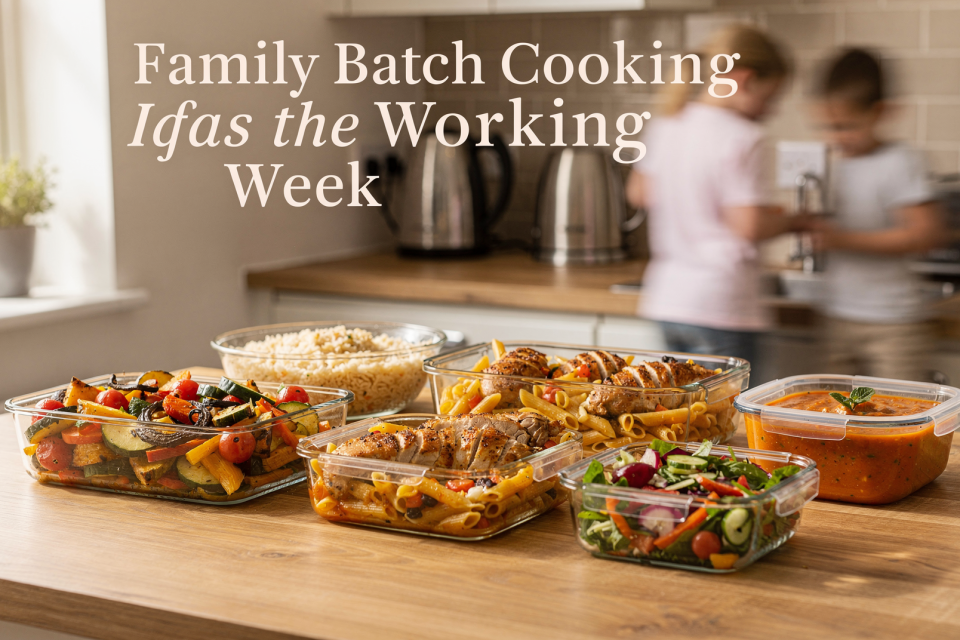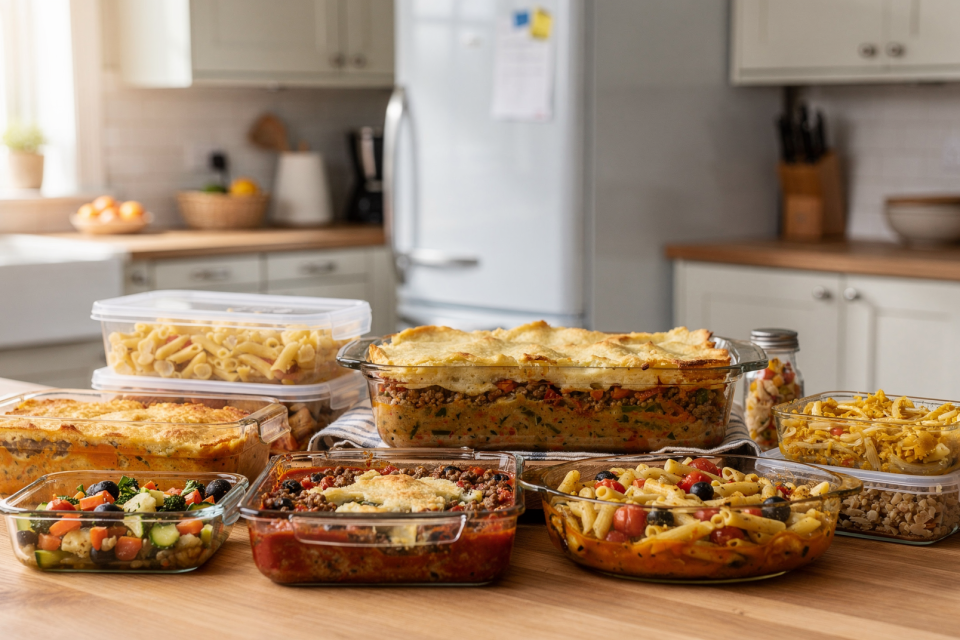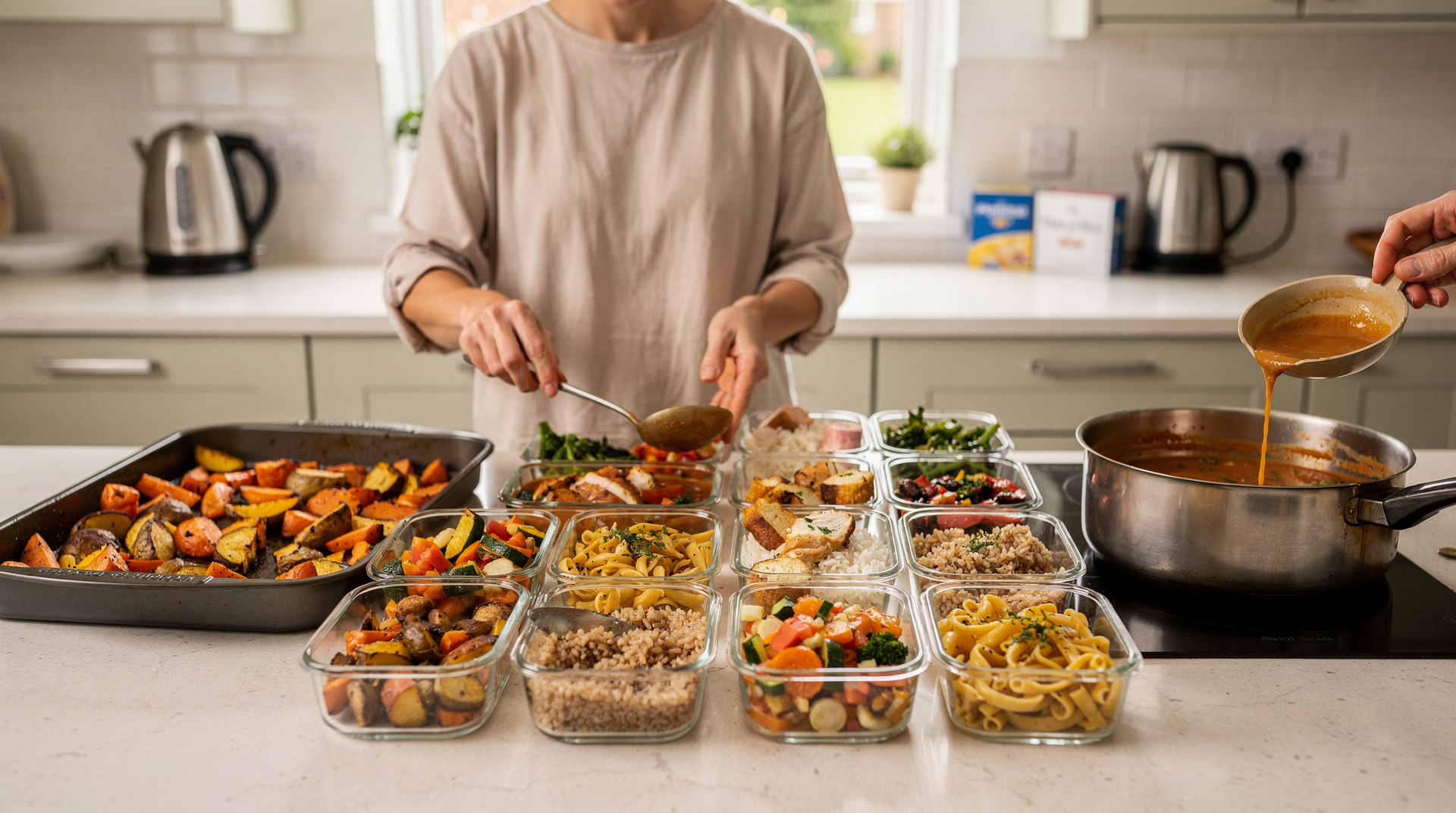
Batch cooking is the quiet hero of a household that runs on unpredictable work hours, after-school clubs, and the eternal question: “What’s for tea?” It’s not about turning your kitchen into a factory on a Sunday afternoon – it’s about building a little system that fits your fridge, your schedule, and the way your family actually eats. When you get it right, you’ll waste less food, slash your supermarket bill, and feel remarkably smug on that rainy Tuesday when dinner is already sorted.
What batch cooking really means
At its simplest, batch cooking is making more of something than you need right now, so you’ve got meals ready for later. In a typical British household, that usually means one or two base dishes prepped on a Sunday or a quiet weekday evening, then used in different ways across the week’s lunches and dinners.
It’s absolutely not about cooking five identical portions of the same meal and expecting everyone to eat them on repeat. The clever bit is the flexibility. A tray of roasted veg can morph into a lunch bowl with grains and a dollop of yogurt, become the base of a quick pasta sauce, or sit proudly beside sausages on a Tuesday. A big pot of chilli can go with rice on Monday, jacket potatoes on Wednesday, and wrap fillings on Thursday – same core, different face, no boredom.
Why it works for British home cooks
Batch cooking slots into real British life because it mirrors the way we already shop and cook. Most of us do one main supermarket run a week – at Tesco, Sainsbury’s, Lidl or wherever the budget fits – and then try to eke out what’s in the fridge for the next six days. We’ve got smaller kitchens than we’d like (especially in flats and terraced houses), limited freezer space, and a deep-seated hatred of throwing food away.
Add in the school run, the commute home in the dark, and that drizzly evening when even the thought of chopping an onion feels like a personal insult, and batch cooking stops being a hobby and starts being a survival tool. It answers the “What’s for tea?” panic when the fridge looks a bit sad and you’re running on fumes. Plus, there’s something deeply satisfying about pulling a homemade shepherd’s pie filling out of the freezer and knowing you’ve outsmarted the entire week.
The three stages of batch cooking
Don’t feel you have to go from zero to a freezer full of colour-coded containers overnight. Like any good kitchen habit, batch cooking works best when you ease into it. Most people start small, gain confidence, and then settle into a rhythm that quietly saves them hours every week.
| Stage | What it looks like | Main benefit | Main risk |
|---|---|---|---|
| Beginner | Cooking one extra meal for the freezer | Less pressure on busy nights | Making too much too soon |
| Intermediate | Preparing a few versatile components | More meal variety | Fridge clutter and poor planning |
| Established | A repeatable weekly system | Real time and money savings | Falling into repetitive menus |
Stage 1: Start with one freezer-friendly meal
If you’re new to this, pick just one dish that freezes beautifully and reheats without complaint. Think lentil and vegetable stew, a rich beef or turkey chilli, chicken and leek pie filling, a basic tomato pasta sauce, or a straightforward curry with chickpeas or chicken thighs. All of these are forgiving, cheap, and taste just as good – sometimes better – after a stint in the cold.
At this stage, the goal isn’t perfection. It’s learning how much your household actually eats, how long leftovers last in your particular fridge, and which containers stack neatly in your freezer without avalanching onto the floor every time you open the door.
Stage 2: Move to flexible components
Once you’ve got a feel for it, stop thinking only in terms of complete meals. Start prepping ingredients that can be combined throughout the week: cooked grains like rice, quinoa or pearl barley; a tray or two of roasted vegetables; a batch of shredded chicken, cooked sausages or spiced beans; a jar of zippy dressing; and a container of washed, chopped salad bits kept strictly separate. This is where batch cooking stops feeling like leftovers and starts feeling like a fridge full of possibilities. You get far more variety without much extra effort.
Stage 3: Build a weekly routine
When batch cooking becomes second nature, it slides into your household rhythm without fuss. You plan meals around what’s already in the cupboards, shop with purpose (not just grabbing whatever looks hopeful), and cook in a sensible order. A typical routine might be: one decent shopping trip, one main cooking session, two quick top-up meals later in the week, and always one freezer meal kept as backup for a truly chaotic day. This rhythm doesn’t just save time – it removes that decision fatigue that makes weeknight cooking feel like a chore.
How to batch cook without creating chaos
The number one mistake I see is trying to cook four different elaborate dishes at once. You end up with a worktop buried under peeling, three pans bubbling uncertainly, and a dishwasher that’s already full before you’ve even plated anything. The secret is to pick recipes that share ingredients and to work in a logical order, not the order the recipe cards suggest.
A simple step-by-step method
- Choose your meals for the week – keep it simple.
- Pick recipes that overlap: if both a soup and a stew need onions, carrots and celery, you’re onto a winner.
- Check what you already have in the fridge, freezer and cupboards. A half bag of lentils lurking at the back of the shelf is a brilliant starting point.
- Make one shopping list – and stick to it.
- Cook in the order that saves time: get grains simmering while the oven heats up, roast veg while a stew bubbles on the hob, prep the next thing while something else finishes.
- Cool everything quickly – spread rice on a baking tray, sit the pan of chilli in a sink of cold water – then portion, label, and store.
A good beginner session
If you’ve got two hours on a Sunday, here’s a session that will genuinely change the shape of your week without wiping you out:
- Roast two trays of vegetables – one with root veg like carrots and parsnips, another with Mediterranean veg like peppers and courgettes.
- Simmer a big pot of soup or stew – a leek and potato soup or a lentil and vegetable number works a treat.
- Cook a batch of rice, couscous or whatever grain you fancy.
- Boil some eggs or poach a couple of chicken breasts for quick lunches.
- Wash and chop salad veg, but keep it dry and store in a container lined with kitchen paper so it lasts.
That lot takes a couple of hours, dirties a manageable number of pans, and sets you up with lunches and dinner foundations for days. You won’t feel like you’ve moved into a production line, I promise.
What to batch cook first
The best batch cooking foods are affordable, forgiving, and useful in more than one meal. Below are my tried-and-tested staples – all of them freeze and reheat well, which is the real test.
| Food | Freezes well? | Reheats well? | Best use |
|---|---|---|---|
| Soups and stews | Yes | Yes | Lunches and easy dinners |
| Chilli and curry | Yes | Yes | Rice bowls, wraps, baked potatoes |
| Roast vegetables | Yes | Usually | Grain bowls, pasta, sandwiches |
| Cooked rice | Yes, if cooled properly | Yes | Stir-fries, bowls, fried rice |
| Pasta sauce | Yes | Yes | Pasta, lasagne, baked dishes |
| Cooked chicken | Yes | Yes | Sandwiches, salads, pies |
| Beans and lentils | Yes | Yes | Soups, curries, vegetarian meals |
Foods that are trickier
Some ingredients don’t love being frozen or reheated, but that doesn’t mean you should avoid them entirely – just know when to add them fresh. Crispy fried foods turn soft, leafy salads go limp if dressed too early, creamy sauces can split on reheating (though a splash of milk and a whisk often revives them), potatoes with a very soft texture can go grainy, and fried eggs or delicate fish are best cooked on the spot. I’ve learned the hard way that a fish pie filling freezes fine, but you’ll want to add the mashed potato topping fresh and bake it from frozen or defrosted, not reheat a complete assembled pie.
Storage rules that matter
Good storage is what turns “I made a huge pot of something” into safe, useful meals. A dish that was glorious on Sunday isn’t much help if it’s gone off by Tuesday lunchtime.
Simple storage checklist
- Cool cooked food as quickly as you can – spread it out, don’t leave a giant pot steaming on the counter for hours.
- Portion into shallow containers; the quicker it cools through, the safer it stays.
- Refrigerate or freeze promptly.
- Label everything with the dish and the date. I use masking tape and a permanent marker – no need for fancy labels.
- Rotate: use older portions first, and keep a rough mental note of what’s in the freezer so the three-month-old chilli doesn’t become a permanent resident.
If you’re storing food in the fridge, pay extra care to cooked rice, meat dishes, and anything with dairy – those are the ones that need watching. If there’s any doubt you’ll eat a portion within a couple of days, pop it straight in the freezer.
Containers: what actually works
For most British kitchens, you don’t need a matching expensive set. A sensible mix covers all bases: sturdy stackable plastic tubs (the kind you can pick up in any supermarket) for the freezer; glass containers with snap-on lids for reheating; small pots for sauces and dressings; and good-quality freezer bags for flat storage. Flat-frozen meals save a shocking amount of space, which is critical when your freezer is already crammed with bread, ice cubes, and a mysterious bag of peas that’s been there since last Christmas. I often freeze chilli or curry flat in bags, then stack them like books – it’s a game-changer.
Batch cooking for different household types
Who you’re feeding changes everything.
For single households
Focus on small portions and meals that can be remixed. One large dish can become tedious by Wednesday, so freeze at least half straight away rather than letting it take over your fridge. Individual portions of soup, dhal or stew tucked in the freezer give you a ready-made dinner without the relentless repetition.
For couples
Cook in portions that stretch into both lunch and dinner. A decent stew, curry or pasta bake can easily cover two evenings if you serve it with different sides – say, garlic bread one night and a simple green salad the next.
For families
Choose base meals that adapt to different palates. A mild tomato and vegetable sauce can be spooned over pasta for the kids and then jazzed up with extra herbs, chilli flakes or a glug of red wine for the grown-ups at the table. No separate meals required.
For shared houses
Label everything clearly with your name and the date. In a shared fridge, unlabelled containers vanish or become a source of quiet kitchen tension. It’s also worth agreeing shelf space in advance so you’re not playing freezer Tetris with someone else’s oven chips.
How to keep costs under control
Batch cooking is brilliant for the budget, but only if you plan before you shop. The point isn’t to buy more food just because you’re cooking more – it’s to use what you’ve got, stretch it further, and waste next to nothing.
Smart money-saving habits
- Plan meals around what’s already in the cupboard and fridge – half a pack of pearl barley? That’s tomorrow’s stew sorted.
- Use seasonal British produce where possible; it’s usually cheaper and tastier.
- Buy larger packs only if you’ll definitely use them. A sack of potatoes is great value, but not if half of them go green and sprout.
- When prices are steep, lean on beans, lentils, oats, potatoes, carrots, cabbage and frozen veg – proper store-cupboard heroes.
- Turn leftovers into a second meal without a second thought. Roast veg from Sunday becomes bubble and squeak on Monday, or gets blitzed into a soup with some stock.
Seasonal ingredients that work well in the UK
Different seasons naturally suit different batch-cooked dishes. In winter, you’ll want hearty soups, casseroles and root vegetable bakes loaded with swede and parsnips. Spring brings gentle leek dishes, pea soups and comforting chicken pies. Summer is all about tomato sauces, roasted peppers and traybakes bursting with courgettes and aubergines. Autumn lends itself to squash soups, lentil stews and savoury sides that use sharp British apples. Shopping with the seasons doesn’t just save pennies – it genuinely makes everything taste better.
Common mistakes to avoid
Batch cooking goes wrong for a few predictable reasons, and I’ve made most of them.
- Cooking too much at once: this leads straight to waste and fridge overload. Better to do a modest session and eat it all than to feel like a contestant on a stressful cooking show.
- Choosing dishes that don’t reheat well: not every meal improves after a night in the fridge. Test small batches before committing the whole pot.
- Ignoring portion sizes: too large and people leave food on the plate; too small and you end up cooking again anyway.
- Forgetting to label containers: after two days, everything looks suspiciously alike, and you’ll defrost what you think is bolognese only to discover it’s apple compote.
- Trying to eat the same meal four times in a row: variety isn’t a luxury, it’s what keeps the habit alive. A little bit of rotation goes a long way.
- Batch cooking without a plan for leftovers: every cooked item should already have a next use in mind – a jacket potato topping, a wrap filling, a base for soup.
A practical weekly batch cooking plan
Here’s a realistic example for a busy UK household that doesn’t demand superhuman effort.
Sunday
- Roast two trays of vegetables – one roots, one Mediterranean-style.
- Make a big pot of lentil bolognese or a hearty chilli.
- Cook a batch of rice or a few jacket potatoes.
- Portion two servings straight into the freezer for later in the week.
Monday
- Reheat the chilli and serve with a jacket potato and some grated cheese. Use leftover roasted vegetables in wraps or as a side.
Tuesday
- Turn the lentil bolognese into a quick pasta bake, or simply spoon it over spaghetti. Add a side salad or a handful of frozen peas for greenery.
Wednesday
- It’s a no-cook evening – pull out a frozen portion from Sunday. Defrost in the fridge overnight or use the microwave on a low setting. Finish any fresh veg that’s close to its use-by date.
Thursday
- Make a speedy soup from any leftover roasted veg, some stock and a tin of beans. Whizz with a stick blender and serve with bread from the freezer.
Friday
- Fridge-clearing dinner: combine whatever remains into a stir-fry, a frittata or a “kitchen sink” traybake. This is often the most satisfying meal of the week.
This kind of plan doesn’t just save time – it cuts through that mental load of deciding what to cook every single night, which is often the real drain.
Batch cooking equipment for smaller UK kitchens
You don’t need a wall of professional gear. A few reliable basics will make the process smoother without taking over your limited worktop. I recommend one large, heavy-based saucepan or a cast-iron casserole dish that can go from hob to oven; one or two sturdy baking trays; a sharp knife and a stable chopping board; a set of freezer-proof containers that stack neatly; labels or simple masking tape and a pen; and a decent sieve or colander. If storage is really tight, choose nesting bowls and stackable tubs – resist the temptation to buy single-use gadgets that promise to spiralise a carrot in twelve different ways. They’ll only take up precious space.
Check-list: are you ready to batch cook?
Run through this quick sense-check before you begin.
- You have at least one recipe that freezes well.
- You know how many people you’re feeding.
- You have enough containers for the portions you plan.
- You have shelf space in the fridge or freezer (even a little).
- You can spare one block of time to cook – an hour or two is plenty.
- You’re willing to eat some repeat meals during the week, with small twists.
If most of those are true, you’re absolutely ready to start. Don’t overcomplicate it – the first session is just about building a little confidence.
FAQ
How many meals should I batch cook at first?
Start with one main dish and one extra component, like a grain or roasted veg. That’s enough to learn the flow without making the week feel like you’re stuck in a canteen queue.
Is batch cooking cheaper than cooking daily?
Usually, yes, because it drastically reduces food waste and helps you use ingredients you’ve already bought. The biggest savings come when you plan meals before you even set foot in the supermarket, so you buy only what you need.
Can I batch cook if my freezer is small?
Absolutely. Focus on one or two portioned meals and a few flexible components rather than trying to fill the entire freezer with large containers. Flat-freezing in bags can be a lifesaver here – you’d be amazed how many meals you can tuck around the edges.
What if my family gets bored easily?
Use base recipes that can be changed at the table. One pot of chilli can be rice bowls on Monday with soured cream and coriander, jacket potatoes on Wednesday with cheese and jalapeños, and wraps on Thursday with crunchy salad and a dollop of yogurt. The core is the same, but the experience shifts.
How long can batch-cooked food stay in the fridge?
This depends on the dish and how it was stored, but as a general rule, cool food quickly, refrigerate promptly, and aim to eat or freeze portions within two to three days. If you’re unsure, trust your nose and freeze earlier rather than later. Cooked rice should be used the next day without fail.
What is the easiest batch cooking meal for beginners?
A soup, stew, chilli or simple pasta sauce is your safest bet. These dishes are forgiving if your timings wobble, they’re built from affordable staples, and they portion out beautifully into the freezer. Once you’ve got one under your belt, you’ll wonder why you didn’t start sooner.
Batch cooking works best when you treat it as a quiet household habit, not a weekend project you grit your teeth through. Start small, choose dishes that actually fit your week, and slowly build a system that makes cooking feel less like a daily uphill climb and more like a gentle, thrifty, satisfying rhythm.